Introduction to Ancient Surgery
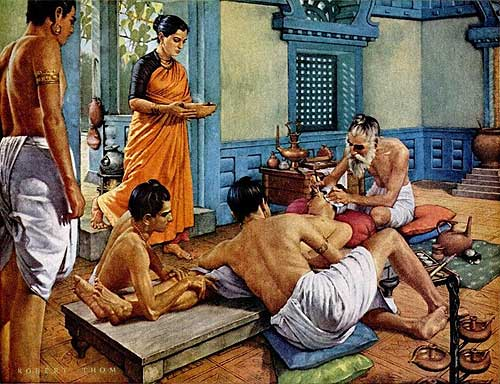
Ancient India was home to some of the earliest known surgical practices, with the physician Sushruta, often called the “Father of Surgery,” leading the way. His work, the Sushruta Samhita, dates back to around 600 BCE and details over 120 surgical procedures, showcasing an advanced understanding of anatomy and medical care.
Techniques and Procedures
Sushruta described techniques such as rhinoplasty (reconstructive surgery of the nose), cataract removal, and extraction of foreign bodies. Instruments made from metal, bamboo, and wood were meticulously designed for precision. The text also details antiseptic practices, suturing methods, and post-operative care, revealing a sophisticated approach to minimizing infection and promoting healing.
Philosophy of Healing
Sushruta emphasized the balance between body, mind, and spirit. Surgery was not merely a technical act but part of a holistic medical philosophy. Physicians were trained to understand the causes of disease, the influence of diet and lifestyle, and the importance of mental and spiritual wellbeing in recovery.
Education and Training
Medical education in ancient India was rigorous. Students learned through hands-on practice on plants, animal models, and cadavers, ensuring mastery before treating humans. Hospitals were established in urban centers, where physicians could teach and perform surgeries under supervised conditions.
Legacy and Influence
The Sushruta Samhita influenced medical practices across Asia and inspired modern reconstructive surgery techniques. Ancient Indian surgical methods demonstrate a remarkable integration of empirical observation, technical skill, and ethical care, highlighting the region’s contribution to the global history of medicine.