• MAIN PAGE
  • LATEST NEWS
    • Lost Cities
    • Archaeology's Greatest Finds
    • Underwater Discoveries
    • Greatest Inventions
    • Studies
    • Blog
  • PHILOSOPHY
  • HISTORY
  • RELIGIONS
    • Africa
    • Anatolia
    • Arabian Peninsula
    • Balkan Region
    • China - East Asia
    • Europe
    • Eurasian Steppe
    • Levant
    • Mesopotamia
    • Oceania - SE Asia
    • Pre-Columbian Civilizations of America
    • Iranian Plateau - Central Asia
    • Indus Valley - South Asia
    • Japan
    • The Archaeologist Editor Group
    • Scientific Studies
    • Aegean Prehistory
    • Historical Period
    • Byzantine Middle Ages
    • Predynastic Period
    • Dynastic Period
    • Greco-Roman Egypt
  • Rome
  • PALEONTOLOGY
  • About us
Menu

The Archaeologist

  • MAIN PAGE
  • LATEST NEWS
  • DISCOVERIES
    • Lost Cities
    • Archaeology's Greatest Finds
    • Underwater Discoveries
    • Greatest Inventions
    • Studies
    • Blog
  • PHILOSOPHY
  • HISTORY
  • RELIGIONS
  • World Civilizations
    • Africa
    • Anatolia
    • Arabian Peninsula
    • Balkan Region
    • China - East Asia
    • Europe
    • Eurasian Steppe
    • Levant
    • Mesopotamia
    • Oceania - SE Asia
    • Pre-Columbian Civilizations of America
    • Iranian Plateau - Central Asia
    • Indus Valley - South Asia
    • Japan
    • The Archaeologist Editor Group
    • Scientific Studies
  • GREECE
    • Aegean Prehistory
    • Historical Period
    • Byzantine Middle Ages
  • Egypt
    • Predynastic Period
    • Dynastic Period
    • Greco-Roman Egypt
  • Rome
  • PALEONTOLOGY
  • About us

The Prehistoric Temples of Göbekli Tepe

December 14, 2025

Introduction to Göbekli Tepe
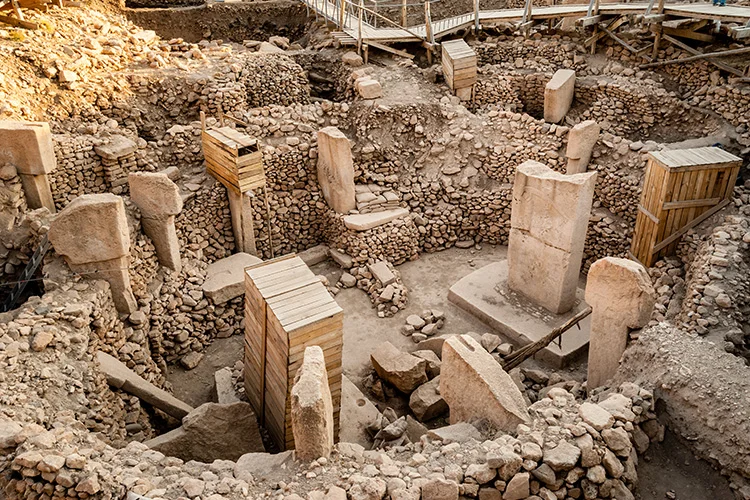
Göbekli Tepe, located in modern-day Turkey, dates back to around 9600 BCE. It is widely regarded as the world’s oldest temple complex, predating Stonehenge by thousands of years. The site challenges traditional views of the origins of organized religion, suggesting that spiritual activity may have preceded agriculture and settled life.

Architectural Design
The complex features massive T-shaped stone pillars arranged in circular enclosures. Many pillars are adorned with intricate carvings of animals such as lions, snakes, and birds. The construction required a high level of planning, coordination, and labor, indicating a sophisticated social structure even among hunter-gatherers.

Religious and Ritual Significance
Archaeologists believe Göbekli Tepe served as a ceremonial center where prehistoric people gathered for communal rituals. The carvings and layout may have symbolized cosmological beliefs, shamanic practices, and communication with spiritual realms. It demonstrates an early human impulse to create sacred spaces for collective experience.

Impact on Understanding Prehistory
Göbekli Tepe rewrites assumptions about early societies. It shows that symbolic thinking, monumental architecture, and complex ritual practices existed long before urban settlements. The site suggests that spiritual needs may have driven humans to cooperate on large-scale projects, laying foundations for later civilization.

Ongoing Research and Discoveries
Excavations continue to reveal new insights, including traces of feasting, burial, and symbolic art. Every season uncovers additional pillars and carvings, offering a window into human cognitive and cultural evolution during the Neolithic period.
← The Sun God Ra and His Daily Journey Through the UnderworldThe First Surgical Practices in Ancient India →
Featured
image_2026-01-28_190316644.png
Jan 28, 2026
Additional €350k in funding for scheme to safeguard Irish UNESCO World Heritage sites announced
Jan 28, 2026
Read More →
Jan 28, 2026
image_2026-01-28_190002439.png
Jan 28, 2026
Twisting Narratives on the History of “Khom” and the Authentic Heritage of Prasat Chan
Jan 28, 2026
Read More →
Jan 28, 2026
image_2026-01-28_184510824.png
Jan 28, 2026
The Taş Tepeler Horizon Expands: Göbeklitepe-Style T-Pillars Discovered in Adıyaman
Jan 28, 2026
Read More →
Jan 28, 2026
image_2026-01-28_184059199.png
Jan 28, 2026
Long before Cleopatra, another female pharaoh redefined ancient Egyptian power
Jan 28, 2026
Read More →
Jan 28, 2026
image_2026-01-28_181544431.png
Jan 28, 2026
Bronze Age secrets unearthed at Northumberland dig site
Jan 28, 2026
Read More →
Jan 28, 2026
image_2026-01-28_180229695.png
Jan 28, 2026
Discovery of monumental sacred lake at Karnak
Jan 28, 2026
Read More →
Jan 28, 2026
read more

Powered by The archaeologist