A Civilization in the Shadow of Giants
When people think of pyramids, Egypt often comes to mind. However, further south along the Nile lies Nubia, in modern-day Sudan, where an equally fascinating but lesser-known pyramid-building tradition flourished. The Nubian pyramids, built by the Kingdom of Kush, represent one of the largest collections of pyramids in the world.
Despite their significance, these structures have long been overshadowed by their Egyptian counterparts.
Unique Architectural Style
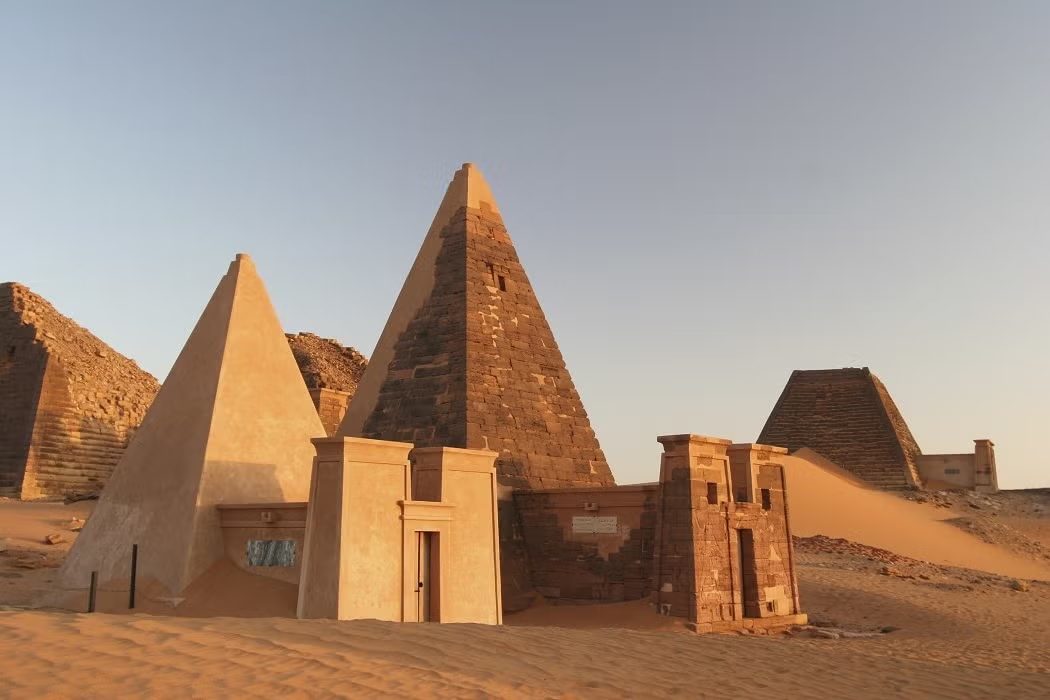
Nubian pyramids differ in several key ways. They are generally smaller, steeper, and narrower than Egyptian pyramids. Their sharp angles give them a distinctive appearance, and many were constructed with sandstone blocks.
Unlike the massive scale of Egyptian pyramids, Nubian pyramids were often built more closely together, forming dense royal cemeteries.
Cultural and Religious Meaning
These pyramids served as tombs for kings, queens, and elites. They reflect beliefs about the afterlife, where the dead were prepared for a spiritual journey beyond death.
Inside or near these pyramids, chapels and burial chambers contained carvings and offerings, showing a blend of Egyptian influence and local traditions.
Comparison with Egyptian Pyramids
While Egyptian pyramids emphasized monumental scale and precision, Nubian pyramids focused more on symbolic function and accessibility. Both, however, shared a common purpose: honoring the dead and ensuring their passage into the afterlife.
Rediscovery and Recognition
Today, these pyramids are gaining recognition as important cultural heritage sites. They remind us that ancient innovation was not limited to one region but spread across diverse civilizations.