Introduction
Dogs have accompanied human communities for thousands of years, serving as hunting partners, livestock guardians, herders, transport animals, and companions.
Across Eurasia, different communities developed working relationships with dogs suited to their environments and economic needs. Some dogs helped control livestock, while others protected settlements or assisted hunters in tracking and retrieving animals.
The genetics of ancient working dogs offers a way to investigate how these animals developed, moved, and adapted alongside human societies.
By analyzing ancient DNA from archaeological dog remains and comparing it with modern genetic data, researchers can investigate population relationships, migration patterns, and the development of specialized dog populations.
However, identifying the exact historical job of an individual dog through genetics alone is difficult. Genetic evidence must be combined with archaeological context, skeletal analysis, and historical information.
The Domestication of Dogs
Dogs descended from ancient wolf populations, although the precise timing, location, and number of domestication processes remain subjects of scientific investigation.
Domestication involved long-term relationships between humans and wolf ancestors.
Animals that tolerated human presence and benefited from living near settlements may have become increasingly integrated into human communities.
Over generations, these relationships produced populations with physical and behavioral characteristics different from those of wild wolves.
The earliest domestic dogs were not necessarily divided into the specialized breeds recognized today. Many modern breed categories developed much more recently.
Working Dogs in Ancient Eurasia
Eurasia contains a wide variety of environments, from Arctic regions and mountain ranges to open steppe, forests, and agricultural plains.
Different environments created different demands for working dogs.
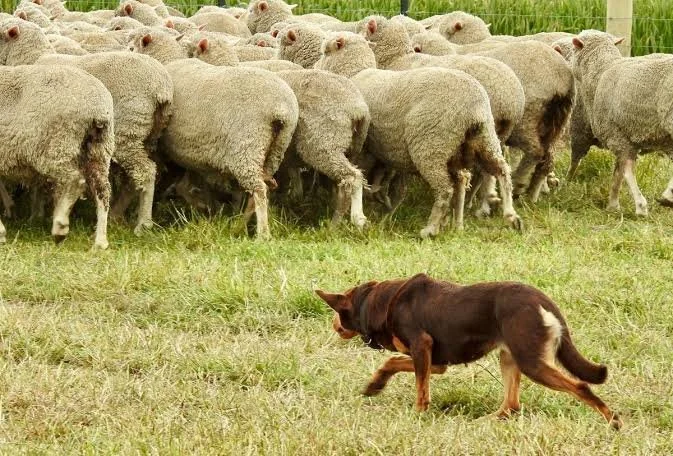
In pastoral communities, dogs could help protect livestock against predators and assist in moving herds.
In hunting societies, dogs could support tracking, pursuit, and the recovery of game.
In settlements, dogs might guard property or warn inhabitants of approaching strangers or animals.
Some dogs also served as transport or draft animals in particular regions, although such practices were not universal.
The Role of Ancient DNA
Ancient DNA analysis allows researchers to investigate the genetic relationships of animals that lived in the past.
DNA can sometimes be recovered from teeth, dense bone, and other preserved skeletal material.
The process requires careful laboratory procedures because ancient DNA is often fragmented and vulnerable to contamination.
Researchers compare genetic sequences from archaeological specimens with other ancient and modern populations.
This can reveal shared ancestry, population changes, and relationships between groups.
However, genetic similarity does not automatically demonstrate that two populations performed the same tasks or shared identical behavior.
Genetic Diversity and Population Movement
Working dogs may have moved alongside human communities.
Pastoral migrations, trade, warfare, and settlement expansion could all transport dogs across large distances.
When dogs from different populations reproduced, their genetic material became mixed.
Ancient DNA can help identify such population interactions.
A dog found in one region might share ancestry with animals from a distant area, suggesting that people or animals moved through connected networks.
Nevertheless, a genetic connection does not reveal the exact route of movement. Archaeological and historical evidence is needed to reconstruct the wider context.
Skeletal Evidence of Working Roles
The skeleton can provide clues about an animal's physical activity and health.
Joint changes, healed injuries, tooth wear, and other skeletal features may reflect aspects of an animal's life.
For example, repeated physical stress may leave traces on joints and bones.
However, these features are not unique to a particular occupation.
A dog with skeletal changes associated with heavy activity cannot automatically be identified as a herding or transport animal.
Researchers must compare skeletal evidence with the archaeological context and the characteristics of other animals from the same site.
Herding and Livestock Protection
Dogs played important roles in many pastoral societies.
Some were used to move livestock, responding to human commands and controlling the direction of animals.
Others protected herds from predators and could spend long periods near grazing animals.
These roles may favor different behavioral and physical characteristics.
Herding dogs often need responsiveness, coordination, and the ability to work closely with people. Livestock guardian dogs may need independence, territorial awareness, and the ability to remain near animals for extended periods.
These distinctions are useful for understanding modern working dogs, but ancient populations may not have been divided into clearly defined categories.
Hunting Dogs and Human Cooperation
Dogs also contributed to hunting activities.
Their sense of smell and ability to track animals made them useful companions.
Depending on the environment and hunting strategy, dogs could help locate prey, follow tracks, retrieve animals, or assist in driving game toward hunters.
Archaeological evidence may include dog burials, hunting equipment, animal remains, and representations of dogs in art.
Some burials suggest that dogs received special treatment, although their exact relationship with human owners may remain uncertain.
Dog Burials and Social Significance
The treatment of dogs after death can provide information about their social importance.
Some archaeological sites contain dog burials that appear deliberate and carefully arranged.
The presence of grave goods or association with human burials may indicate that dogs held particular cultural value.
However, burial treatment does not necessarily prove that a dog performed a specific working role.
A dog could be valued as a companion, protector, hunting partner, or symbol of social status.
The archaeological context must be considered before assigning a particular interpretation.
Genetic Adaptation and Environment
Over long periods, dog populations can develop genetic differences associated with body size, coat characteristics, metabolism, and other traits.
Some characteristics may be influenced by environmental conditions, while others result from human selection.
For example, populations living in cold environments may exhibit physical traits that help them cope with low temperatures.
However, climate adaptation is complex, and it cannot be inferred from a single genetic marker.
Researchers need large comparative datasets and careful analysis to distinguish natural selection, artificial selection, population history, and random genetic change.
The Limits of Ancient Dog Genetics
Ancient DNA provides powerful evidence, but it has limitations.
Preservation varies greatly between archaeological environments. Some regions provide abundant genetic material, while others yield very little.
The available samples may also represent only a small portion of the dogs that once lived in a region.
This creates a risk of drawing broad conclusions from limited remains.
Furthermore, genetic studies cannot directly reconstruct an animal's training, temperament, or exact daily activities.
Those questions require evidence from skeletal analysis, archaeological context, historical sources, and comparison with modern animal behavior.
The Relationship Between Humans and Dogs
The history of working dogs is closely connected with the development of human economies.
As communities adopted pastoralism, agriculture, and more complex settlement systems, their relationships with dogs changed.
Dogs could become essential partners in protecting livestock, supporting hunting, and guarding settlements.
Their movement across Eurasia also reflects the interconnectedness of human societies.
People did not transport only tools, crops, and technologies. They also moved animals that carried practical knowledge and genetic histories across regions.
Conclusion
The genetics of ancient working dogs in Eurasia offers valuable insight into the long relationship between humans and domestic animals.
Ancient DNA can reveal population ancestry, genetic diversity, and patterns of movement, while skeletal evidence and archaeological context help investigate how dogs lived and interacted with people.
It is important not to assume that genetics alone can identify a dog's occupation. Working roles must be reconstructed through multiple forms of evidence.
Together, genetic research and archaeology demonstrate that dogs were not simply passive companions in human history. They were active participants in hunting, pastoralism, settlement protection, and migration, adapting alongside the communities that depended on them.