• MAIN PAGE
  • LATEST NEWS
    • Lost Cities
    • Archaeology's Greatest Finds
    • Underwater Discoveries
    • Greatest Inventions
    • Studies
    • Blog
  • PHILOSOPHY
  • HISTORY
  • RELIGIONS
    • Africa
    • Anatolia
    • Arabian Peninsula
    • Balkan Region
    • China - East Asia
    • Europe
    • Eurasian Steppe
    • Levant
    • Mesopotamia
    • Oceania - SE Asia
    • Pre-Columbian Civilizations of America
    • Iranian Plateau - Central Asia
    • Indus Valley - South Asia
    • Japan
    • The Archaeologist Editor Group
    • Scientific Studies
    • Aegean Prehistory
    • Historical Period
    • Byzantine Middle Ages
    • Predynastic Period
    • Dynastic Period
    • Greco-Roman Egypt
  • Rome
  • PALEONTOLOGY
  • About us
Menu

The Archaeologist

  • MAIN PAGE
  • LATEST NEWS
  • DISCOVERIES
    • Lost Cities
    • Archaeology's Greatest Finds
    • Underwater Discoveries
    • Greatest Inventions
    • Studies
    • Blog
  • PHILOSOPHY
  • HISTORY
  • RELIGIONS
  • World Civilizations
    • Africa
    • Anatolia
    • Arabian Peninsula
    • Balkan Region
    • China - East Asia
    • Europe
    • Eurasian Steppe
    • Levant
    • Mesopotamia
    • Oceania - SE Asia
    • Pre-Columbian Civilizations of America
    • Iranian Plateau - Central Asia
    • Indus Valley - South Asia
    • Japan
    • The Archaeologist Editor Group
    • Scientific Studies
  • GREECE
    • Aegean Prehistory
    • Historical Period
    • Byzantine Middle Ages
  • Egypt
    • Predynastic Period
    • Dynastic Period
    • Greco-Roman Egypt
  • Rome
  • PALEONTOLOGY
  • About us

The God-Kings of Ancient Egypt

December 19, 2025

Analyzing the Concept of Divine Rulership Among the Pharaohs

Introduction to Pharaohs
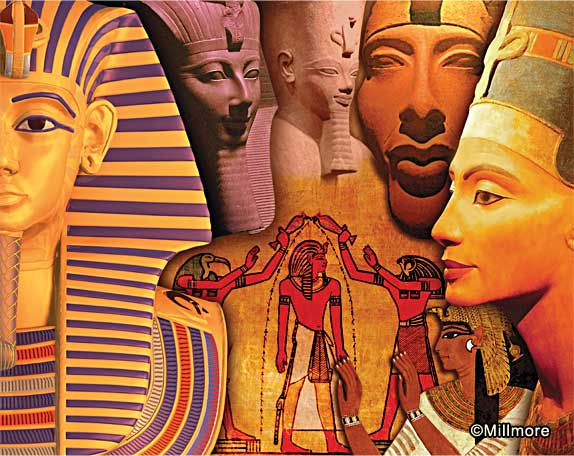
Ancient Egyptian kings were seen as divine intermediaries between gods and people. Their authority encompassed religious, political, and military domains, reinforcing the unity of the state.

Divine Symbolism
Pharaohs were considered incarnations of Horus during life and Osiris after death. Iconography, including crowns, scepters, and regalia, emphasized their sacred and earthly power.

Political Authority
As absolute rulers, pharaohs controlled taxation, law, trade, and military campaigns. Their decrees were considered divinely sanctioned, blending religion and governance seamlessly.

Funerary Practices
Tombs and mortuary temples reinforced the pharaoh’s divine status. Monumental architecture, like pyramids and obelisks, ensured eternal remembrance and cosmic alignment.

Cultural Legacy
The god-king concept influenced neighboring civilizations and later ideologies about divine rulership, reflecting the inseparable link between religion, authority, and social structure in ancient Egypt.
← The Mystery of the EtruscansThe Ancient Olympic Games →
Featured
image_2025-12-20_011100063.png
Dec 19, 2025
The Role of Myth in Sumerian Kingship
Dec 19, 2025
Read More →
Dec 19, 2025
image_2025-12-20_005333454.png
Dec 19, 2025
The Sacred Bull in Ancient Cultures
Dec 19, 2025
Read More →
Dec 19, 2025
image_2025-12-20_003537323.png
Dec 19, 2025
The Mystery of the Etruscans
Dec 19, 2025
Read More →
Dec 19, 2025
image_2025-12-20_002741288.png
Dec 19, 2025
The God-Kings of Ancient Egypt
Dec 19, 2025
Read More →
Dec 19, 2025
image_2025-12-20_002024096.png
Dec 19, 2025
The Ancient Olympic Games
Dec 19, 2025
Read More →
Dec 19, 2025
image_2025-12-20_001517638.png
Dec 19, 2025
The Legend of the Minotaur and the Labyrinth
Dec 19, 2025
Read More →
Dec 19, 2025
read more

Powered by The archaeologist