The Four Heavens: A New History of the Ancient Maya by David Stuart; Princeton University Press
The Four Heavens: A Comprehensive Study of Maya Civilization
David Stuart, an archaeologist at the University of Texas at Austin and the youngest-ever recipient of a MacArthur “genius” grant at age 18, has written an expansive account of Maya civilization spanning c. 1000 BCE to 1697 CE—nearly two centuries after the Spanish conquest. His book, The Four Heavens, synthesizes decades of discoveries, made possible largely through the decipherment of Maya hieroglyphs, which Stuart himself has helped pioneer.
The Maya: A Civilization of Clusters and Cycles
Unlike the centralized Aztec empire, the Maya favored smaller urban clusters scattered across the Yucatán Peninsula, Chiapas, Campeche, Quintana Roo, and Central America. They spoke dozens of languages—over 28 of which survive today—and maintained a society deeply shaped by war, politics, and mobility. Settlements were often abandoned, with dense jungle reclaiming the ruins, reflecting the Maya’s view of life as ephemeral and cyclical.
Stuart emphasizes that Maya history should not be seen as a linear rise and fall, but as a series of “ups and downs”, marked by cycles of city-building, expansion, collapse, and renewal. Environmental pressures, overpopulation, conflict, and shifting trade networks contributed to these patterns of persistent impermanence, which are also encoded in the Maya cyclical calendar, with its precise turning points and rituals of renewal.
Insights from La Corona and Classic-Period Hubs
Stuart opens with his 2012 visit to La Corona in Petén, Guatemala, where limestone staircases bearing carved texts provide a window into Classic-period political events (c. 150–900 CE). His ability to read these inscriptions has allowed him to reconstruct dynastic histories and trace political developments across multiple city-states.
He provides detailed portraits of major hubs including:
Calakmul, Caracol, Coba, Copán, Dos Pilas, Dzibanche, Ek Balam, Naranjo, Tikal
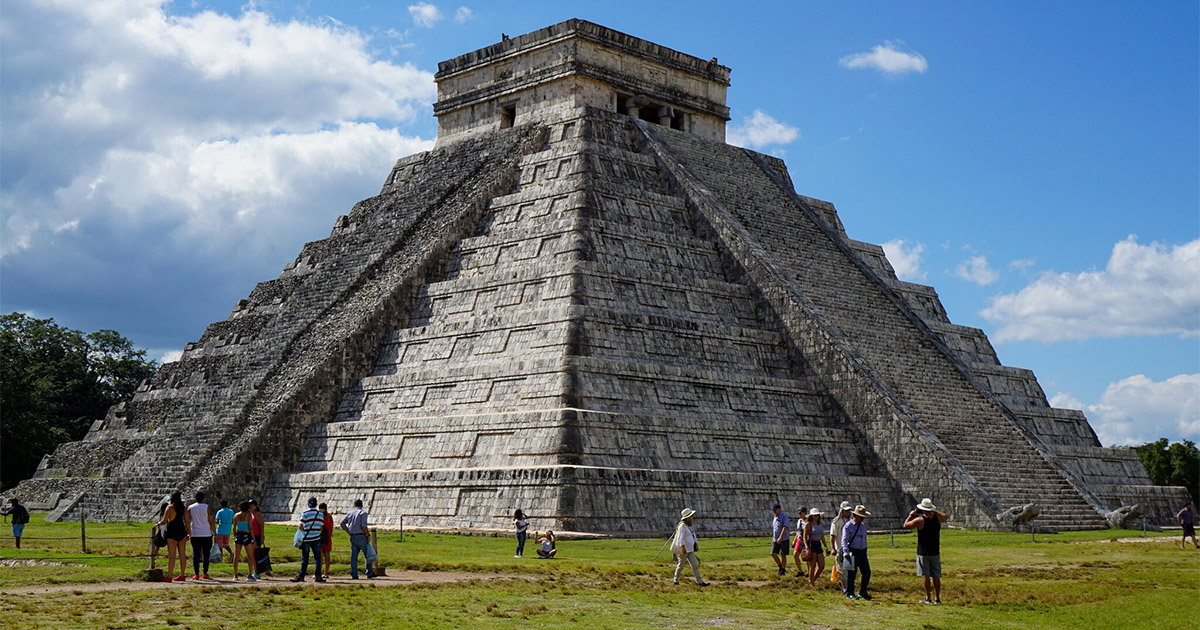
Chichén Itza, the largest post-Classic city, with architectural influences reflecting interaction with the Aztec and Toltec civilizations
Stuart highlights the lives of key rulers, such as Ajnumsaj of Naranjo, who presided over political stability, and Lady Ch’akch’en of Coba, whose leadership appears expansionist.
Connections to the Present-Day Maya
Stuart also draws attention to the 11 million Maya descendants today, including approximately 40% of Guatemala’s population, and a diaspora of roughly 500,000 in the United States, concentrated in California and Texas. He selectively references Spanish codices, noting their bias and the fact that many Maya cities were already abandoned by the 16th century.
Cultural and Technological Achievements
The Maya excelled in mathematics, including the concept of zero, astronomy, and monumental architecture. They constructed stepped pyramids, palaces, and ball courts without the use of metal tools or the wheel.
While Stuart’s narrative focuses heavily on the ruling elite, tombs, and political history, he touches only briefly on economic structures, daily life, markets, tribute systems, and long-distance trade in jade, obsidian, feathers, and cacao. Essential cultural dimensions—such as schooling, jurisprudence, cuisine, slavery, sexuality, and philosophy—receive minimal attention.
Nevertheless, the book’s depth of epigraphic scholarship and historical reconstruction represents a milestone in Maya studies, providing access to the oldest written voices in the Americas and a much fuller understanding of their complex civilization.
A Groundbreaking Contribution
Despite its narrow focus, The Four Heavens demonstrates the power of epigraphy to illuminate the past. Stuart’s work transforms fragmented inscriptions into a holistic narrative, revealing how the Maya understood time, power, and impermanence, and offering scholars and readers alike a new lens on one of the Americas’ greatest civilizations.
The book is both a tribute to the ingenuity of the Maya and a testament to the rewards of decades spent decoding the hieroglyphs that unlock their world.