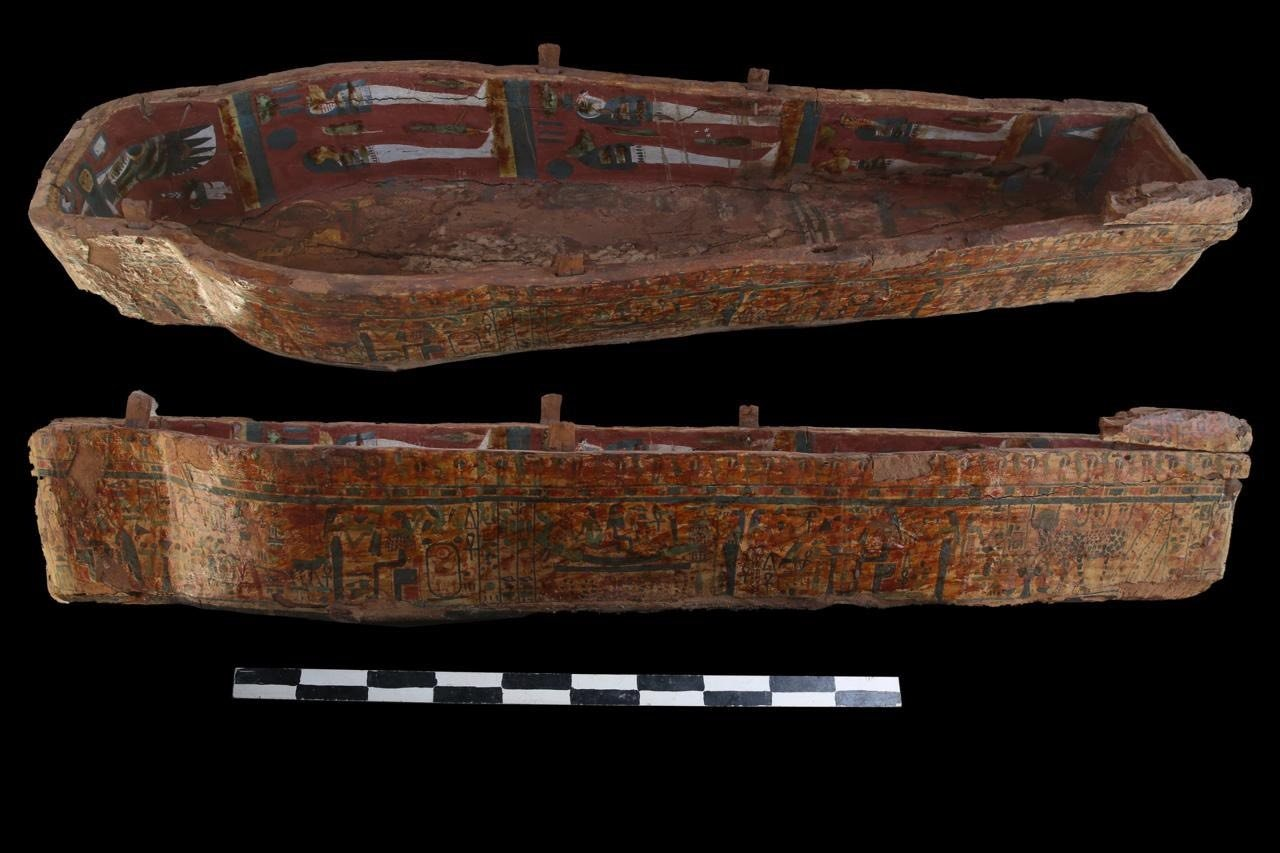
Extraordinary Third Intermediate Period Coffins Discovered in Luxor
A joint Egyptian archaeological mission has made a remarkable discovery in Luxor, unearthing 22 brightly painted wooden coffins and eight rare sealed vessels dating to the Third Intermediate Period (c. 1070–664 BC). The find was announced this week by officials, highlighting the continuing richness of Luxor’s archaeological landscape, often referred to as the world’s largest open-air museum.
The excavation took place in the southwest corner of the Asasif necropolis in the Qurna area on Luxor’s West Bank. This area was historically reserved for high-ranking officials and temple staff, making it a site of great significance for understanding elite burial practices and religious roles in ancient Egypt. The mission is a collaboration between the Supreme Council of Antiquities and the Zahi Hawass Foundation for Archaeology and Heritage, led by the renowned Egyptologist Zahi Hawass.
A Carefully Arranged Funerary Cache
Archaeologists uncovered 22 wooden coffins arranged in multiple layers inside a rock-cut rectangular chamber, which appears to have functioned as a dedicated funerary repository. The coffins were stacked in 10 horizontal rows, with the lids separated from their bases to maximize space within the chamber. This careful organization demonstrates the skill and planning of ancient embalmers, who needed to accommodate multiple individuals while maintaining the dignity and ritual importance of the burials.
Preliminary research dates these coffins to the Third Intermediate Period, covering Dynasties 21 through 25. The period is known for its political transitions and the continued elaboration of religious practices, and the discovery offers fresh insights into funerary rituals and the roles of temple personnel during this time.
Temple Singers and Social Roles
Most of the coffins do not bear personal names but rather functional titles, giving archaeologists unique insight into social and religious structures. The most common title is “Singer of Amun,” referring to women who performed ritual songs and ceremonies for the god Amun at the nearby Karnak Temple.
Experts note that the concentration of this title suggests the women played critical roles in temple rituals and were highly valued in the religious hierarchy. This discovery sheds light on gender-specific roles within the temple and highlights the intricate link between spiritual life and social status in ancient Egypt during this period of transition.
Rare Sealed Vessels: A Treasure Trove of Potential Insights
In addition to coffins, archaeologists found eight rare sealed containers placed inside a larger ceramic vessel. Several of these jars still retain their original clay seals of varying sizes, offering the potential for intact organic or ritual materials that could provide unprecedented insights into the burial practices and ceremonial objects of the time.
The mission also uncovered pottery vessels believed to have been used in the mummification process, adding another layer of understanding to the elaborate mortuary customs practiced by the ancient Egyptians during the Third Intermediate Period. Experts describe the sealed jars as an “information treasure”, awaiting careful conservation and analysis.
Conservation Efforts: Preserving Ancient Artistry
Minister of Tourism and Antiquities Sherif Fathy emphasized that the discovery demonstrates Egypt’s ongoing commitment to archaeological research and heritage preservation. The coffins’ fragile condition required urgent conservation measures, which included:
Stabilizing weakened wood fibers
Consolidating flaking painted plaster
Carefully cleaning the surfaces to preserve the vibrant pigments
Once stabilized, the coffins were moved to secure storage, where further study and conservation will continue to reveal their secrets. These steps ensure that the coffins remain available for both research and public display, offering future generations the chance to connect with the artistry and religious culture of ancient Egypt.
Piecing Together a Larger Story
The coffins appear to have been carefully relocated from their original tombs, prompting ongoing research to identify where they were first interred. Determining the provenance of these burials is essential for reconstructing the full historical context and understanding the intentions behind this large-scale funerary cache.
Zahi Hawass described the discovery as an extraordinary addition to Third Intermediate Period archaeology, noting that it provides rare and valuable information about religious, social, and burial practices. The careful planning, functional titles, and presence of sealed ritual vessels all contribute to a richer understanding of how the elite of this period prepared for the afterlife.
Significance for Egyptology
This discovery reinforces the importance of Luxor as a center of archaeological research and emphasizes the complexity of Egypt’s Third Intermediate Period, a time often overshadowed by the more famous New Kingdom. The coffins, mummies, and sealed vessels offer a multi-dimensional perspective, highlighting the interplay between ritual, status, and material culture.
As excavations and analyses continue, researchers hope to:
Identify the original tombs of the coffins
Examine the contents of the sealed vessels
Understand the social and religious roles of temple singers
Document the artistic techniques and symbolism of the painted coffins
In doing so, they will reconstruct a pivotal chapter in ancient Egyptian history, connecting material culture with the human stories of those who lived and served in one of the world’s most remarkable civilizations.