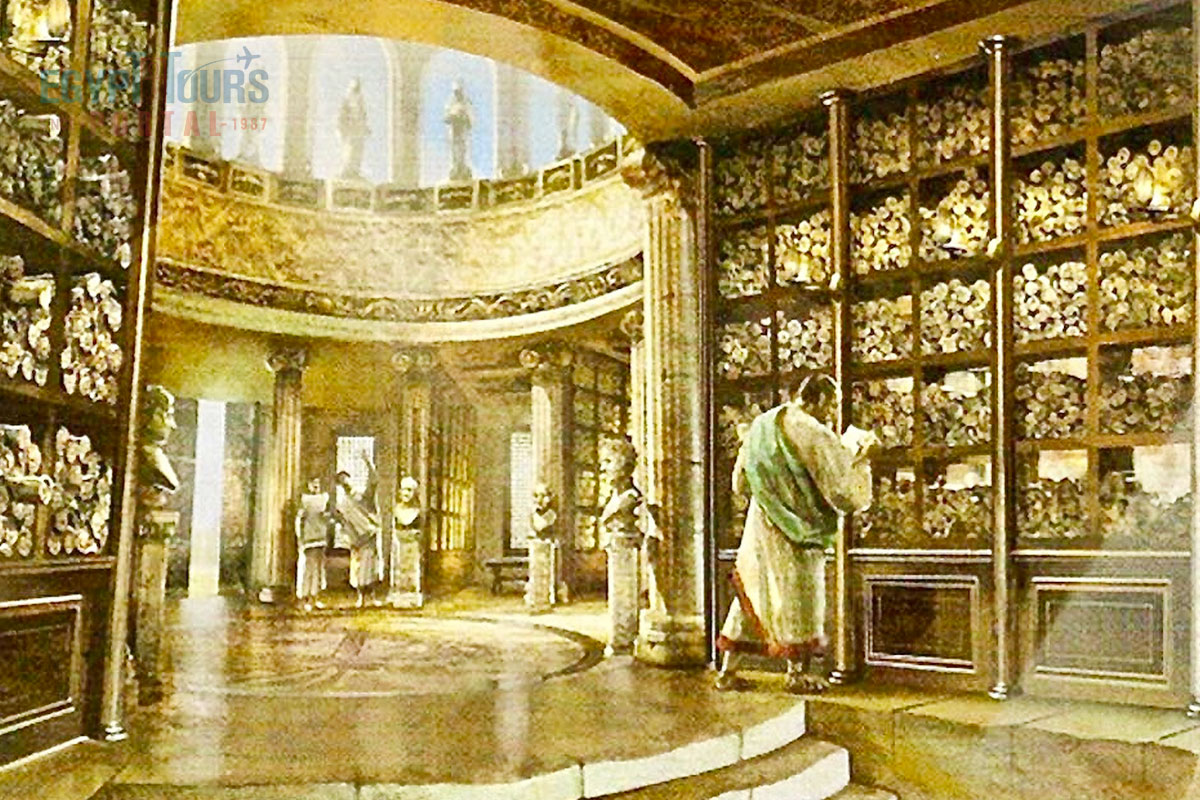
The Hellenistic period saw the rise of major libraries that preserved and expanded human knowledge. The Library of Alexandria was the most famous, aiming to collect all known written works. Scholars from across the Mediterranean studied mathematics, medicine, astronomy, and philosophy there.
Pergamon rivaled Alexandria, especially after restrictions on papyrus trade led to the development of parchment. This innovation transformed book production and preservation. Antioch also emerged as a center of learning, supporting scientific and philosophical inquiry.
These libraries were more than storage spaces; they were research institutions that encouraged debate, experimentation, and scholarship. They played a critical role in advancing science and literature.
Although most Hellenistic libraries were eventually destroyed, their legacy shaped education, knowledge preservation, and intellectual culture in the ancient and modern worlds.