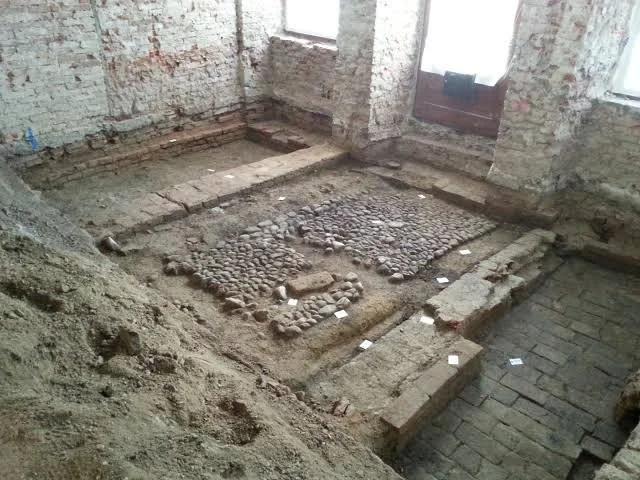
Pebble pavements are among the architectural features that can reveal how people organized and used the spaces around them. Although they may appear simple when compared with monumental buildings or elaborate stone structures, paved surfaces required decisions about materials, labor, drainage, and movement. In prehistoric towns, these surfaces could connect houses, courtyards, workshops, storage areas, and communal spaces. When archaeologists examine several paved areas together rather than treating each one as an isolated feature, they may begin to identify patterns that help explain how a settlement functioned.
Pebbles were practical building materials in places where riverbeds, beaches, and glacial deposits provided a reliable supply. Their rounded shapes made them suitable for creating compact surfaces, although builders often needed to select stones of appropriate sizes and arrange them carefully. A pavement might consist of tightly packed pebbles placed over prepared soil, a layer of gravel, or another foundation material. The quality of construction depended on local conditions, available resources, and the intended use of the surface. A path used mainly by pedestrians did not necessarily require the same preparation as a busy working area where heavy objects were moved regularly.
The arrangement of paving stones can provide clues about the purpose of a space. A narrow strip of carefully laid pebbles between buildings might have served as a walkway, while a broad paved area could have functioned as a courtyard or a place for communal activities. Surfaces near workshops may have helped workers maintain a stable area for processing materials. In settlements with poor natural drainage, pavements could also reduce mud and allow people to move more easily during wet seasons. However, these interpretations must be based on the dimensions, construction, wear patterns, and archaeological context of each feature rather than its appearance alone.
The idea of hidden networks becomes especially useful when several paved surfaces appear to connect across a settlement. A series of paths, entrances, and courtyards may suggest that residents followed established routes between important areas. These connections could have influenced how people carried water, transported goods, visited neighbors, or brought materials to workshops. Yet a visually connected group of pavements does not necessarily mean that the entire settlement was planned according to a single design. Paths may have developed gradually as new buildings were added, older structures were demolished, or changing needs encouraged residents to modify existing spaces.
Archaeologists can investigate these relationships by mapping the location, orientation, elevation, and condition of preserved pavements. Detailed plans help reveal whether surfaces align with entrances, follow natural slopes, or lead toward particular buildings. If several pavements share similar construction methods, they may reflect common building traditions or the use of comparable materials. Differences in technique may indicate separate construction episodes, distinct household practices, or changes in the availability of resources. Such patterns can become more meaningful when combined with evidence from nearby walls, drains, hearths, and occupation layers.
Wear is another important source of information. Repeated movement can smooth exposed stones, loosen their arrangement, or create shallow depressions along frequently used routes. Researchers may compare the degree of wear across different sections to identify areas that experienced heavier use. However, wear can be difficult to interpret because it is influenced by the hardness of the stones, the weight and type of traffic, erosion, and later disturbance. A heavily worn surface might have been used for many years, but it could also have been exposed to water or other environmental processes. Archaeologists therefore need to consider the surrounding evidence before reconstructing movement patterns.
Drainage may have played a major role in the design of pebble pavements. Builders sometimes created surfaces with slight slopes so that rainwater could move away from houses and working areas. In other cases, paving may have been installed above a compacted foundation to prevent water from collecting underfoot. The location of drains, channels, and lower-lying ground can help researchers determine whether a paved area contributed to water management. These details matter because the organization of a settlement was shaped not only by social relationships but also by the practical challenge of living in a particular landscape.
The objects and residues found on or near paved surfaces can add another layer of interpretation. Concentrations of pottery fragments, animal bones, stone flakes, or other debris may indicate activities carried out in nearby spaces. A paved courtyard associated with domestic remains could have been used for food preparation or household work, while a surface near specialized tools might have supported manufacturing. Still, artifacts can move after deposition, and rubbish may be dumped in places where it was not originally produced. The distribution of finds should therefore be considered alongside stratigraphy and evidence of later disturbance.
Dating these surfaces can be challenging because stones themselves often provide little direct chronological information. Archaeologists commonly examine the layers beneath and above a pavement, along with artifacts and organic remains associated with its construction or use. If a pavement was built over an older occupation layer, that layer may help establish a date before which the paving could not have been constructed. Material deposited on top of the surface may provide evidence of its later use or abandonment. Repairs and resurfacing can complicate the picture, since a single paved area may have remained in service through several phases of settlement development.
The social significance of paving should be approached with similar care. A well-maintained path leading to a communal building might suggest that residents shared responsibility for certain spaces, but it could also reflect the authority of a household or institution. Differences in pavement quality may reveal unequal access to labor or materials, although they may simply reflect different practical requirements. The strongest interpretations emerge when architectural evidence is considered alongside the settlement's wider layout, household organization, environmental setting, and material culture.
Pebble pavements can therefore contribute to a more detailed understanding of prehistoric towns. Their value lies not only in the stones themselves but in the relationships among paths, buildings, working areas, and open spaces. By examining construction techniques, wear, drainage, repairs, and associated artifacts, archaeologists can reconstruct how people moved through their communities and adapted their surroundings. These patterns rarely provide a complete picture on their own, but they can reveal important details about the everyday decisions through which settlements developed and changed.