Exploring the Mystery of an Undeciphered Script
The Indus Valley Civilization, flourishing around 2600–1900 BCE, created one of the world’s earliest urban cultures. Yet despite its achievements in architecture, sanitation, and trade, its writing system remains undeciphered. Understanding this script could unlock a new chapter of human history.
The Script on Seals and Artifacts
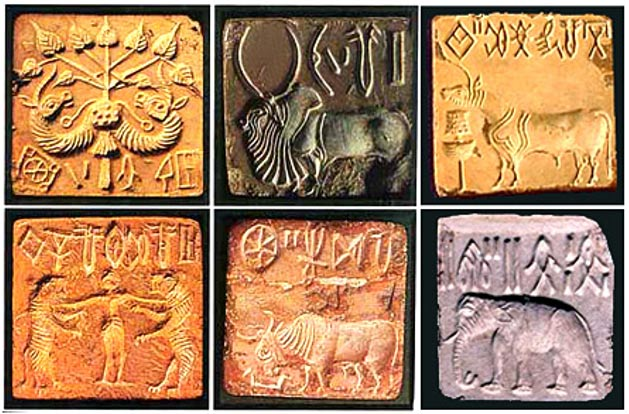
The writing appears mainly on small steatite seals, pottery, and metal objects. The symbols are short often only a few characters—and feature combinations of animals, geometric shapes, and abstract signs.
Because the inscriptions are brief, scholars struggle to identify grammar, names, or repeated patterns.
Attempts at Decipherment
Researchers have proposed links to Dravidian, Indo-Aryan, and even non-linguistic symbolic systems. Advanced AI analysis has begun identifying patterns, but no theory has gained consensus.
The lack of bilingual texts like a “Rosetta Stone” is the major obstacle to decipherment.
What the Script Might Reveal
If decoded, the script could provide answers to long-standing questions:
How was the society structured?
What religious beliefs shaped daily life?
What languages were spoken in the region?
It could also illuminate trade connections with Mesopotamia and Central Asia.
A Civilization Hidden Behind Symbols
For now, the script remains silent. But ongoing archaeological discoveries and technological advances bring us closer to understanding the voice of the Harappans—one of the ancient world’s most enigmatic peoples.