How Trees Became Pillars of Wisdom, Life, and Cosmic Order
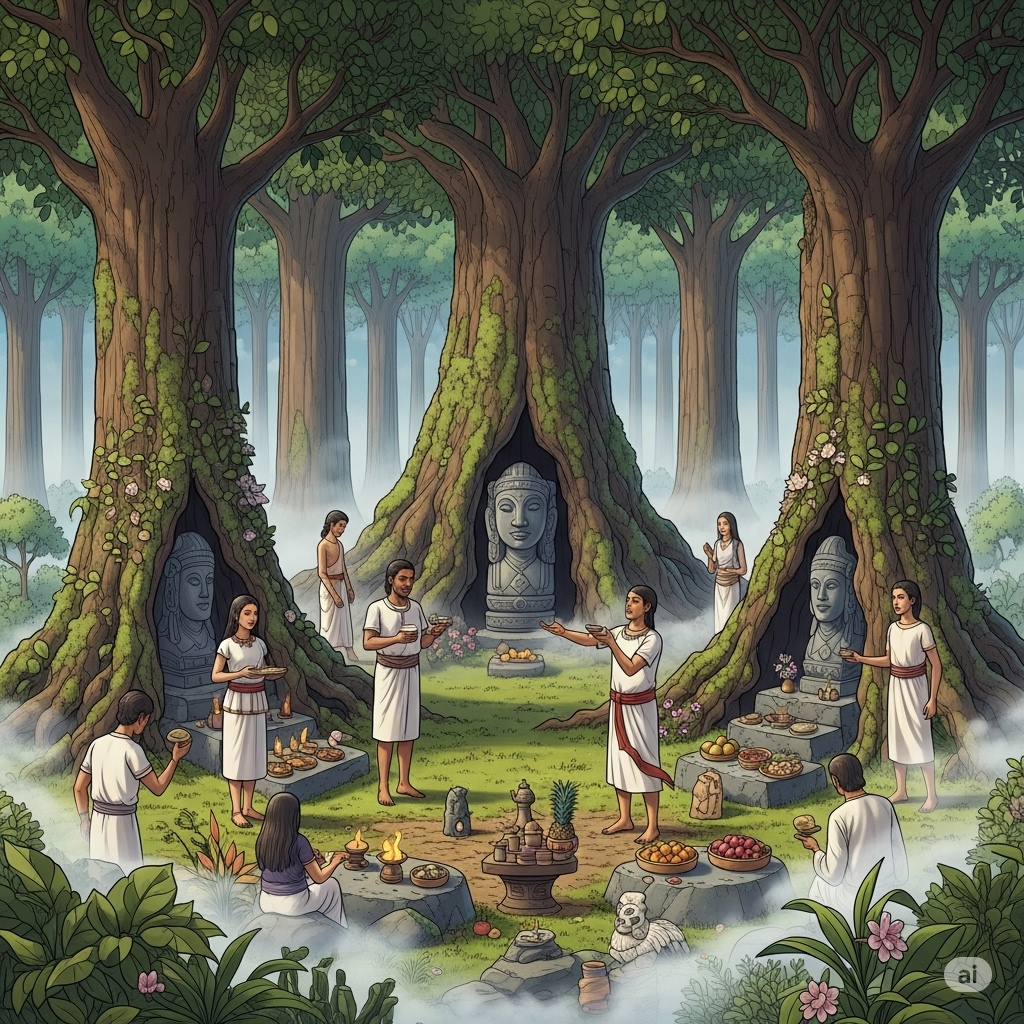
Trees have long served as symbols of life, stability, and the connection between earth and sky. Across ancient civilizations, sacred trees appeared at the center of myths, rituals, and spiritual landscapes. They represented wisdom, fertility, ancestry, and divine presence.
The Bodhi Tree in Buddhist Tradition
One of the most iconic sacred trees is the Bodhi Tree, under which Siddhartha Gautama attained enlightenment. This tree became a symbol of awakening, compassion, and inner transformation.
Buddhist temples often feature Bodhi trees as living reminders of spiritual guidance and meditative practice.
Yggdrasil in Norse Mythology
In Norse belief, Yggdrasil the World Tree connected the nine realms. Its roots and branches touched every part of the cosmos, serving as the axis of existence.
Gods, humans, and mythical beings all relied on Yggdrasil as a symbol of balance and continuity. Its image reinforced the idea that all worlds were interconnected.
Sacred Trees Across Cultures
Beyond India and Scandinavia, many cultures honored trees:
Celts viewed oaks as gateways to divine knowledge.
Mesopotamians depicted tree-of-life motifs on temple walls.
African traditions held ancestral rituals beneath ancient baobabs.
Trees shaped ceremonies, guided community decisions, and served as markers of sacred ground.
Why Trees Held Such Power
Trees offered food, shelter, and materials, but they also symbolized renewal through their growth cycles. They represented the bridge between the physical and spiritual realms, grounding communities both physically and symbolically.