• MAIN PAGE
  • LATEST NEWS
    • Lost Cities
    • Archaeology's Greatest Finds
    • Underwater Discoveries
    • Greatest Inventions
    • Studies
    • Blog
  • PHILOSOPHY
  • HISTORY
  • RELIGIONS
    • Africa
    • Anatolia
    • Arabian Peninsula
    • Balkan Region
    • China - East Asia
    • Europe
    • Eurasian Steppe
    • Levant
    • Mesopotamia
    • Oceania - SE Asia
    • Pre-Columbian Civilizations of America
    • Iranian Plateau - Central Asia
    • Indus Valley - South Asia
    • Japan
    • The Archaeologist Editor Group
    • Scientific Studies
    • Aegean Prehistory
    • Historical Period
    • Byzantine Middle Ages
    • Predynastic Period
    • Dynastic Period
    • Greco-Roman Egypt
  • Rome
  • PALEONTOLOGY
  • About us
Menu

The Archaeologist

  • MAIN PAGE
  • LATEST NEWS
  • DISCOVERIES
    • Lost Cities
    • Archaeology's Greatest Finds
    • Underwater Discoveries
    • Greatest Inventions
    • Studies
    • Blog
  • PHILOSOPHY
  • HISTORY
  • RELIGIONS
  • World Civilizations
    • Africa
    • Anatolia
    • Arabian Peninsula
    • Balkan Region
    • China - East Asia
    • Europe
    • Eurasian Steppe
    • Levant
    • Mesopotamia
    • Oceania - SE Asia
    • Pre-Columbian Civilizations of America
    • Iranian Plateau - Central Asia
    • Indus Valley - South Asia
    • Japan
    • The Archaeologist Editor Group
    • Scientific Studies
  • GREECE
    • Aegean Prehistory
    • Historical Period
    • Byzantine Middle Ages
  • Egypt
    • Predynastic Period
    • Dynastic Period
    • Greco-Roman Egypt
  • Rome
  • PALEONTOLOGY
  • About us

The Mysterious Handprints in Ancient Caves

December 4, 2025

Understanding the Meaning Behind Prehistoric Hand Stencils

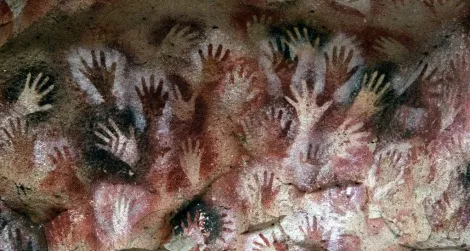
Hand stencils appear in caves across the world from France and Spain to Indonesia, Australia, and the Americas. These ancient prints, created tens of thousands of years ago, offer some of the earliest examples of human expression.

Researchers continue to uncover what these handprints meant to the people who left them behind.

How the Handprints Were Made

Most stencils were created by placing a hand on a cave wall and blowing pigment around it, leaving behind a negative silhouette. The consistent technique across different continents suggests a shared human impulse for communication and creativity.

Possible Symbolic Meanings

Scholars have proposed several interpretations:

  • Identity markers showing who entered a sacred space.

  • Ritual symbols used for initiation, healing, or storytelling.

  • Territorial signs indicating group presence.

  • Expressions of connection to ancestors or spiritual forces.

Some caves contain hundreds of handprints, hinting at communal gatherings or ceremonies.

Women and Children in Cave Art

Recent studies suggest many prints may belong to women or adolescents, challenging earlier assumptions that cave art was created only by male hunters. This discovery broadens the understanding of prehistoric social roles.

Echoes from the Ancients

Hand stencils represent a desire to be remembered—a message from people who lived long before written language. These prints remain one of humanity’s most direct connections to the deep past.

← The Construction Techniques of Ancient MegalithsThe Role of Sacred Trees in Ancient Religions →
Featured
image_2025-12-04_225351242.png
Dec 4, 2025
The Construction Techniques of Ancient Megaliths
Dec 4, 2025
Read More →
Dec 4, 2025
image_2025-12-04_225310269.png
Dec 4, 2025
The Mysterious Handprints in Ancient Caves
Dec 4, 2025
Read More →
Dec 4, 2025
image_2025-12-04_224759090.png
Dec 4, 2025
The Role of Sacred Trees in Ancient Religions
Dec 4, 2025
Read More →
Dec 4, 2025
image_2025-12-04_224648150.png
Dec 4, 2025
The Lost Language of the Indus Valley Civilization
Dec 4, 2025
Read More →
Dec 4, 2025
image_2025-12-04_224539650.png
Dec 4, 2025
The Ancient Cult of the Serpent Across Civilizations
Dec 4, 2025
Read More →
Dec 4, 2025
image_2025-12-04_223446946.png
Dec 4, 2025
The Role of Astrology in the Rise and Fall of Empires
Dec 4, 2025
Read More →
Dec 4, 2025
read more

Powered by The archaeologist