The Center of the Ancient World
In ancient Greece, few places held as much influence as Delphi. Perched on the slopes of Mount Parnassus, it was believed to be the center of the world—a place where humans could communicate directly with the gods.
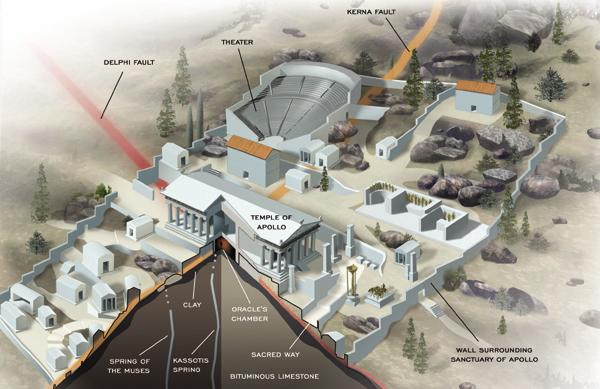
At the heart of this site was the Oracle of Apollo, where a priestess known as the Pythia delivered prophecies that shaped decisions across the Greek world.
The Power of Prophecy
Leaders, generals, and citizens traveled great distances to seek guidance from the Oracle. Its influence extended to:
Military campaigns
Political decisions
Colonization efforts
The words spoken at Delphi were often ambiguous, allowing for multiple interpretations—but they were taken very seriously.
The Ritual Process
The Pythia would enter a sacred chamber, sit on a tripod, and deliver her prophecy in a trance-like state. Priests would then interpret her words for those seeking answers.
This ritual added to the sense of mystery and divine authority.
The Scientific Theory
Modern researchers have proposed that natural gases may explain the Pythia’s trance.
Geological studies suggest that the site sits above fault lines that could release gases such as ethylene. In small doses, these gases can induce altered states of consciousness.
This theory suggests that the Oracle’s visions may have had a natural origin.
Faith and Interpretation
Whether divine or scientific, the Oracle’s power lay in belief. People trusted its authority, and that trust shaped real-world decisions.
A Blend of Nature and Culture
It is possible that both explanations are true in different ways. Natural phenomena may have contributed to the experience, while cultural beliefs gave it meaning and authority.
Lasting Influence
The Oracle of Delphi remained active for centuries, leaving a lasting impact on Greek history and culture.
Mystery That Endures
Even today, Delphi continues to inspire debate. Was it a sacred connection to the divine, or an early example of natural phenomena interpreted through belief?
The answer may lie somewhere in between—but the mystery is part of what makes Delphi so fascinating.