Every civilization has developed stories about the origins of the universe and the divine beings who shaped it. Despite cultural differences, many of these myths share surprisingly similar themes.
In ancient Mesopotamia, creation stories describe primordial gods emerging from a cosmic ocean. One of the central deities in these myths is Tiamat, a powerful being representing the chaotic waters of creation.
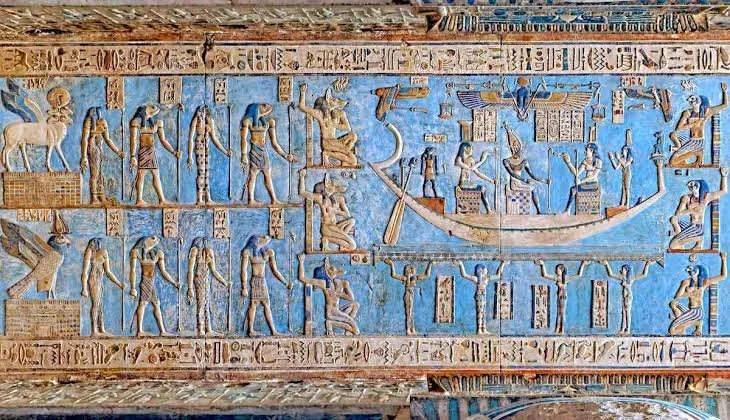
Egyptian mythology likewise describes the universe beginning within a vast primordial ocean called Nun, from which the creator god Atum emerged to bring order to the cosmos.
In Hindu cosmology, the universe begins with the cosmic being Brahma, who shapes the world through divine thought and speech.
Although these myths differ in detail, they often describe similar ideas: the universe emerging from chaos, divine beings shaping order, and humanity arising within a cosmic framework governed by higher powers.
Comparing these myths helps scholars understand how ancient societies interpreted the mysteries of existence long before scientific explanations developed.