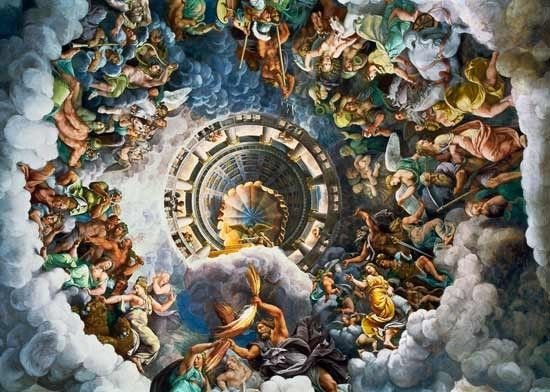
The Hellenistic World After Alexander
Following Alexander the Great’s conquests in the 4th century BCE, Greek culture spread across a vast region stretching from the Mediterranean to South Asia. This era, known as the Hellenistic period, was marked by intense cultural interaction. Rather than replacing local traditions, Greek beliefs blended with existing religious systems, creating new syncretic traditions.
Greek and Egyptian Religious Fusion
In Egypt, Greek rulers adopted local religious customs to legitimize their authority. The god Serapis was created as a fusion of Greek and Egyptian deities, combining aspects of Zeus, Osiris, and Apis. Greek-style temples housed Egyptian gods, while Egyptian iconography adapted to Greek artistic styles. This blending allowed both cultures to coexist within a shared religious framework.
Persian Influences on Greek Thought
Greek contact with Persian religion introduced concepts such as cosmic dualism, divine judgment, and moral struggle. Zoroastrian ideas influenced later Hellenistic philosophy, particularly concepts of good versus evil and the afterlife. These themes gradually entered Greek philosophical and religious discourse.
Greek and Indian Religious Exchange
In regions such as Bactria and northwest India, Greek settlers encountered Hindu and Buddhist traditions. Greek artistic styles influenced Buddhist iconography, leading to the first human representations of the Buddha. Philosophical exchanges also occurred, with Greek skepticism and Indian metaphysics shaping each other’s ideas.
Impact on Philosophy and Spiritual Practice
Hellenistic syncretism encouraged philosophical schools like Stoicism and Neoplatonism, which incorporated Eastern ideas about fate, harmony, and the soul. Mystery religions flourished, offering personal salvation and spiritual transformation across cultural boundaries.
Long-Term Significance
Religious syncretism during the Hellenistic period laid the foundation for later religious developments, including Roman religion and early Christianity. It demonstrated how cultural interaction can produce enduring spiritual and philosophical traditions.