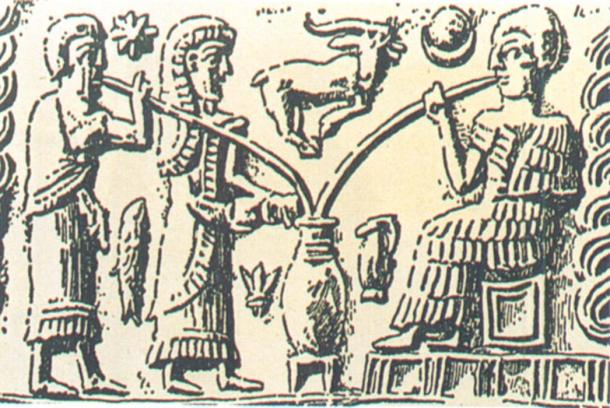
Beer as a Staple of Daily Life
– Beer was consumed by all social classes, from common laborers to royalty, due to its nutritional value and safer quality compared to untreated water.
– Workers were often paid in beer rations, sometimes receiving several liters per day.
– Brewing was primarily a domestic activity early on, later expanding into temple economies and specialized breweries.
Religious and Ritual Significance
– Beer played a key role in offerings to gods such as Ninkasi, the goddess of brewing and fermentation.
– Hymns and prayers were dedicated to beer, including the famous Hymn to Ninkasi, which doubles as both praise and a recipe.
– Ritual feasts, sacred banquets, and funerary ceremonies often required large quantities of beer to honor ancestors and deities.
Brewing Techniques and Ingredients
– Mesopotamian beer was made from fermented barley bread, malted grains, dates, and sometimes aromatic herbs.
– The resulting drink was thick, porridge-like, and consumed with straws to avoid sediment.
– Large clay vats, fermentation jars, and brewing installations have been found in archaeological sites, showing an advanced understanding of fermentation.
Economic and Social Impact
– Beer production supported a wide network of workers, including farmers, maltsters, brewers, transporters, and temple administrators.
– Beer was essential in trade, taxation, and temple redistribution systems.
– The beverage helped shape early urban economies and contributed to social cohesion in ancient cities.