Mysterious Origins of the Sculptures
– The stone statues of San Agustín, carved between 1 CE and 900 CE, were created by a culture whose identity remains largely unknown.
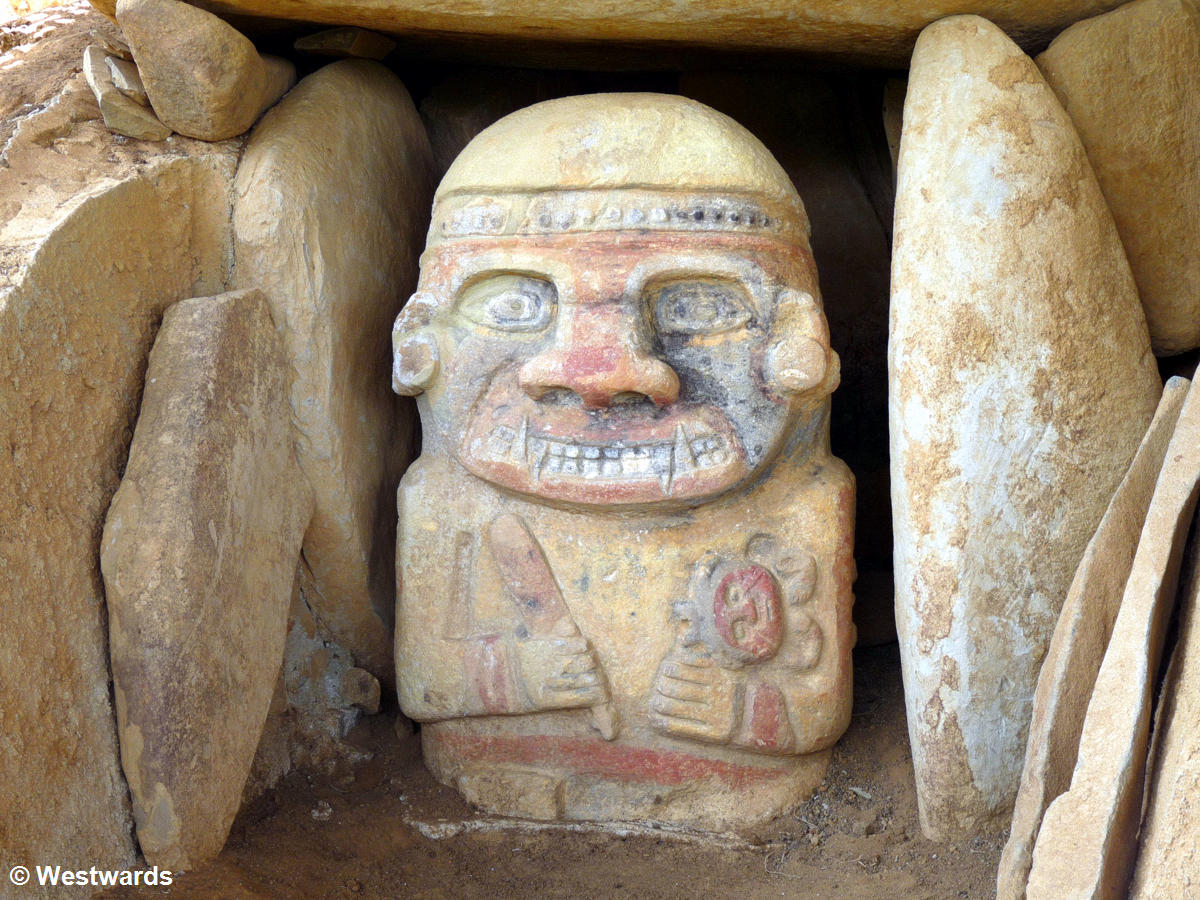
– These monumental figures range from 1 to 7 meters in height, some depicting warriors, shamans, deities, and zoomorphic guardians.
– The absence of written records has left scholars uncertain about the cultural purpose or spiritual meaning behind the sculptures.
Symbolism and Artistic Style
– Many statues incorporate fierce expressions, exaggerated facial features, and intricate carvings representing jaguars, snakes, birds, and mythical hybrids.
– The figures were positioned as guardians near burial mounds, indicating they likely served a protective or ritual function.
– The repeated appearance of fangs, clawed hands, and supernatural traits suggests a belief system centered on transformation, shamanic power, and the afterlife.
Archaeological Context
– Excavations revealed that the statues were arranged as part of complex ceremonial centers featuring tombs, terraces, and processional paths.
– Some statues align with cosmic directions, hinting at astronomical significance or seasonal rituals.
– Stone monuments were often placed at entrances to sacred sites, symbolizing thresholds between the living world and ancestral realms.
Cultural Importance Today
– San Agustín Archaeological Park is a UNESCO World Heritage Site, preserving the largest collection of megalithic sculptures in South America.
– The stone giants offer rare insights into a civilization that vanished long before European contact.
– Scholars continue to study the statues to understand South America’s prehistoric religious systems and artistic traditions.