Small lakes have occupied distinctive places in the landscapes of Eurasia, from glacial basins and forest wetlands to mountain tarns and shallow lowland pools. Their isolation, changing water levels, and distinctive surroundings may have made them important locations for particular cultural activities. Archaeological discoveries of objects deposited in lakes or along their margins have encouraged researchers to investigate whether some aquatic environments were used for ritual practices. These deposits can include metal objects, weapons, ornaments, pottery, animal remains, and other materials. However, not every object found in a lake represents a ritual offering, and interpreting such deposits requires careful attention to context and environmental processes.
Ritual deposition generally refers to the deliberate placement of objects in a setting as part of a meaningful social or ceremonial act. In archaeological contexts, deliberate deposition may be suggested by repeated patterns, unusual combinations of materials, carefully arranged objects, or locations that differ from ordinary settlement refuse. Small lakes could have provided settings for such practices because water bodies often formed distinctive boundaries between land and aquatic environments. Yet the symbolic significance of water cannot be assumed to have been identical across Eurasian societies. Researchers need to investigate the cultural and chronological context of each deposit rather than applying a universal interpretation.
The archaeological record of lake deposits is strongly influenced by preservation. Waterlogged sediments can preserve wood, plant remains, textiles, and other organic materials that would usually decay on dry land. Low-oxygen conditions may slow decomposition, although preservation varies substantially between lakes. In some environments, mineral-rich water can alter or coat deposited objects, while fluctuating water levels can expose them to erosion and physical damage. Sediment cores and environmental sampling help establish the conditions under which objects were buried and whether the lake environment has changed since their deposition.
One of the main challenges is determining whether an object entered a lake intentionally or through ordinary human activity. A metal tool may have been deliberately offered, accidentally lost while fishing, dropped from a boat, or washed into the water during a flood. Similarly, pottery fragments may represent ritual activity, domestic waste, or material eroded from a nearby settlement. Archaeologists therefore consider the number and condition of the objects, their spatial arrangement, their relationship to nearby shorelines, and the presence of other archaeological features. Repeated deposition of particular object types in a specific location may support a ritual interpretation, but the evidence must still be assessed in its broader setting.
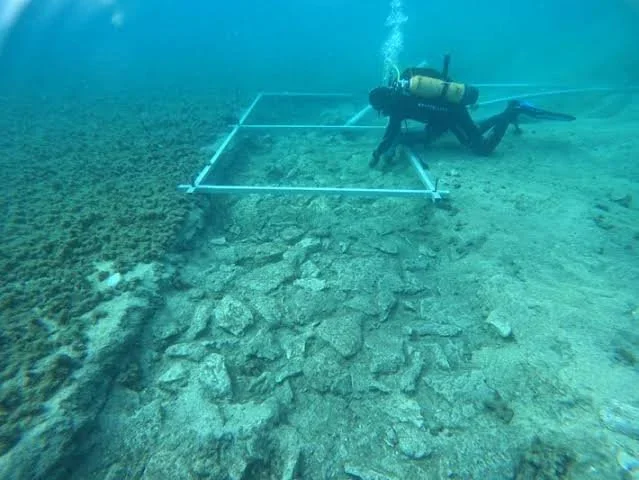
The distribution of deposits around a lake can reveal how people interacted with the water's edge. Objects concentrated near an inlet, island, shallow platform, or sheltered shoreline may indicate that a particular location was repeatedly visited. Researchers can compare these concentrations with evidence of paths, landing places, settlements, and other features that may have made access easier. Underwater survey can identify submerged structures or artifacts that are invisible from the shore. However, the apparent location of a deposit may have changed as sediment accumulated, shorelines shifted, or water levels rose and fell.
Chronology is essential for understanding whether lake deposition formed a continuous practice or occurred during a limited period. Radiocarbon dating of suitable organic material may help establish when a deposit formed, while typological comparisons can provide approximate dates for objects. Dendrochronology may offer more precise information when preserved wooden objects contain suitable tree rings and can be matched with reference chronologies. Archaeologists must distinguish the date when an object was manufactured from the date when it was deposited. An older object could have remained in use or storage for many years before being placed in the lake.
The relationship between lake deposits and settlement life is another important area of research. Some lakes lie near settlements where people obtained food, water, or transport routes, while others occupy more isolated landscapes. A deposit near a habitation site may have been associated with household or community activities, whereas a deposit in a remote location may suggest a different pattern of use. Nevertheless, distance alone does not establish ritual significance. Remote places can be used for fishing, hunting, resource collection, or temporary shelter, while ritual activities can take place within ordinary settlements. Archaeological evidence must determine which explanations are most plausible.
Small lakes may also have been affected by political, economic, and social changes. The deposition of valuable objects could have been connected to periods of conflict, community transitions, or changes in the organization of exchange. In some cases, repeated deposits of weapons or ornaments may indicate practices involving status, commemoration, or the transformation of possessions into offerings. These possibilities should not be treated as established explanations without supporting evidence. The same category of object can carry different meanings across societies and periods, and an apparent pattern may result from differences in archaeological recovery or preservation.
Environmental archaeology provides a means of reconstructing the surroundings in which lake deposits occurred. Pollen, seeds, charcoal, diatoms, and other biological indicators can reveal changes in vegetation, fire activity, water quality, and land use. These records may help determine whether a lake was surrounded by forest, open grassland, cultivated land, or a changing wetland environment when objects were deposited. Such information can clarify how people accessed the lake and whether human activity altered its margins. It can also help explain why a deposit survived in one location but was displaced or destroyed in another.
The study of small lakes across Eurasia demonstrates the importance of interpreting aquatic deposits through multiple lines of evidence. Some deposits may reflect deliberate ritual activity, while others result from accidental loss, settlement disposal, or environmental movement. Archaeologists can develop stronger interpretations by combining underwater survey, sediment analysis, artifact study, chronology, and landscape reconstruction. These methods help reveal how communities interacted with lakes as places of practical activity and, in some cases, as settings for culturally significant acts. The broader lesson is that the meaning of an archaeological deposit emerges from its relationship to people, places, and historical circumstances rather than from the presence of an object in water alone.