Introduction: The Epicenter of Mass Entertainment
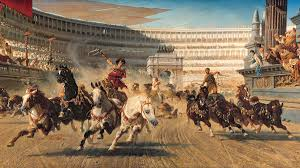
Nestled in the natural valley between the Palatine and Aventine hills in Rome sits the Circus Maximus (Circus Maximus). While the Colosseum is often celebrated as the definitive arena of Roman spectacle, it was dwarfed in both physical scale and cultural popularity by the Circus. Measuring over 2,000 feet (600 meters) in length and nearly 400 feet (118 meters) in width, it was the largest stadium in the entire Roman Empire, capable of accommodating over 150,000 seated spectators—with some historical estimates pushing that number closer to 250,000.
Chariot racing (ludi circenses) was Rome’s true national obsession, cutting across lines of gender, class, and political status. In the Circus Maximus, common plebeians sat directly alongside aristocratic senators to witness high-velocity, lethal spectacles. The stadium was a triumph of engineering and a complex economic micro-city, functioning as a high-stakes arena where driving factions vied for imperial favor, drivers achieved unimaginable wealth, and emperors controlled the volatile passions of the Roman masses through the calculated policy of "bread and circuses" (panem et circenses).
1. Architectural Anatomy: The Anatomy of the Track
The design of the Circus Maximus evolved over centuries, transforming from an open-air dirt track into a monumental, multi-tiered stone masterpiece under Julius Caesar and the Emperor Trajan. Its structural layout was highly specialized to optimize both athletic competition and spectator safety.
The Carceres (Starting Gates): Located at the open, wide end of the stadium was a curved row of 12 vaulted starting gates known as carceres (literally "prisons"). The gates were arranged in a precise geometric arc to ensure that every chariot, regardless of its lane assignment, stood at an mathematically equal distance from the starting line.
The Spina (The Central Backbone): Running down the center of the track at a slight diagonal was a massive stone barrier called the spina (spine). The spina divided the track into distinct inbound and outbound lanes. It was decorated with lavish trophies of empire, including fountains, shrines, and towering Egyptian obelisks imported by emperors like Augustus and Constantius II.
The Metae (Turning Posts): At either end of the spina stood the metae—three colossal, conical bronze or stone pillars mounted on heavy stone bases. These turning posts marked the most dangerous zones on the track, where drivers had to execute tight, high-speed 180-degree turns while closely packed together.
The Cavea (The Seating Tiers): The stadium seating was divided into three distinct vertical zones based on social class. The lowest tiers were made of solid marble and reserved for senators and knights. Above them rose the stone tiers for the ordinary citizens, topped by a wooden upper gallery for the poorest plebeians and women.
2. The Mechanics of the Race
A standard race day at the Circus Maximus featured 24 individual races, each conducted with ritualistic, military precision.
The Procession (Pompa Circensis): Before the horses stepped onto the track, a grand religious parade marched through the city gates into the Circus. Led by the emperor or a high magistrate, the procession included musicians, dancers, athletes, and priests carrying the statues of the gods, validating the sporting event as a holy festival.
The Mappa Drop: The race commenced when the presiding magistrate dropped a white cloth, known as a mappa, from his high viewing box above the starting gates. This visual signal triggered a system of spring-loaded mechanics that caused the wooden doors of all 12 carceres to snap open simultaneously.
The Lap Counters: A standard race consisted of seven consecutive laps around the spina, totaling roughly 3.5 miles (5.6 kilometers). To track the progress of the race for the massive crowd, the spina featured two unique mechanical counting systems: seven large bronze eggs (ova) that were lowered one by one, and seven bronze dolphins that were rotated forward to honor Neptune, the patron god of horses.
3. The Chariot Factions: The Big Four
Chariot racing was completely dominated by four massive, state-regulated enterprises known as factions (factiones). Each faction was defined by a specific color, and fans wore these colors with an intensity that frequently boiled over into violent, urban street riots.
The Reds (Russata) and Whites (Albata): The oldest, foundational factions of the republic, traditionally representing summer (red) and winter (white).
The Blues (Veneta) and Greens (Prasina): The economic and political titans of the Imperial Era. The Greens were fiercely supported by the common working classes and several emperors (like Caligula and Nero), while the Blues tended to align with the conservative aristocracy.
The Corporate Ecosystem: Factions were not merely sports teams; they were massive corporate conglomerates. They owned sprawling breeding farms across North Africa and Spain, employed armies of veterinary surgeons, horse trainers, leather smiths, and talent scouts, and systematically managed the immense betting economies that ran rampant throughout the city.
4. The Driver's Trade: Lethal Professionalism
The men who drove the chariots, known as aurigae or agitatores, were almost exclusively slaves or freedmen. Despite their low legal status, successful drivers became the most celebrated celebrities in the Roman world, their names inscribed on monuments and their faces painted on public murals.
The Weaponry and Rigging: Unlike Greek drivers who held the reins loosely in their hands, a Roman driver wrapped the thick leather reins tightly around his own waist to leverage his entire body weight for steering. While this gave the driver immense control, it carried a catastrophic risk: if the chariot flipped, the driver would be dragged to death by his own horses. To prevent this, Roman drivers always carried a sharp, curved knife (falx) tucked into their chest bandages to cut themselves free in an emergency.
The Naufragia (Shipwrecks): The catastrophic crashes that occurred around the metae turning posts were known as naufragia (literally "shipwrecks"). Drivers would intentionally crowd their rivals against the stone pillars, attempting to smash their wheels and cause pile-ups, much to the bloodthirsty delight of the crowd.
The Scorpus and Diocles Legacies: The rewards for surviving these shipwrecks were astronomical. The famous 2nd-century driver Gaius Appuleius Diocles competed for 24 years, winning 1,462 of his 4,257 races. Upon retirement, his accumulated prize winnings totaled over 35 million sesterces—a sum large enough to personally feed the entire city of Rome for a year, making him the wealthiest athlete in human history.
5. The Structural Evolution: Engineering Challenges
Managing a stadium of such immense proportions required sophisticated structural engineering, particularly regarding crowd control, emergency evacuation, and hydraulic management.
Vomitoria (Exits): Like the Colosseum, the Circus Maximus utilized a complex matrix of internal vaulted staircases and exit tunnels called vomitoria. The geometry of these tunnels allowed the stadium to be emptied entirely of its 150,000+ spectators in less than 30 minutes, preventing deadly human stampedes.
The Cloaca Maxima Integration: The Circus sat in a low-lying valley that naturally collected rainwater from the surrounding hills. To keep the track dry and firm, Roman engineers routed branches of the Cloaca Maxima (the great sewer line) directly beneath the stadium floor. This network of subterranean stone vaults continuously drained excess groundwater away into the Tiber River.
The Safety Moat: To protect the elite senators sitting in the front rows from runaway horses or loose animals during the hunting spectacles (venationes) that were occasionally held on the track, Julius Caesar excavated a 10-foot-wide, 10-foot-deep water canal (euripus) between the track and the stone seats. This moat acted as an impenetrable psychological and physical barrier for the beasts.
6. The Circus as a Social Microcosm
The Circus Maximus was unique because it was the only public venue in Rome where men and women were permitted to sit together without segregation. This turned the stadium into the premier social hub of the capital.
The poet Ovid wrote extensive advice on how to use the crowded benches of the Circus to pick up lovers, noting that the tight seating forced people close together, and that brushing dust off a neighbor's cloak or adjusting their cushion was an ideal way to strike up a conversation.
Beyond romance, the exterior of the stadium was framed by a massive, two-story arcade packed with commercial businesses. When the races were happening, the outside arches functioned as a bustling bazaar filled with taverns, cookshops, astrology booths, brothels, and money-lenders, making the Circus Maximus the continuous, throbbing engine of Roman street life.