The English word "palace" directly derives from the Palatine Hill (Palatium in Latin). For over four centuries, this single hill in the center of Rome served as the absolute epicenter of the Western world.
What began as an exclusive neighborhood for wealthy Republican senators eventually transformed into a massive, interconnected mega-structure of imperial power. Today, the Palatine Hill is one of the most active and continuously revealing archaeological sites in Europe.
1. The Evolution of the Imperial Residences
The Palatine wasn't built in a day, nor was it built by a single emperor. It is a complex stratigraphy of different palaces built, buried, and built over by successive dynasties.
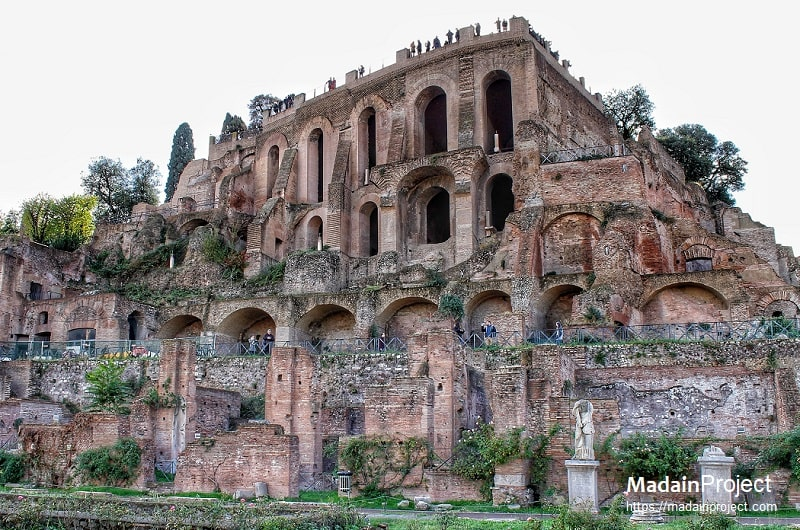
On the Palatine Hill, the evolution of the imperial palace complex reflected the growing power of the Roman emperors. The relatively modest House of Augustus, built by Augustus (r. 27 BCE–14 CE), emphasized intimate spaces and richly painted mythological frescoes, reinforcing Augustus’s carefully crafted image as merely the “first citizen” rather than a monarch. In the 1st century CE, the Domus Tiberiana, associated with Tiberius and later Nero, became the first truly large-scale imperial residence, marked by enormous substructures overlooking the Roman Forum and incorporating administrative and service areas. Under Domitian (r. 81–96 CE), the palace reached its architectural and political height with the Domus Augustana and Domus Flavia, designed by the architect Rabirius and distinguished by grand audience halls and the vast palace stadium, serving as the empire’s official state residence for centuries. Finally, the Domus Severiana, constructed by Septimius Severus (r. 193–211 CE), dramatically expanded the palace complex through massive brick arcades and artificial terraces that extended the hill outward above the Circus Maximus.
2. From Mud to Marble: The Mythic Origins
Before it was an imperial seat, the Palatine was the mythical birthplace of Rome. According to legend, it was in a cave at the base of this hill—the Lupercal—that the she-wolf nursed the infant twins Romulus and Remus.
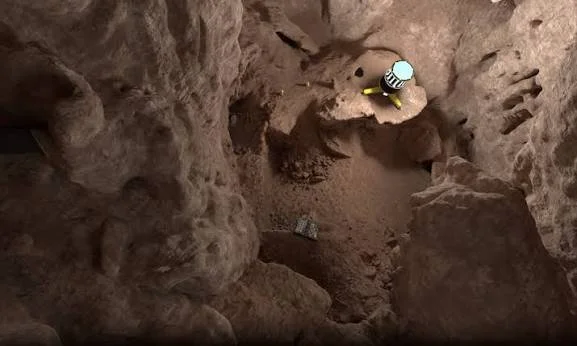
Modern archaeology has surprisingly validated the timeline of the myth. Excavations on the southwestern corner of the hill have uncovered post-holes cut directly into the bedrock. These are the Casa Romuli (Huts of Romulus), the remnants of Iron Age wattle-and-daub huts dating back to the 8th century BCE—the exact time period Roman historians claimed Romulus founded the city. The Romans revered these post-holes, preserving them untouched even as massive marble palaces were erected around them.
3. Recent Excavations and the "SUPER" Sites
Because the Palatine was continuously occupied—eventually becoming the Farnese Gardens in the 16th century—excavating it requires carefully peeling back layers of history. Recent years have seen massive breakthroughs in restoring and opening restricted areas.
The Resurrection of the Domus Tiberiana (2023): For nearly 50 years, the Domus Tiberiana was closed to the public due to severe structural instability. In late 2023, following decades of geotechnical stabilization and excavation, it finally reopened. The excavations shed new light on the "city inside the palace," uncovering everything from ancient oyster shells and amphorae to cult spaces dedicated to the Egyptian goddess Isis.
The Senatorial Mosaic (Late 2023/2024): In a recently excavated late-Republican domus near the Palatine, archaeologists uncovered a pristine, 16-foot-long rustic mosaic wall. Made of shells, coral, Egyptian blue tiles, and glass, it depicts a coastal city and sea battles—a perfect time capsule of aristocratic luxury just before the imperial palaces took over the hill.
The "SUPER" Sites: The archaeological park now manages several hyper-sensitive sites on the hill that require special access to protect their fragile environments. This includes the heavily frescoed House of Augustus and the Aula Isiaca, an underground hall displaying the transition from private patrician homes to imperial foundations.
Beneath the crumbling brick arches visible today lie the subterranean corridors (cryptoportici) where emperors like Caligula were assassinated, and where the grinding bureaucratic machinery that ran an empire spanning from Scotland to Syria was housed.