• MAIN PAGE
  • LATEST NEWS
    • Lost Cities
    • Archaeology's Greatest Finds
    • Underwater Discoveries
    • Greatest Inventions
    • Studies
    • Blog
  • PHILOSOPHY
  • HISTORY
  • RELIGIONS
    • Africa
    • Anatolia
    • Arabian Peninsula
    • Balkan Region
    • China - East Asia
    • Europe
    • Eurasian Steppe
    • Levant
    • Mesopotamia
    • Oceania - SE Asia
    • Pre-Columbian Civilizations of America
    • Iranian Plateau - Central Asia
    • Indus Valley - South Asia
    • Japan
    • The Archaeologist Editor Group
    • Scientific Studies
    • Aegean Prehistory
    • Historical Period
    • Byzantine Middle Ages
    • Predynastic Period
    • Dynastic Period
    • Greco-Roman Egypt
  • Rome
  • PALEONTOLOGY
  • About us
Menu

The Archaeologist

  • MAIN PAGE
  • LATEST NEWS
  • DISCOVERIES
    • Lost Cities
    • Archaeology's Greatest Finds
    • Underwater Discoveries
    • Greatest Inventions
    • Studies
    • Blog
  • PHILOSOPHY
  • HISTORY
  • RELIGIONS
  • World Civilizations
    • Africa
    • Anatolia
    • Arabian Peninsula
    • Balkan Region
    • China - East Asia
    • Europe
    • Eurasian Steppe
    • Levant
    • Mesopotamia
    • Oceania - SE Asia
    • Pre-Columbian Civilizations of America
    • Iranian Plateau - Central Asia
    • Indus Valley - South Asia
    • Japan
    • The Archaeologist Editor Group
    • Scientific Studies
  • GREECE
    • Aegean Prehistory
    • Historical Period
    • Byzantine Middle Ages
  • Egypt
    • Predynastic Period
    • Dynastic Period
    • Greco-Roman Egypt
  • Rome
  • PALEONTOLOGY
  • About us

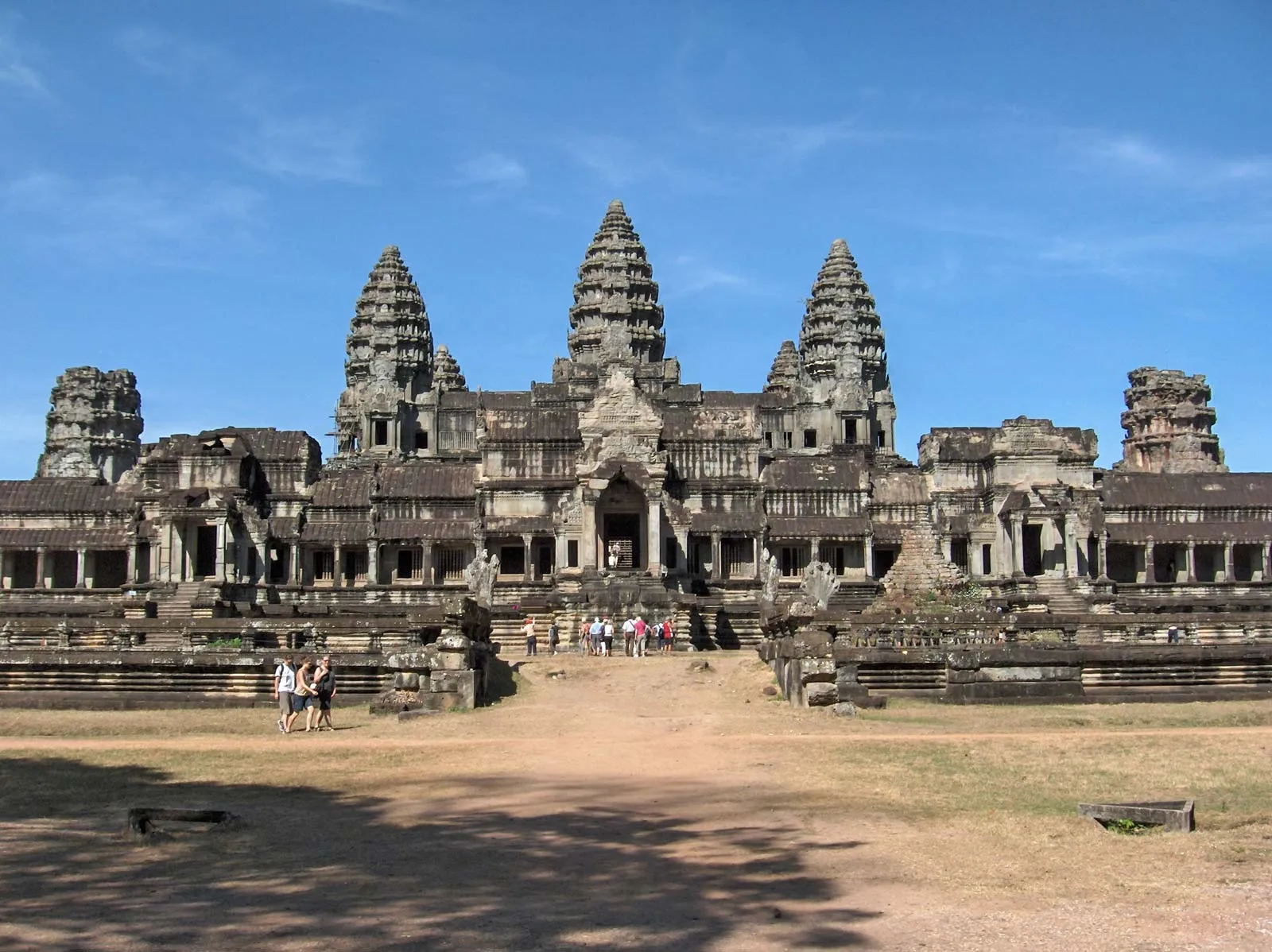
The Sacred Temples of Angkor Wat

November 29, 2025

Exploring Its History, Architecture, and Spiritual Meaning

Angkor Wat stands as one of the greatest achievements of the Khmer Empire and a symbol of Cambodia’s identity.

Historical Origins

Built in the 12th century under King Suryavarman II, Angkor Wat was originally dedicated to Vishnu. It later became an important Buddhist center.

Architectural Marvel

The temple complex showcases:

  • Intricate bas-reliefs

  • Towering sandstone structures

  • Precise astronomical alignments

  • A vast moat symbolizing the cosmic ocean

Its layout represents the Hindu universe, with Mount Meru reflected in its central towers.

Spiritual Legacy

Beyond its architectural beauty, Angkor Wat serves as a living symbol of faith, resilience, and cultural heritage, drawing millions of visitors and worshippers each year.


← The Role of Salt in Ancient EconomiesThe Legend of the Sword in the Stone →
Featured
image_2026-02-27_171558757.png
Feb 27, 2026
Prehistoric Toolkits That Shouldn’t Exist
Feb 27, 2026
Read More →
Feb 27, 2026
image_2026-02-27_165950329.png
Feb 27, 2026
The Oldest Evidence of Organized Sports
Feb 27, 2026
Read More →
Feb 27, 2026
image_2026-02-27_163102381.png
Feb 27, 2026
The Forgotten Woodlands Civilizations
Feb 27, 2026
Read More →
Feb 27, 2026
image_2026-02-27_161538661.png
Feb 27, 2026
The World’s First Secret Societies
Feb 27, 2026
Read More →
Feb 27, 2026
image_2026-02-27_161134911.png
Feb 27, 2026
The Lost Stone Calendars That Measured Eternity
Feb 27, 2026
Read More →
Feb 27, 2026
image_2026-02-27_154831730.png
Feb 27, 2026
Ancient Children’s Toys That Survived Millennia
Feb 27, 2026
Read More →
Feb 27, 2026
read more

Powered by The archaeologist