During the Bronze Age, communities across many regions developed different ways to protect settlements, resources, and important routes. While some societies constructed large defensive centers with substantial walls and imposing gateways, others relied on smaller fortifications around villages, hilltop communities, agricultural settlements, and strategically located outposts. These modest defensive structures are important because they reveal how communities responded to insecurity without necessarily possessing the labor force or resources required for monumental construction. Their remains can help archaeologists investigate local defense, social organization, settlement hierarchy, and the relationship between peripheral communities and larger political centers.
The term peripheral settlement describes a community situated outside a major political, economic, or administrative center. Such settlements might have occupied borderlands, mountain valleys, coastal zones, agricultural frontiers, or routes connecting different regions. Their location did not necessarily mean that they were isolated or politically unimportant. Some peripheral communities controlled access to valuable resources, while others connected distant settlements through trade and movement. Small fortifications in these areas may have helped protect residents, livestock, stored crops, and other resources, although the purpose of each structure must be established through archaeological evidence.
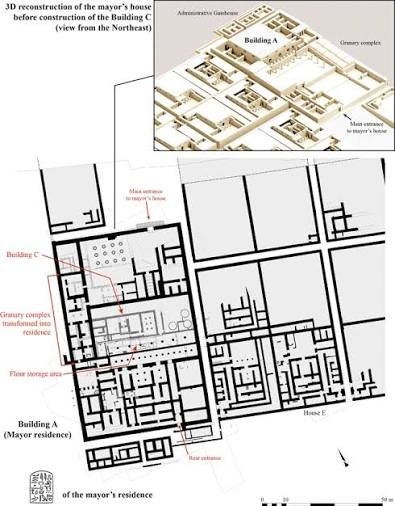
Identifying Bronze Age fortifications can be difficult because defensive features often resemble ordinary settlement boundaries. Ditches, earthen banks, stone walls, and timber palisades could have served to control livestock, mark property, prevent erosion, or define domestic space. A defensive interpretation becomes more convincing when the structure occupies a strategically advantageous position, restricts access to the settlement, or includes features designed to strengthen protection. Archaeologists examine the width and depth of ditches, the thickness of walls, the arrangement of entrances, and the relationship between defensive structures and nearby buildings. Evidence of burning, projectiles, or destruction may contribute to the interpretation, but none of these features alone proves that a settlement experienced an attack.
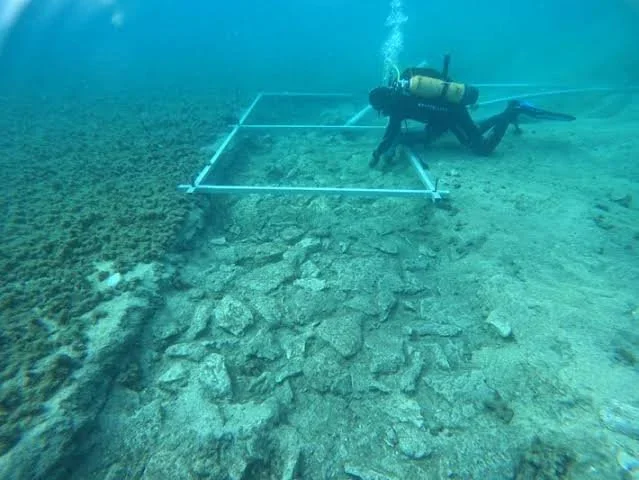
The construction materials used for small fortifications depended on local geology, vegetation, and available labor. Communities with access to suitable stone might construct dry-stone walls or reinforce earthen banks with masonry. In wooded environments, timber posts and palisades could provide barriers that were relatively quick to build. Some settlements may have combined ditches, banks, and wooden structures to create multiple obstacles. Archaeological preservation varies considerably, however, and timber defenses may survive only as postholes, discolorations in the soil, or traces of decayed wood. Reconstructing their original appearance therefore requires careful excavation and comparison with other securely identified structures.
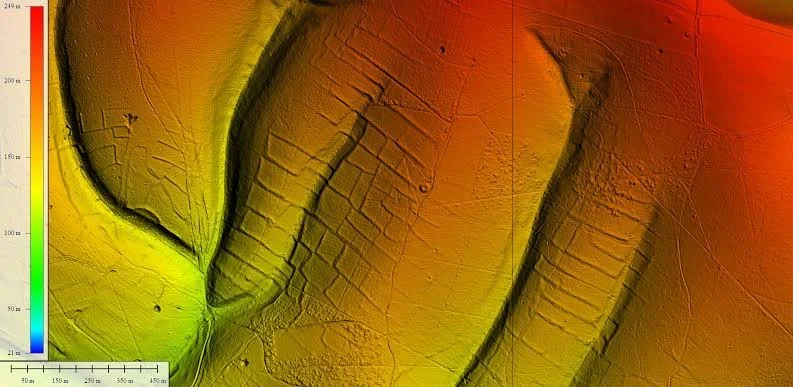
The position of a fortification within the landscape can reveal the kinds of threats or strategic concerns that its builders considered important. Hilltop settlements may have benefited from elevated views and difficult approaches, while communities near river crossings or narrow passes could have controlled movement through a region. Defensive structures located near agricultural fields might have helped protect harvests or livestock during periods of insecurity. Researchers can use geographic information systems and terrain analysis to examine visibility, slope, and access routes. Nevertheless, an elevated position does not automatically indicate a military purpose, since hilltops may also offer fertile land, water access, or advantages for ordinary settlement.
Small fortifications also raise questions about the organization of labor. Even a modest wall or ditch required planning, material collection, construction skills, and maintenance. The work may have been carried out by households, local leaders, community groups, or people operating under the authority of a larger political organization. Archaeological evidence rarely identifies the exact arrangements behind construction, but the scale of the project, the consistency of building techniques, and the presence of specialized features can help researchers assess the likely level of coordination. Repeated repairs may indicate that residents maintained the defenses over several generations or rebuilt them in response to changing circumstances.
The relationship between peripheral fortifications and larger Bronze Age centers is particularly important. Some small settlements may have formed part of wider territorial systems, protecting access to trade routes, mineral resources, or agricultural production. Others may have developed local defenses independently in response to disputes or environmental pressures. Similar construction methods across several sites could indicate shared technical knowledge, political connections, or imitation, but they do not automatically demonstrate centralized control. Archaeologists need to compare chronology, settlement patterns, material culture, and the distribution of resources before drawing conclusions about regional organization.
Evidence of conflict must be interpreted cautiously. Burned buildings, abandoned settlements, damaged walls, and concentrations of weapons can be consistent with violent events, but other explanations are possible. Accidental fires, structural failures, changing economic conditions, and environmental disasters can also lead to settlement abandonment or destruction. Where human remains display injuries associated with violence, they may provide more direct evidence of conflict, although the circumstances of those injuries still require investigation. A fortified settlement could have been built in anticipation of danger without ever experiencing a recorded attack.
Chronology can reveal whether a fortification was constructed during the initial settlement phase or added later. Radiocarbon dating of suitable organic material, analysis of associated pottery, and the study of construction layers can help establish the sequence of events. Researchers must distinguish the date of the original structure from later repairs, extensions, or rebuilding. A wall may have continued in use long after its initial construction, and some defenses may have been repurposed as property boundaries once their defensive role ended. Understanding these changes helps reconstruct how the settlement responded to shifting political and economic conditions.
Small-scale fortifications in Bronze Age peripheral settlements provide evidence of local decision-making and adaptation. Their modest size does not diminish their historical importance; instead, it offers a perspective on how communities protected themselves within varied landscapes and political circumstances. By combining architectural analysis, spatial reconstruction, scientific dating, and careful evaluation of evidence for conflict, archaeologists can investigate the reasons behind their construction and maintenance. These structures help demonstrate that Bronze Age defense was not limited to monumental citadels but could also depend on practical, locally organized measures designed to meet the needs of smaller communities.