A new book by historian and archaeologist Eve MacDonald paints a more complete portrait of the once-great African society destroyed by Rome
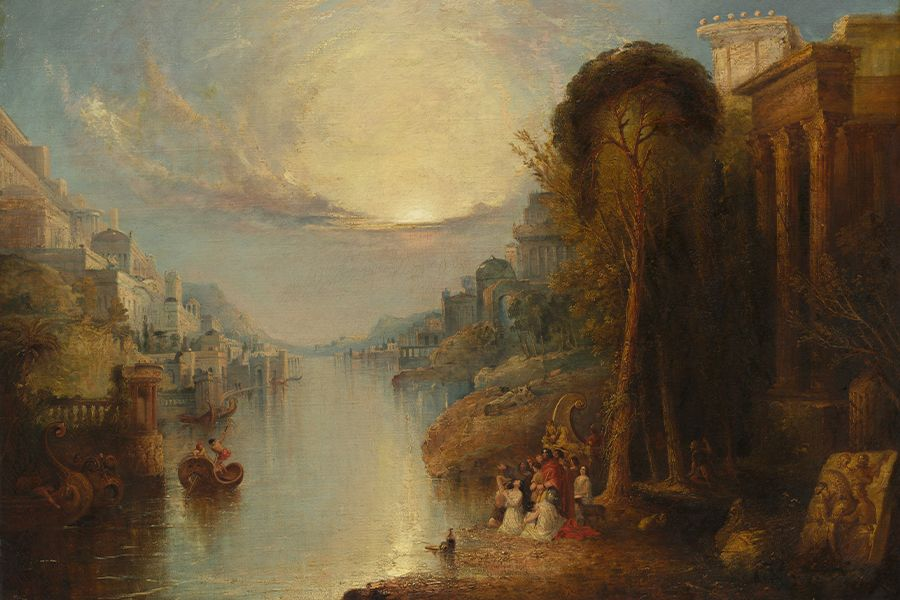
A vision of ancient Carthage, attributed to the painter William Linton
Around 310 B.C.E., Carthage came under siege by Agathocles of Syracuse and his forces. According to the ancient historian Diodorus, the Carthaginians, believing their gods had abandoned them, became so desperate to regain divine favor that they sacrificed 200 children. However, no archaeological evidence has ever confirmed such an event. In her new book, Canadian-British historian and archaeologist Eve MacDonald argues that this horrific account was likely “an imagined scene by a hostile ancient source.”
That source, of course, was Rome, which would later destroy Carthage in the Third Punic War from 149 to 146 B.C.E. Roman leaders sought to depict Carthage and its citizens not as real people, but as a savage enemy, MacDonald writes, using the city’s image to bolster Roman morale. In Carthage: A New History of an Ancient Empire, she draws on archaeological work from the past two decades, including her own, to offer a fuller, more nuanced portrait of the city and its inhabitants.
MacDonald traces Carthage’s story from its Phoenician founding in the ninth century B.C.E. to the myths—and possible truths—surrounding Dido, the political figure from Tyre who became its legendary queen. She explores the city’s rise as a naval power, its eventual destruction, and the first century after its fall, when Punic language and culture continued to influence North Africa. “It is believed that Africa was never so Punic as it was after Carthage was destroyed,” she notes, as surviving Carthaginians formed a kind of Punic diaspora.
“New archaeology and old literature present a different Carthage in the postwar years,” MacDonald writes. Recent isotopic analyses, for instance, show that Carthage could draw on substantial local resources, such as lead-silver mining, even when trade was restricted during wartime.
Her book is ambitious, focusing as much on sailors and soldiers as on generals and aristocrats. “The Roman memories only ever told one side of the story,” she observes. “The complexity of this once-great, sophisticated, and multicultural African city—with its innovative technologies, courageous warriors, and deep religious beliefs—was lost.”