• MAIN PAGE
  • LATEST NEWS
    • Lost Cities
    • Archaeology's Greatest Finds
    • Underwater Discoveries
    • Greatest Inventions
    • Studies
    • Blog
  • PHILOSOPHY
  • HISTORY
  • RELIGIONS
    • Africa
    • Anatolia
    • Arabian Peninsula
    • Balkan Region
    • China - East Asia
    • Europe
    • Eurasian Steppe
    • Levant
    • Mesopotamia
    • Oceania - SE Asia
    • Pre-Columbian Civilizations of America
    • Iranian Plateau - Central Asia
    • Indus Valley - South Asia
    • Japan
    • The Archaeologist Editor Group
    • Scientific Studies
    • Aegean Prehistory
    • Historical Period
    • Byzantine Middle Ages
    • Predynastic Period
    • Dynastic Period
    • Greco-Roman Egypt
  • Rome
  • PALEONTOLOGY
  • About us
Menu

The Archaeologist

  • MAIN PAGE
  • LATEST NEWS
  • DISCOVERIES
    • Lost Cities
    • Archaeology's Greatest Finds
    • Underwater Discoveries
    • Greatest Inventions
    • Studies
    • Blog
  • PHILOSOPHY
  • HISTORY
  • RELIGIONS
  • World Civilizations
    • Africa
    • Anatolia
    • Arabian Peninsula
    • Balkan Region
    • China - East Asia
    • Europe
    • Eurasian Steppe
    • Levant
    • Mesopotamia
    • Oceania - SE Asia
    • Pre-Columbian Civilizations of America
    • Iranian Plateau - Central Asia
    • Indus Valley - South Asia
    • Japan
    • The Archaeologist Editor Group
    • Scientific Studies
  • GREECE
    • Aegean Prehistory
    • Historical Period
    • Byzantine Middle Ages
  • Egypt
    • Predynastic Period
    • Dynastic Period
    • Greco-Roman Egypt
  • Rome
  • PALEONTOLOGY
  • About us

The Terracotta Army: Guardians of China's First Emperor

December 11, 2025

Construction of the Warriors

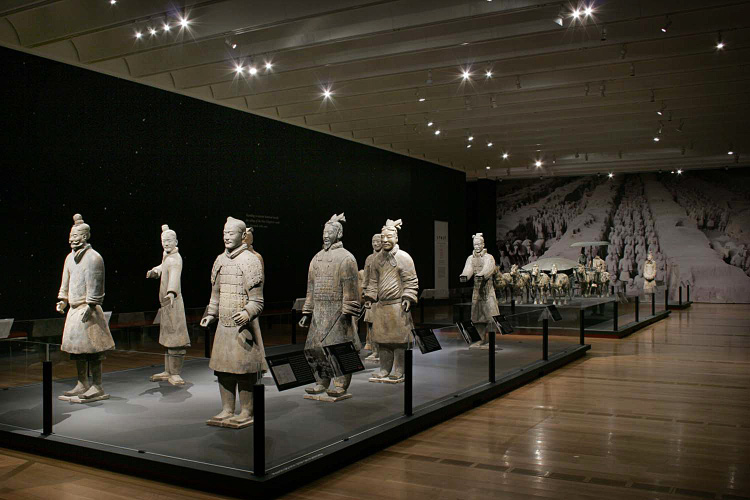
– Built around 210 BCE for Qin Shi Huang, the first emperor to unify China, the terracotta army consists of more than 8,000 life-sized figures.
– Each warrior is uniquely sculpted, with individual facial features, hairstyles, armor patterns, and weaponry.
– Craftsmen worked in specialized workshops, combining mass-production molds with hand-sculpted details.

Symbolism and Purpose

– The army was designed to protect the emperor in the afterlife, reflecting beliefs in eternal rule and spiritual warfare.
– Warriors include infantry, archers, cavalrymen, officers, chariots, and horses, representing a complete military formation.
– The site also contains musicians, acrobats, strongmen, and officials, indicating a full imperial court in the next world.

Burial Complex

– The mausoleum covers nearly 56 square kilometers, making it one of the largest in history.
– Archaeologists believe the central tomb chamber—still unopened—may contain rivers of mercury meant to replicate China’s geography.
– The complex was guarded by traps, hidden mechanisms, and layers of earth to deter intruders.

Historical Importance

– The terracotta army provides insight into Qin military organization, craftsmanship, and imperial ideology.
– Its discovery in 1974 reshaped understanding of ancient Chinese funerary traditions.
– The site is now one of the world’s most significant archaeological wonders.
← The Role of the Turtle in Ancient MythologyThe Nazca Civilization Before the Lines →
Featured
image_2025-12-12_001750915.png
Dec 11, 2025
The Ancient Astronomers of Chichen Itza
Dec 11, 2025
Read More →
Dec 11, 2025
image_2025-12-12_001705363.png
Dec 11, 2025
The Sacred Trees of Ancient Pagan Cultures
Dec 11, 2025
Read More →
Dec 11, 2025
image_2025-12-12_001605843.png
Dec 11, 2025
The Lost Temples of Angkor Before Angkor Wat
Dec 11, 2025
Read More →
Dec 11, 2025
image_2025-12-11_235943300.png
Dec 11, 2025
The Role of the Turtle in Ancient Mythology
Dec 11, 2025
Read More →
Dec 11, 2025
image_2025-12-11_235452975.png
Dec 11, 2025
The Terracotta Army: Guardians of China's First Emperor
Dec 11, 2025
Read More →
Dec 11, 2025
image_2025-12-11_234715866.png
Dec 11, 2025
The Nazca Civilization Before the Lines
Dec 11, 2025
Read More →
Dec 11, 2025
read more

Powered by The archaeologist