For the people of the Viking Age, death was not an end, but a perilous journey. Whether a warrior was destined for the golden halls of Valhalla or the bleak, misty fields of Helheim, their transition from the earthly world required meticulous ritual preparation.
Viking burials were highly stratified, deeply symbolic affairs that ranged from fiery pyres to monumental earthworks, all designed to provide the deceased with the tools, status, and transport needed in the afterlife.
1. The Ship as a Cosmic Vessel
In Norse mythology, the ship was the ultimate symbol of travel, power, and connection between realms. For the wealthy elite—both men and women—the ship became their eternal coffin.
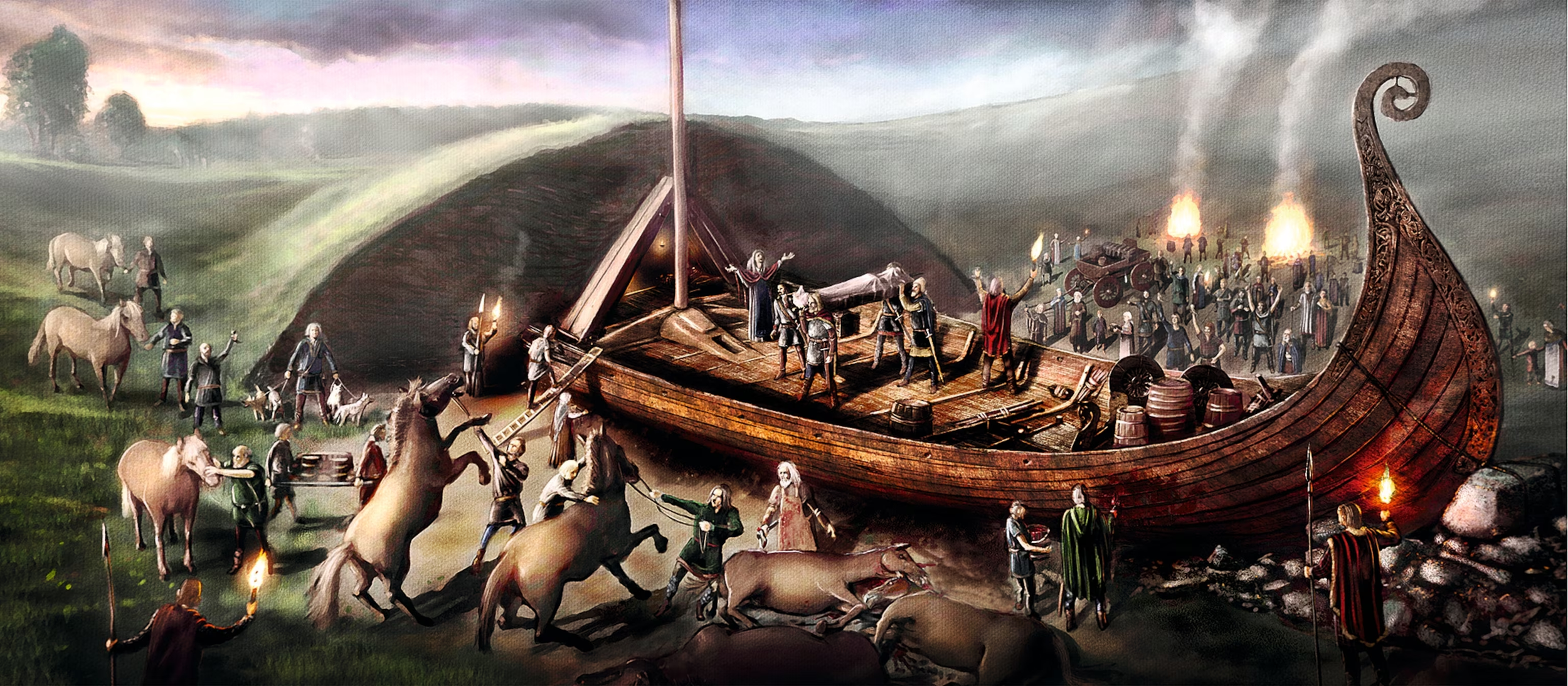
Instead of being abandoned at sea, traditional Viking ship burials were remarkably complex land operations:
The Excavation: A massive trench was dug close to water routes. A fully functional longship or knarr (merchant vessel) was dragged inland and settled into the trench.
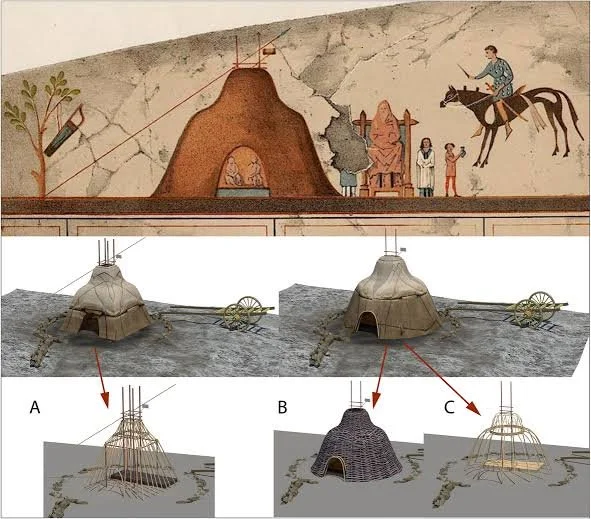
The Burial Chamber: A wooden, tent-like burial chamber was constructed directly on the deck of the ship, housing the body of the chieftain or noblewoman dressed in fine silk and furs.
Sealing the Mound: Once the rituals were complete, the entire ship was packed with heavy clay, stones, and turf, creating a monumental earthen mound (tumulus) that permanently altered the landscape.
The preservation of these sites is an archaeological miracle. In sites like Oseberg and Gokstad in Norway, the blue clay and peat sealed out oxygen, preserving the wood, textiles, and organic matter for over a thousand years.
2. Grave Goods and Ritual Sacrifices
The Norse afterlife was a literal place where a person kept their social status and physical needs. Therefore, a grave was packed with everything a person might need to live comfortably or fight eternally.
Weapons and Wealth: Warriors were buried with their swords, axes, spears, and shields. Crucially, these weapons were sometimes deliberately bent or "killed" to ensure their spirits accompanied the master without being stolen by grave robbers.
Animals: Ships were frequently packed with the skeletons of sacrificed horses, hunting dogs, oxen, and even exotic animals like peacocks. Horses were vital; they were intended to pull chariots or be ridden across the shifting terrain of the spirit world.
Human Sacrifice: Arab traveler Ibn Fadlan, who witnessed a Rus Viking funeral along the Volga River in 922 CE, documented the ritual sacrifice of a slave girl who volunteered to accompany her deceased master. She was treated to intoxicating drinks, performed ritual acts with the chieftains, and was ultimately stabbed and strangled by an old woman known as the "Angel of Death."
3. The Cleansing Fire: Cremation Customs
While ship earthworks were popular in Western Scandinavia, cremation was equally prevalent throughout the Viking world, especially in Sweden and eastern territories.
The Spiritual Belief: Cremation was seen as a way to rapidly release the soul from the physical flesh. Smoke from the pyre was believed to carry the deceased directly into the sky to the gods.
The Pyre Ship: Even when a family couldn't afford a real ship, the concept of the ship remained. Pyres were often built inside stone outlines shaped like a ship, known as stone ships (skeppssättningar). The body was burned alongside its worldly possessions inside this symbolic stone vessel, and the remaining ashes were covered with a thin layer of earth and stones.
4. The Famous Archaeology of Death
The Oseberg Ship (Excavated 1904, Norway)
Dating to around 834 CE, this is the most lavishly decorated Viking ship ever discovered. It was not a warship, but a royal pleasure yacht.
Remarkably, it was the final resting place of two high-status women—one in her 70s, likely a queen or powerful priestess, and a younger woman in her 50s. The grave goods included an intricately carved wooden cart, four sledges, textiles, and the bones of 15 horses.
The Ladby Ship (Denmark)
The only ship burial found in Denmark, this site revealed a 72-foot warship. While the wood had rotted away completely, the thousands of iron rivets remained perfectly in situ within the soil, allowing archaeologists to map the exact shape of the vessel. The site also contained 11 horses and several dogs, indicating a high-ranking military commander.
5. Summary of Funerary Dynamics
Inhumation (Mound Burials): Favored by the elite; designed to project dynastic power, mark territory for the living, and preserve physical wealth for the afterlife.
Cremation (Pyres/Stone Ships): Focused on spiritual release and purification; highly common across all social classes, utilizing symbolic stone architecture when real ships were unavailable.
The Christian Shift: By the late 10th and 11th centuries, as Christianity took hold, these dramatic rituals vanished. Weapons, sacrifices, and mounds were replaced by simple East-West oriented graves in consecrated churchyards, marking the end of the Viking Age ritual landscape.
The complexity of these graves shows that the Vikings did not fear death; they feared being forgotten. By building massive mounds and sending their loved ones into the next world with wealth and weapons, they ensured their legacy would endure both in Valhalla and in the soil beneath our feet.