When pop culture pictures a Viking warrior, it usually conjures up a fantasy of horned helmets, massive double-bitted axes, and heavy, cumbersome armor.
The archaeological reality is far more elegant. The Norse were maritime raiders and traders; they needed equipment that was lightweight, highly functional, and easy to maintain on long sea voyages. When we look at the physical evidence—primarily burial mounds and bog deposits across Scandinavia and the UK—we see a highly evolved toolkit of war.
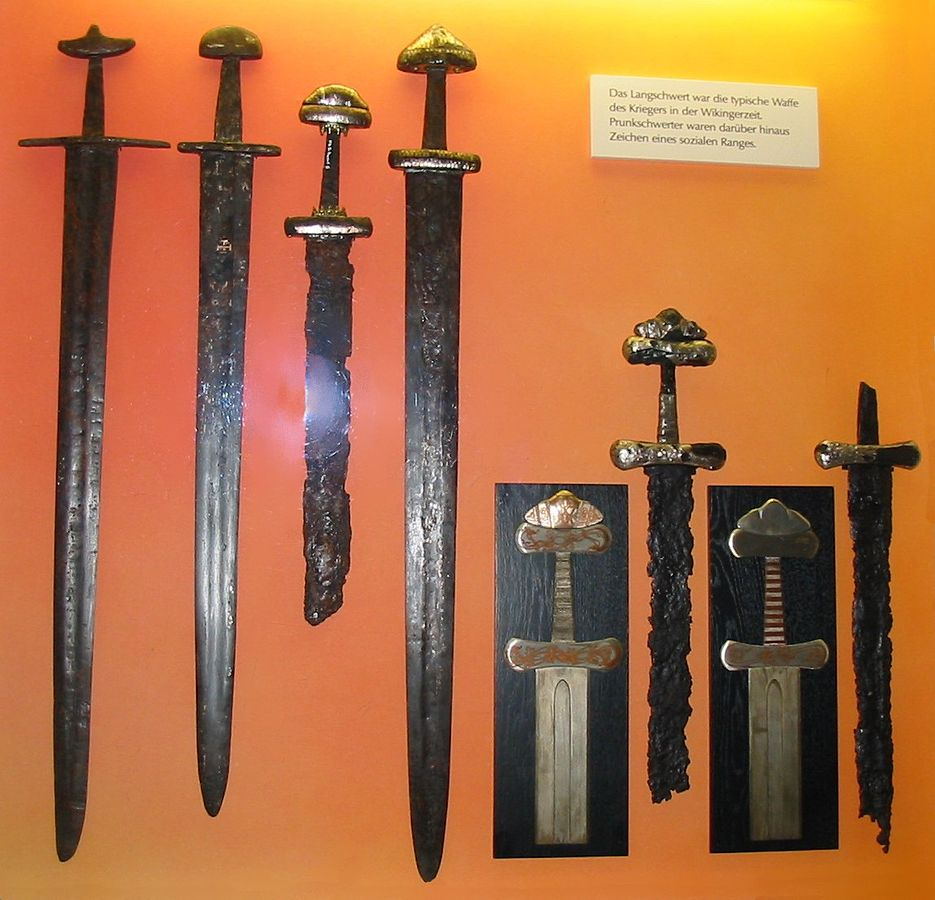
The "holy trinity" of the Viking Age battlefield wasn't the sword (which was an expensive, elite status symbol). It was the axe, the spear, and the shield.
1. The Spear: The True Weapon of the Viking Age
Despite the fame of the axe, the spear was by far the most common weapon in the Viking arsenal. According to the foundational Petersen Typology (the classification system developed by Norwegian archaeologist Jan Petersen in 1919, still used today to date Viking artifacts), spearheads came in a massive variety of shapes and sizes, serving two distinct tactical roles.
Throwing Spears (Javelins): These featured narrow, leaf-shaped blades designed to pierce mail and shields. The Norse often initiated battles with a volley of these lighter spears.
Hewing / Thrusting Spears: These were heavy, broad-bladed weapons used in close-quarters melee. Many of these featured "wings" or "lugs" at the base of the spearhead. These wings prevented the spear from penetrating too deeply into an enemy (which could wrench the weapon out of the user's hands) and were used to parry enemy weapons.
Because spear shafts were made of ash wood (which decays), we only find the iron heads today. However, historical sagas and rivet holes suggest the shafts were typically 7 to 9 feet long.
2. The Axe: From Farm Tool to Terror
The axe is the iconic Viking weapon, born from practical necessity. Every Norse farmer, shipbuilder, and woodsman owned a hand axe. When raiding season began, that same tool could be taken into battle. However, dedicated war axes evolved distinct, specialized geometries.
The Bearded Axe (Skeggøx)
Common in the early Viking Age (8th-9th centuries), this design drops the lower edge of the blade down to create a "beard." This was an engineering masterstroke:
It provided a wide cutting edge while carving away the steel behind it, keeping the weapon incredibly light and fast.
The beard could be used to hook an opponent's shield, pulling it down to expose their head or neck to a spear thrust from a comrade.
The Dane Axe
By the 10th and 11th centuries, the axe evolved into the fearsome "Dane Axe." Wielded with two hands on a shaft up to 5 feet long, this was an elite shock-troop weapon. Contrary to the thick wedges of wood-chopping axes, the blades of Dane axes were forged astonishingly thin—often only a few millimeters thick behind the edge. They were designed strictly for cleaving through flesh and mail armor, trading durability against solid objects for devastating cutting efficiency.
3. The Round Shield: The Dynamic Defense
Because armor like chainmail (brynja) was incredibly expensive, a Viking's life depended almost entirely on their shield. These were not heavy, passive walls of wood; they were light, highly maneuverable defensive tools.
The greatest archaeological evidence for shield construction comes from the Gokstad Ship burial in Norway (c. 900 CE), where 64 round shields were found tied along the gunwales of the longship.
Viking combat relied on the Center-Grip. Unlike later medieval shields strapped to the forearm, holding a shield by a central handle meant it could be pivoted rapidly, extended outward to close the distance against an attacking blade, or angled to deflect blows rather than absorbing them head-on.
When warriors stood shoulder-to-shoulder, overlapping these 30-to-35-inch discs, they formed the famous Shield Wall (skjaldborg)—a mobile fortress that defined Norse infantry tactics for three centuries.