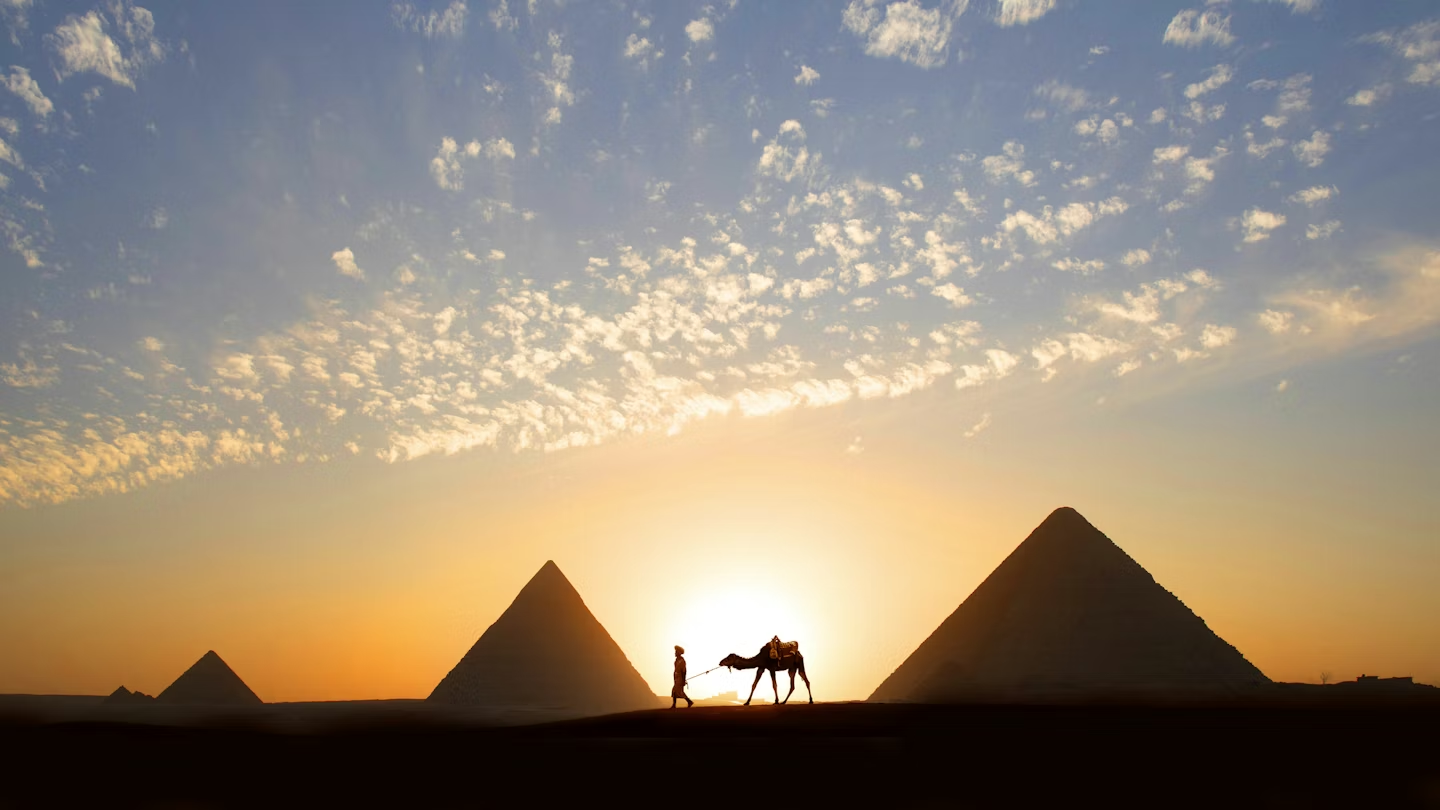
Egypt is home to some of the world’s most remarkable ancient architecture, including impressive tombs and remarkably preserved temples. Among these treasures stands the Great Pyramid of Giza, the only surviving monument of the Seven Wonders of the Ancient World, making the pyramids a must-see destination for travelers. These monumental structures offer a glimpse into a powerful historical dynasty, showcasing building techniques that continue to intrigue historians today.
Use this guide to plan your visit, learn about how the pyramids were constructed, explore their unique architectural features, and find out what to expect when you go.
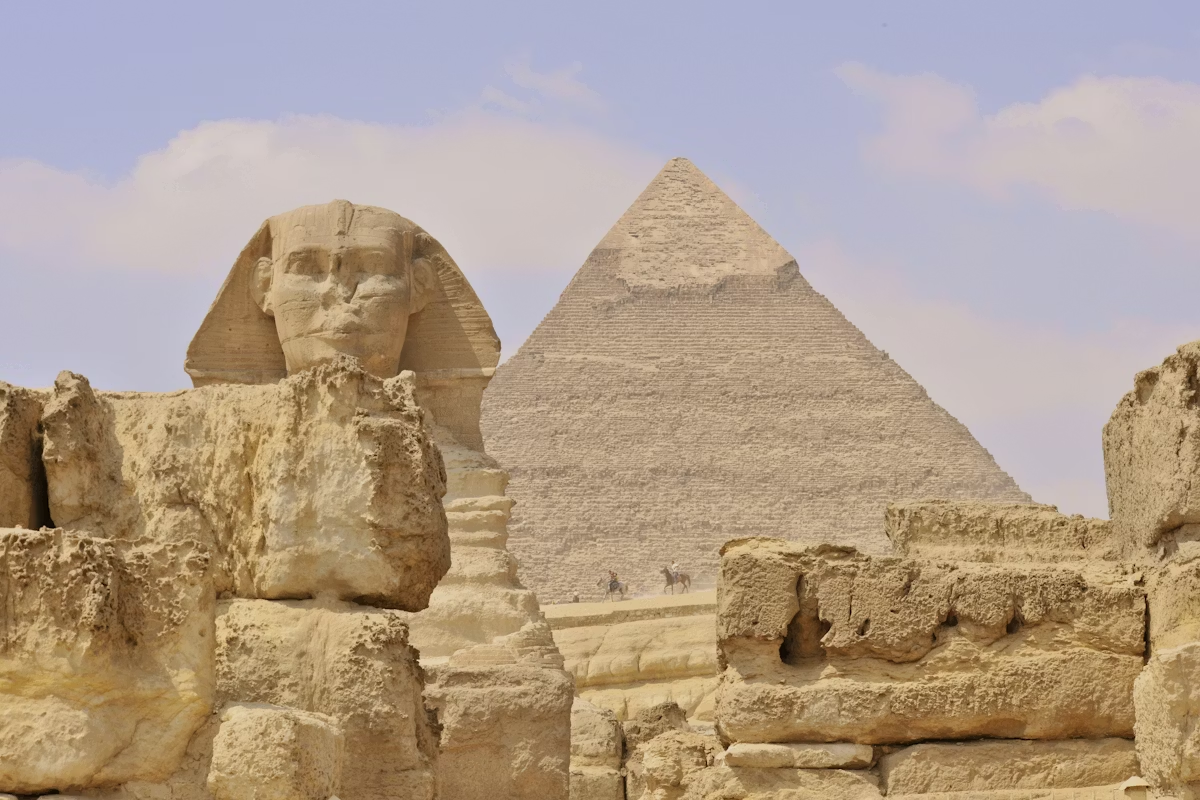
The Great Sphinx of Giza.
What Are the Pyramids of Giza?
The Pyramids of Giza are monumental tombs built for three of Egypt’s ancient pharaohs. Ancient Egyptians believed that when a pharaoh died, they would ascend to the afterlife as a god. To prepare for this journey, each pharaoh commissioned massive pyramids to serve as tombs, where they could store items needed in the next world.
The first and largest pyramid, the Pyramid of Khufu also called the Great Pyramid was constructed around 2550 BCE for Pharaoh Khufu. About 30 years later, his son, Pharaoh Khafre, began building his own pyramid, the Pyramid of Khafre, and the iconic Sphinx, which is thought to bear his likeness, was built to guard the tomb. The smallest of the three, the Pyramid of Menkaure, was completed around 2490 BCE by Khafre’s son.
Together with the Sphinx and several smaller pyramids and tombs, these structures form the Giza Pyramid Complex.
How Were the Pyramids Built?
The construction of the Pyramids of Giza remains one of history’s greatest engineering mysteries. Although researchers do not know all the specifics, decades of archaeological discoveries have revealed important clues.
It is estimated that building the three pyramids required 10,000–20,000 workers over roughly 20 years. While older accounts claimed the pyramids were built by enslaved people, more recent evidence indicates that the workforce primarily consisted of native Egyptian farmers, who worked on the pyramids during the annual flooding of the Nile. These workers lived in a temporary settlement near the Pyramid of Menkaure.
Various tools and materials were used in construction. Stones for Khufu and Menkaure’s pyramids came from nearby quarries, though the source of Khafre’s stones is still debated. Workers transported stones by dragging sleds over wet sand and lifting them using ramps. The exact design of these ramps remains unknown, adding to the enduring mysteries of how the Pyramids of Giza were built.
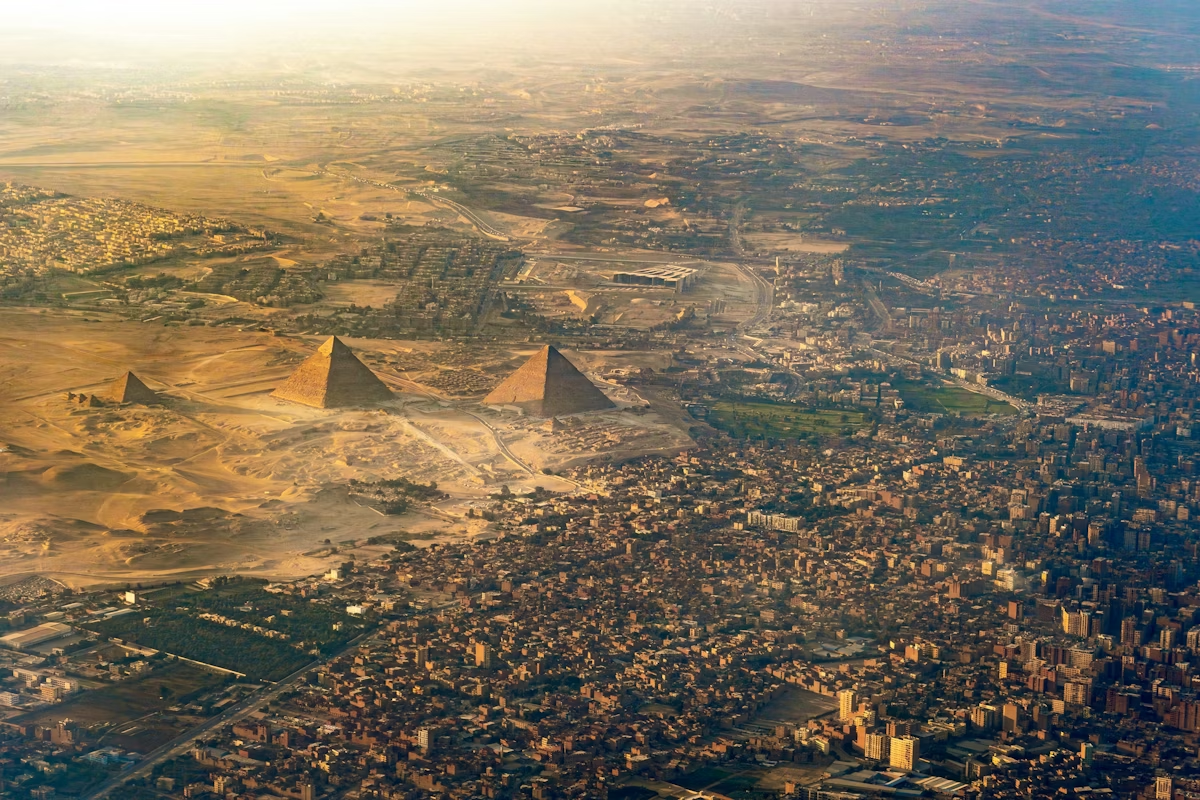
Aerial view of the Pyramids of Giza.
What makes the Pyramids unique?
Precise alignment
The Great Pyramid is nearly perfectly aligned with the cardinal directions north, south, east, and west a fact that continues to puzzle historians. Scholars have suggested various methods for achieving this alignment, with the latest theory involving the fall equinox, though no definitive evidence confirms this.
Limestone casing
Originally, the Pyramids of Giza were covered in smooth limestone, which has mostly been removed over time for use in other Egyptian buildings. Today, only the Khafre Pyramid still has some of its original limestone casing at the top.
Smaller pyramids and tombs
The main pyramids Khufu, Khafre, and Menkaure are accompanied by smaller structures. Along the east side of Khufu’s pyramid are three smaller pyramids, known as the Queens’ Pyramids, built for Khufu’s wives and sisters. Additional smaller pyramids and temples are located near Khafre and Menkaure, along with mastabas, which served as tombs for royal officials and other members of the king’s family.
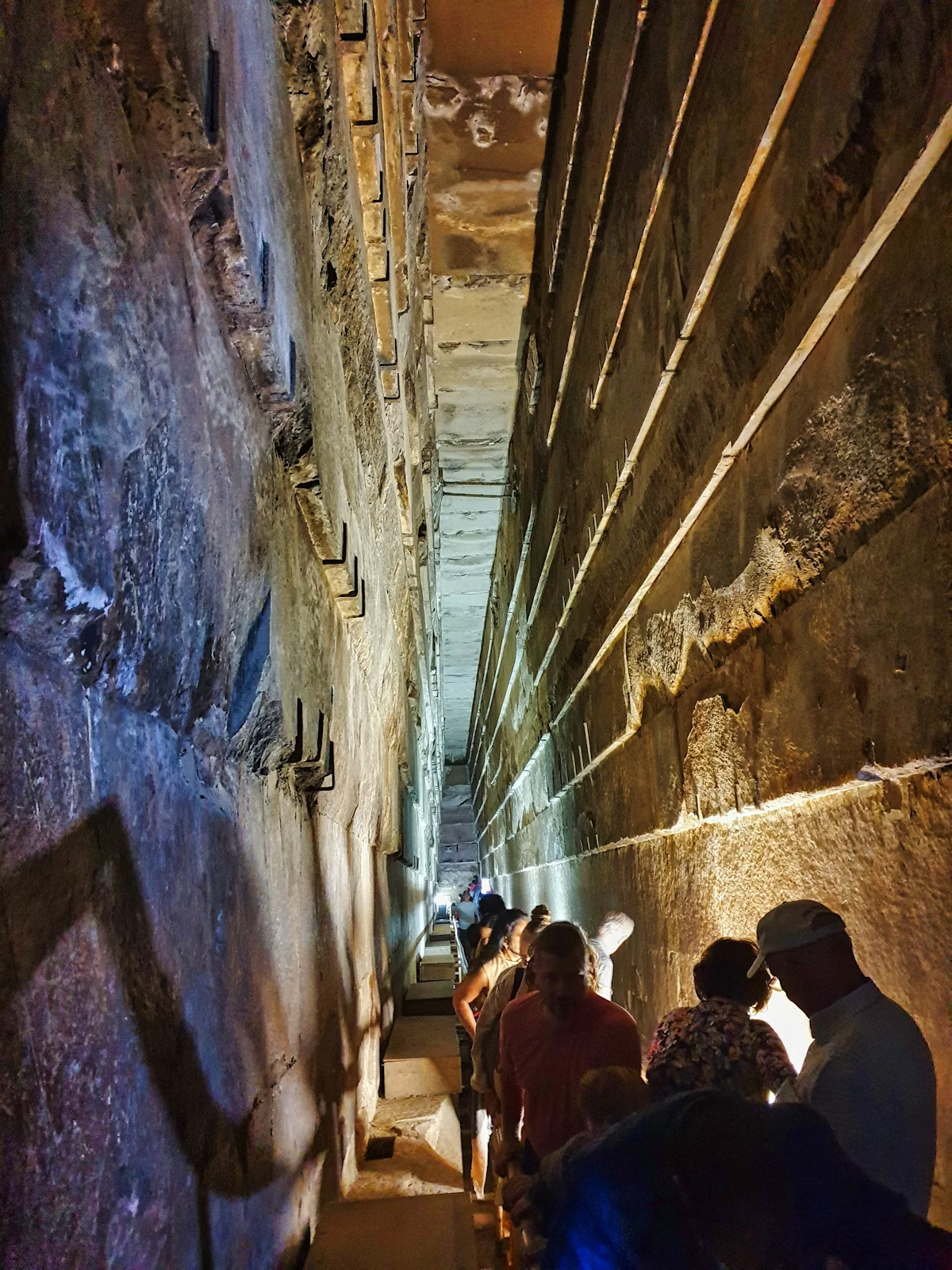
Visitors within the Grand Gallery of the Great Pyramid of Khufu.
Can you go inside the Pyramids?
Visitors can enter the Great Pyramid of Khufu, the Pyramid of Khafre, and the Pyramid of Menkaure for an additional fee. Some sections may be closed for ongoing archaeological work, and the interior passages are often narrow and steep. Entering a pyramid is not recommended for people with limited mobility or those who are claustrophobic.
Best time to visit
The Pyramids of Giza can be visited year-round, but the peak season is from December to February, when the weather is cooler. For fewer crowds and pleasant conditions, consider visiting during the shoulder seasons of October–November or March–April. Arriving early, as soon as the site opens, allows 2–3 hours of quieter exploration before most tour groups arrive around 10 a.m.
What to wear
Egypt is a mainly Muslim country, so dressing conservatively is recommended. Cover your shoulders and knees to respect local customs. Wear comfortable walking shoes or sandals, and bring a hat and sunglasses for sun protection.
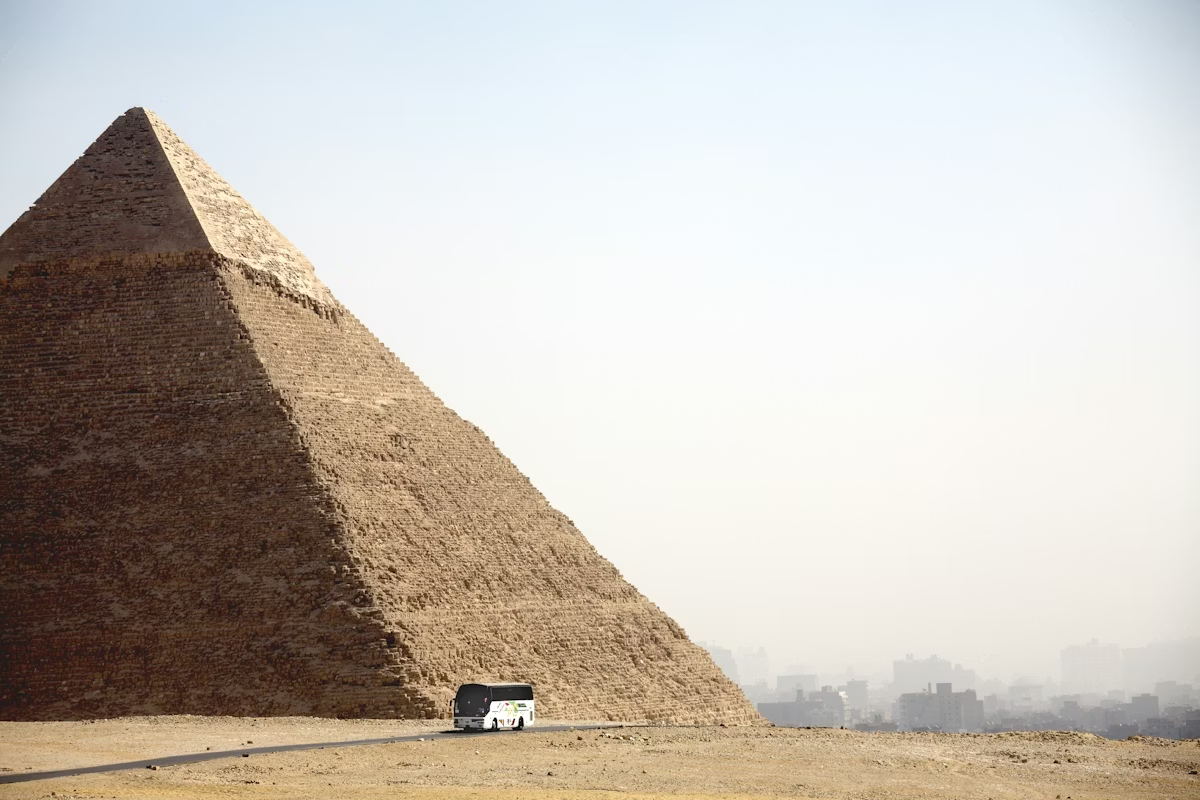
A tour bus within the Giza Complex.
Getting to the Giza Complex
Booking a guided tour is convenient because it helps you avoid the many vendors around the site, and most tours include hotel pickup and drop-off. If you prefer to go independently, Uber is the easiest option. You can also take the metro to Giza and then catch a shared microbus to the ticket office.
How long to visit
Set aside at least 4–5 hours to explore the Giza Complex at a relaxed pace. If you plan to enter the pyramids, visit the cemeteries, and explore the tombs, you may spend over 7 hours there.
Opening hours
The Pyramids are open daily from 7 a.m. to 5 p.m., with last entry at 4 p.m.
Entrance fees
The basic "area entry" fee is LE700 for adults (LE60 for Egyptian and Arab visitors), which allows access to the exterior of the pyramids and the Sphinx. Additional fees apply for entering specific pyramids—for example, the Great Pyramid costs LE1000 (LE100 for Egyptians and Arabs). Visiting the cemeteries and Meresankh Tomb also has extra costs. Students with ID get a 50% discount.
Best places to stay
The Pyramids are in Giza, about a 45-minute drive from Cairo. While staying in Downtown Cairo is fine, booking a hotel near the Pyramids for a night is ideal. This allows you to enjoy the sunrise over the pyramids and rest a bit longer before exploring.
Tip: Planning your visit with a local guide can make the experience smoother and more informative.