Introduction
Tmutarakan occupies a fascinating position in the history of medieval Eastern Europe because it connected the world of Rus', Byzantium, and the Black Sea.
The medieval settlement is associated with the ancient and medieval settlement of Tmutarakan, located on the Taman Peninsula in the northern Black Sea region.
The site's history stretches far beyond the tenth century and includes Greek, Roman, Byzantine, and later political influences.
A Black Sea Crossroads
The Taman Peninsula occupied a strategically important position between the Black Sea and Sea of Azov.
Its geography placed it near routes connecting:
the Caucasus;
Crimea;
the Black Sea;
the steppe;
Byzantium;
eastern Europe.
Greek Foundations
The region had a long Greek colonial history.
Greek settlements around the Black Sea were established centuries before the emergence of Rus'.
This means that describing Tmutarakan simply as a "Greek colony" does not capture its entire history.
Instead, the site represents multiple successive cultural phases.
Tmutarakan and Rus'
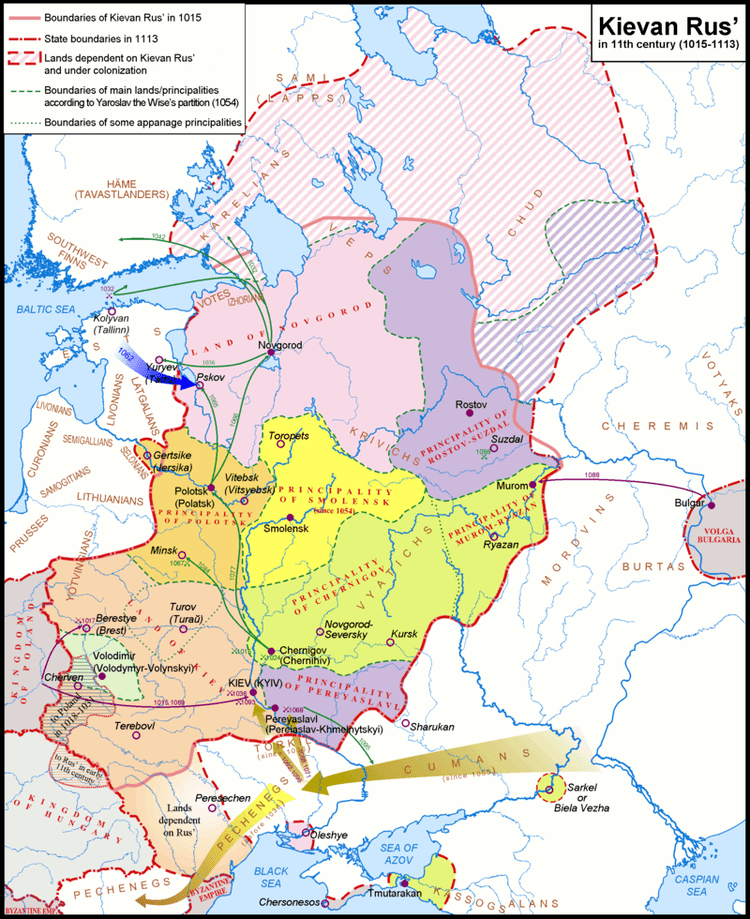
During the medieval period, Tmutarakan became associated with the political world of Rus'.
Rurikid princes exercised authority in the region.
This was remarkable because the settlement was geographically distant from Kyiv.
Its importance reflected Rus' expansion into the Black Sea and Caucasian frontier.
Trade
The settlement participated in maritime and overland trade.
Commercial goods could move through the region from different directions.
Archaeological evidence from Black Sea settlements often demonstrates the circulation of:
ceramics;
amphorae;
metals;
coins;
glass;
luxury objects.
Byzantine Connections
Byzantine influence remained strong in the Black Sea.
Christianity, architecture, coinage, diplomacy, and commercial relationships connected Tmutarakan to the Byzantine world.
Multicultural Society
Tmutarakan's historical significance lies partly in its multicultural character.
Greek traditions interacted with:
Byzantine culture;
Rus' political structures;
steppe societies;
Caucasian populations.
The Black Sea frontier was therefore a zone of interaction rather than a strict cultural boundary.
Archaeological Challenges
The identification and interpretation of individual structures at Tmutarakan can be complicated because the settlement developed through many historical periods.
Archaeologists must carefully separate layers belonging to different centuries.
Conclusion
Tmutarakan demonstrates how interconnected medieval Eastern Europe was.
Rather than being a remote outpost, it belonged to a network of Black Sea communities linked by trade, warfare, diplomacy, and cultural exchange.
Its history is particularly valuable for understanding the relationship between Rus', Byzantium, the Caucasus, and the Black Sea world.