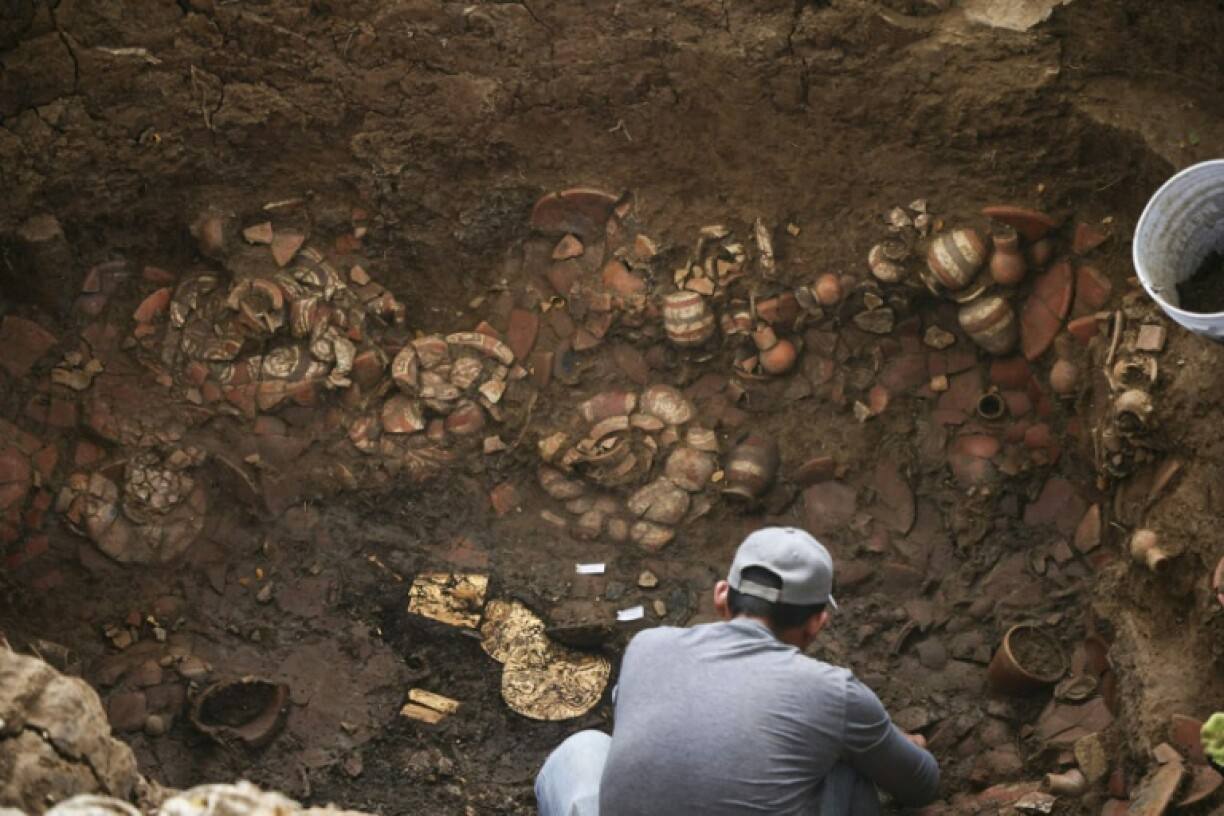
Archaeologists in Panama have uncovered a tomb dating back over a thousand years, containing human remains buried alongside gold ornaments and ceramic artifacts, the project’s lead researcher told AFP.
The tomb was found at the El Caño Archaeological Site in the Natá district, roughly 200 kilometers southwest of Panama City. The site has been under excavation for about two decades, during which researchers have revealed numerous remains linked to pre-Hispanic cultures of the region.
According to archaeologist Julia Mayo, the tomb dates between 800 and 1000 AD. The skeletal remains were discovered surrounded by gold artifacts and pottery decorated with traditional motifs, indicating the individuals buried there likely held high social status.
One individual, believed to have been the most prominent in the group, was adorned with two bracelets, two earrings, and pectoral jewelry featuring bat and crocodile designs—symbols that may have carried spiritual or political significance.
The El Caño Archaeological Site is associated with the societies that inhabited Panama’s central provinces between the 8th and 11th centuries, offering valuable insight into their social hierarchy, craftsmanship, and ceremonial practices.
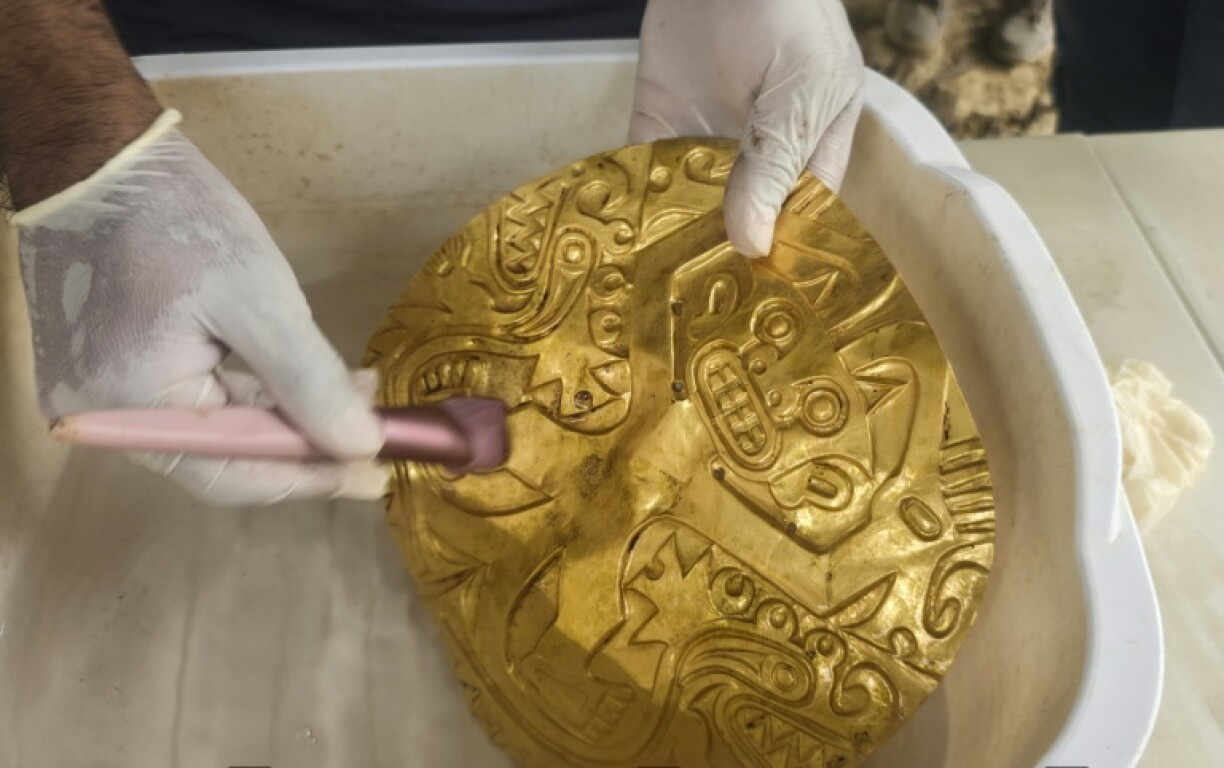
The skeletal remains were found surrounded by gold objects and pottery decorated with traditional motifs, pointing to these being
“This was their burial ground for roughly two centuries,” Mayo explained, noting that nine other tombs of a similar type had previously been uncovered at the site.
Ministry of Culture of Panama described the find as highly significant for Panamanian archaeology and for understanding pre-Hispanic societies of the Central American isthmus—the land bridge linking North and South America.
Experts say the discoveries suggest that, for these communities, death was not viewed as an absolute end but rather a passage into another stage of existence. The presence of rich grave goods indicates that social rank and identity likely continued to hold meaning even in the afterlife.