Introduction
Trelleborg is one of Denmark's most famous Viking Age fortresses and an important example of the highly organized military architecture associated with the reign of Harald Bluetooth.
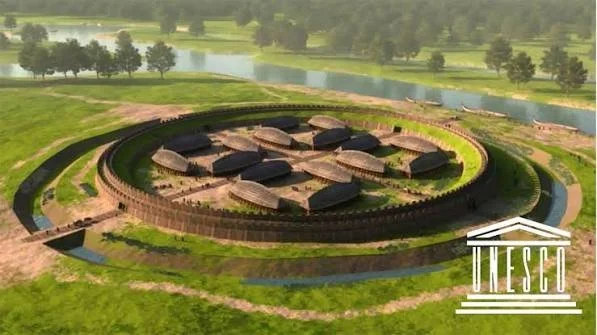
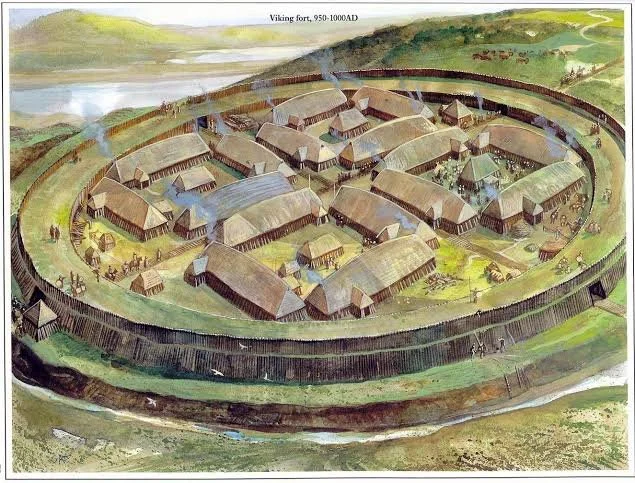
The fortress was constructed according to a precise geometric plan.
Its circular enclosure, monumental ramparts, standardized houses, and strategic location demonstrate that Viking Age Denmark possessed sophisticated military and administrative capabilities.
Construction
Trelleborg required enormous quantities of labor.
Earth had to be excavated and moved to create defensive banks and ditches.
Timber was needed for buildings and fortifications.
The standardized design indicates that construction was planned before work began.
The Fortress Layout
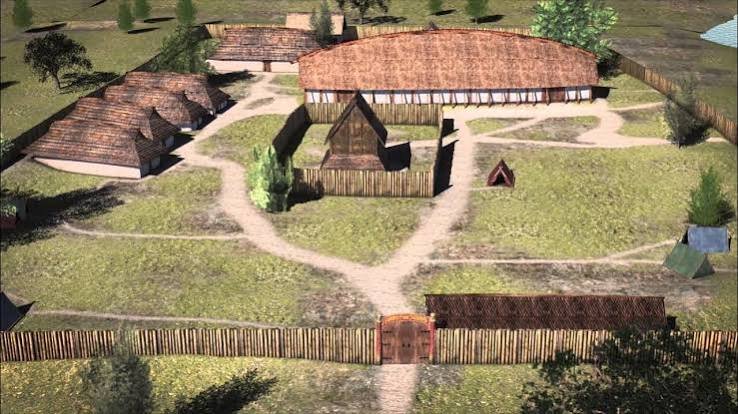
The main fortress was circular.
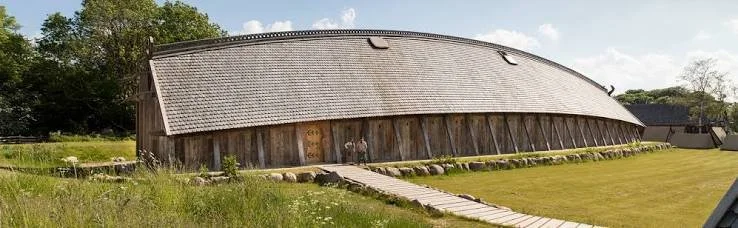
Inside were longhouses arranged in a carefully organized pattern.
Roads and entrances were systematically positioned.
This symmetry suggests the involvement of skilled planners and surveyors.
Military Organization
Trelleborg could accommodate substantial numbers of people.
Its military purpose probably included training, mobilization, storage, and strategic defense.
The fortress may have served as a temporary base for royal forces rather than simply a permanent city.
The Viking Army
The fortress provides evidence for a more organized form of warfare than the stereotype of independent raiders might suggest.
A centralized king needed warriors who could assemble rapidly.
They required food, weapons, horses, ships, and logistical support.
Fortresses such as Trelleborg could facilitate this organization.
The River and Strategic Position
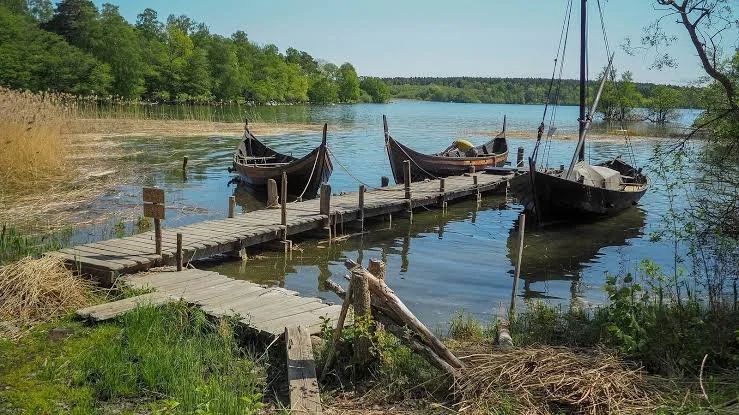
Trelleborg was positioned near important waterways.
This allowed movement of troops and supplies.
Water transportation was essential to Scandinavian warfare.
A fortress controlling river and land routes could have significant strategic importance.
Archaeological Evidence
Artifacts discovered at the site include:
weapons;
tools;
jewelry;
agricultural equipment;
household objects;
craft materials.
These finds demonstrate that the fortress was a functioning settlement rather than a purely symbolic monument.
Burials
Nearby graves provide evidence for individuals associated with the community.
Human remains can help archaeologists investigate age, sex, health, diet, and injuries.
Such evidence can reveal the physical realities of Viking life.
Royal Power
Trelleborg is best understood within the political transformation of tenth-century Denmark.
Harald Bluetooth was attempting to strengthen royal control over a more unified kingdom.
Fortresses could serve as instruments of that process.
They provided military infrastructure while simultaneously demonstrating royal authority.
Christianization
Harald's reign also witnessed the growing influence of Christianity.
The construction of military fortresses and the promotion of Christianity occurred within the same period of political consolidation.
Both processes strengthened connections between Denmark and continental Europe.
Conclusion
Trelleborg demonstrates the sophisticated organizational capabilities of Viking Age Denmark.
Its geometry, standardized architecture, military function, and archaeological remains reveal a society capable of large-scale planning.
Rather than depicting Vikings simply as independent warriors, Trelleborg reveals the administrative machinery behind royal armies and territorial control.
It was a fortress, military base, logistical center, and powerful symbol of centralized kingship.