Introduction
Aggersborg is the largest and most spectacular of Denmark's Viking Age ring fortresses.
Located near the Limfjord in northern Jutland, Aggersborg occupied a strategically important position controlling one of Denmark's most significant waterways.
Its enormous circular enclosure and highly standardized internal layout demonstrate a level of military and architectural planning rarely associated with early medieval Scandinavia.
Scale
Aggersborg was substantially larger than the other known Danish ring fortresses.
Its enormous dimensions allowed it to accommodate large numbers of people.
The scale of the structure demonstrates that its construction required extraordinary resources.
Circular Design
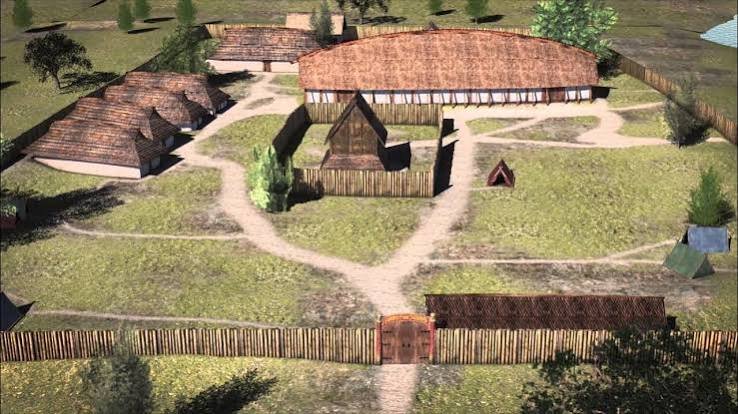
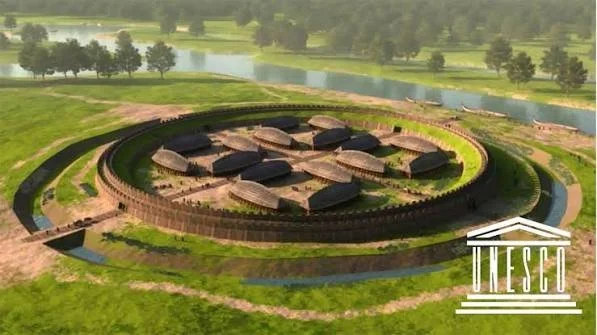
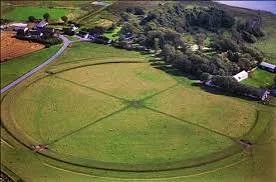
The fortress consisted of a massive circular rampart divided by major roads.
Four principal entrances were positioned according to a carefully planned geometric scheme.
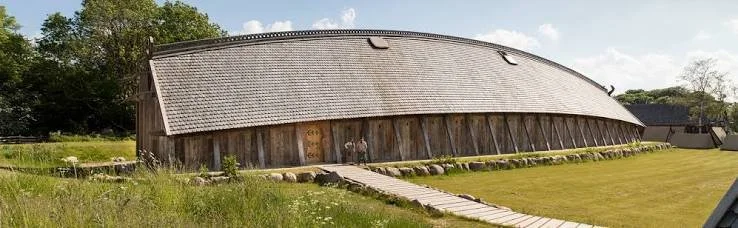
Inside were groups of standardized longhouses.
The symmetry is one of Aggersborg's most remarkable characteristics.
Engineering
Building Aggersborg required:
surveying;
earthmoving;
timber construction;
road construction;
drainage;
logistical planning.
Workers needed food and equipment throughout the construction process.
The fortress therefore represents not only military technology but administrative capacity.
Strategic Geography
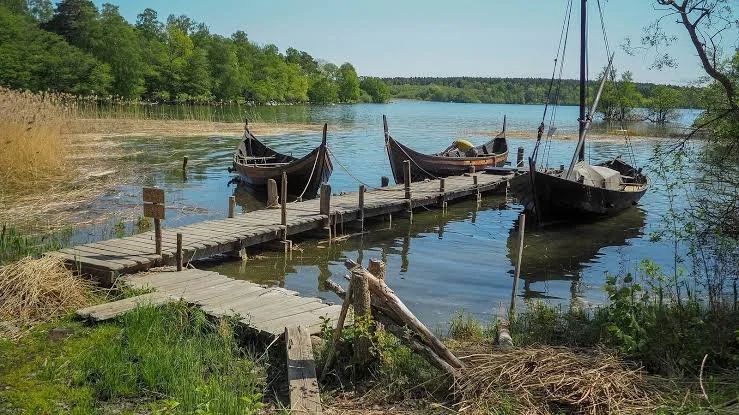
The Limfjord was a major transportation corridor.
Ships could use the waterway to move across northern Jutland.
Controlling this region allowed rulers to influence both commercial and military movement.
Aggersborg's position was therefore strategically valuable.
Royal Authority
Aggersborg is closely associated with the political ambitions of Harald Bluetooth.
The fortress formed part of a broader network of royal installations.
These sites likely helped the monarchy coordinate military forces and reinforce control over strategically important areas.
International Context
The construction of Aggersborg occurred during a period when Scandinavian kingdoms increasingly interacted with continental European powers.
Military organization was changing.
Kings were building stronger political institutions.
Christianity was expanding.
Trade networks were becoming increasingly integrated.
Aggersborg belongs to this broader transformation.
Daily Life
Despite its military appearance, people lived within the fortress.
Food preparation, craft production, animal keeping, and domestic activities all occurred.
Archaeological remains provide evidence of what inhabitants ate and how they worked.
The Meaning of the Fortresses
Scholars debate whether the ring fortresses were purely military.
Possible functions include:
royal residences;
military camps;
administrative centers;
training facilities;
logistical depots;
political symbols.
It is possible that they served several functions simultaneously.
Short Occupation
One striking feature of Aggersborg is that it appears to have been used for a relatively short period.
This raises important questions.
Why would a king invest enormous resources in a fortress that was not occupied continuously for centuries?
One possibility is that the fortress was designed for a particular political or military campaign.
Conclusion
Aggersborg represents the extraordinary organizational capacity of late Viking Age Denmark.
Its massive size, geometric design, strategic location, and standardized architecture reveal a centralized state capable of mobilizing enormous resources.
The fortress stands as a monument to a period when Scandinavian kingship was becoming more powerful and structured.
Aggersborg was therefore not merely a defensive wall.
It was an expression of royal strategy, military organization, engineering, and political ambition.