Whitehill on Stronsay represents part of the island's Neolithic archaeological heritage, a period during which communities across Orkney experienced profound changes in settlement, agriculture, architecture, technology, and social organization. The Neolithic, or “New Stone Age,” is generally associated with the adoption of farming and new forms of material culture, although the transition was neither sudden nor uniform.
In Orkney, the Neolithic produced some of the most remarkable prehistoric monuments in Europe. Settlements, chambered tombs, stone circles, standing stones, and ceremonial complexes demonstrate that communities were capable of coordinating substantial construction projects while maintaining productive agricultural economies.
The Neolithic Transformation
The Neolithic period marked a major transformation in human life.
Earlier Mesolithic communities relied heavily on hunting, fishing, gathering, and other forms of mobile or semi-mobile subsistence. Neolithic communities increasingly practiced agriculture and animal husbandry.
This did not mean that hunting and gathering disappeared.
Instead, farming became part of a diversified economy.
Crops such as barley could be cultivated, while cattle, sheep, and pigs provided meat, milk, hides, wool, and other resources.
Settlement on Stronsay
Island environments such as Stronsay offered attractive opportunities for Neolithic communities.
Fertile soils supported cultivation, while grasslands provided grazing. The surrounding sea supplied fish and shellfish, and boats allowed people to travel between islands.
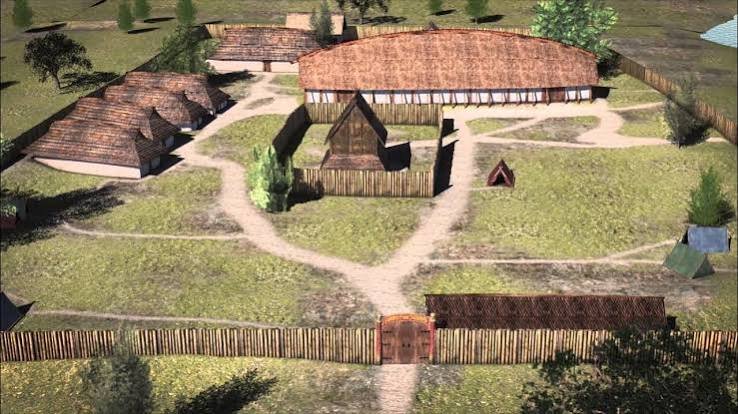
Neolithic settlements were not simply places where people slept.
They were centers of production, food preparation, tool manufacture, social interaction, and ritual activity.
Houses and Domestic Architecture
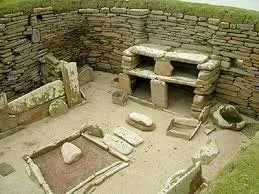
Neolithic houses in Orkney are often characterized by substantial stone construction.
Walls could be thick, and interiors were carefully organized. Central hearths provided warmth and served as cooking areas.
Furniture and household equipment were usually made from stone, wood, bone, and other organic materials.
Because organic materials rarely survive in the archaeological record, archaeologists often reconstruct domestic life indirectly through stone tools, pottery, food remains, and structural features.
Agriculture and Food Production
Farming required knowledge of soils, seasons, rainfall, and animal behavior.
Barley was an especially important crop in northern Britain. Its ability to tolerate relatively cool conditions made it well suited to the Orkney environment.
Cereal grains could be processed using stone querns or grinding stones.
Animals provided a different set of resources. Cattle and sheep were valuable not only for meat but also for milk, hides, wool, and bone.
The combination of agriculture and marine resources gave island communities considerable dietary flexibility.
Pottery and Household Technology
Neolithic Orkney is famous for distinctive pottery traditions.
Grooved Ware is particularly associated with later Neolithic Orkney and appears at several major sites.
Earlier pottery traditions also existed and were used for cooking and storage.
Pottery provides archaeologists with valuable information because vessels can sometimes preserve residues from foods or other substances.
Monument Building
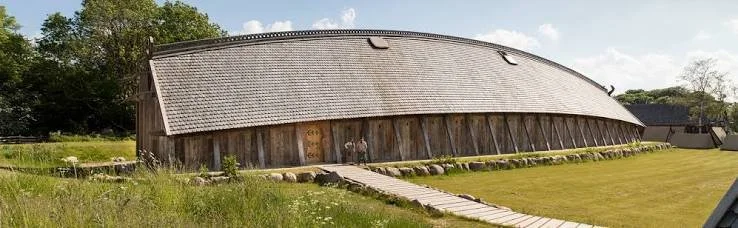
Perhaps the most extraordinary characteristic of Neolithic Orkney is its monumental architecture.
Communities constructed chambered tombs, stone circles, standing stones, and large ceremonial buildings.
The scale of such structures indicates that prehistoric society could organize substantial communal labor.
Monuments may have served religious, social, political, and ancestral purposes simultaneously.
The Importance of Ancestry
Neolithic burial monuments demonstrate that the dead occupied an important position within society.
Chambered tombs sometimes contained the remains of numerous individuals rather than a single burial.
This suggests that communities may have viewed burial places as collective ancestral spaces.
The repeated deposition and manipulation of human remains may have formed part of complex funerary traditions.
Seafaring and Inter-Island Connections
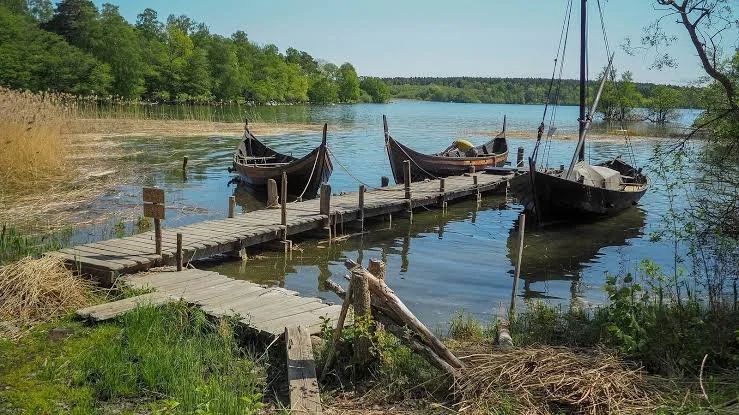
The people of Neolithic Orkney were maritime travelers.
The islands could be reached by boats, and archaeological similarities across Orkney demonstrate connections between communities.
Stone, pottery styles, ideas, and perhaps people moved across the archipelago.
The sea therefore functioned as a transportation network.
Archaeological Significance of Whitehill
Whitehill contributes to understanding the broader distribution of Neolithic activity across Stronsay.
Even sites without spectacular surviving monuments are important because they demonstrate that prehistoric settlement extended beyond the famous archaeological centers.
They help reconstruct population density, land use, agricultural expansion, and the relationship between domestic and ceremonial landscapes.
Conclusion
Whitehill's Neolithic significance lies within the broader story of Stronsay's transformation during the early farming period.
Its archaeological context reflects a society that combined agriculture, livestock husbandry, maritime resources, stone architecture, pottery production, and communal monument building.
The Neolithic inhabitants of Stronsay were not isolated farmers living at the edge of Europe. They were members of interconnected island communities participating in one of the most important transformations in prehistoric human history.
Their legacy survives in the archaeological landscape that remains visible today.