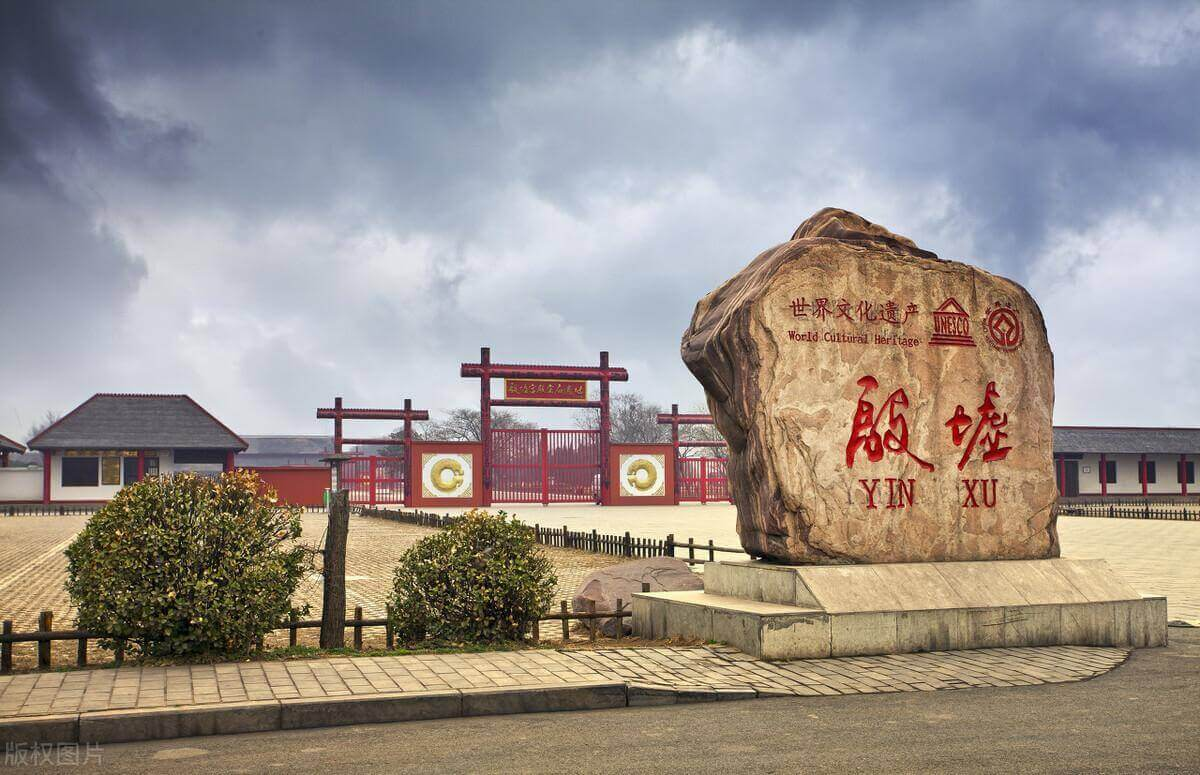
Yinxu, located near modern Anyang in Henan Province, was the final capital of the Shang Dynasty and one of the most important urban centers of Bronze Age China.
The archaeological site contains a remarkable combination of royal tombs, palace foundations, workshops, sacrificial areas, residential settlements, and oracle bone archives.
Together, these discoveries provide one of the most detailed pictures of an ancient Chinese state.
The name Yinxu means “Ruins of Yin,” referring to the ancient Shang capital that later historical tradition associated with the final phase of the dynasty.
The Rise of Yinxu
The Shang rulers moved their capital to the Anyang region during the later phase of the dynasty.
From this center, the Shang court governed a network of territories and maintained political, military, and religious authority.
Yinxu was not merely a royal residence.
It was a major center of:
government,
ritual,
bronze production,
military activity,
and elite burial.
Royal Tombs
The royal tombs of Yinxu are among the site's most spectacular archaeological features.
These tombs were large underground structures constructed for members of the Shang elite.
Some were designed as deep vertical shafts with additional chambers and passages.
The construction of a major royal tomb required enormous amounts of labor.
Workers had to excavate large quantities of earth and construct complex burial spaces.
The scale of these tombs demonstrates the political power of the Shang ruling class.
The Tomb of Fu Hao
One of the most important discoveries at Yinxu was the tomb of Fu Hao.
Fu Hao was associated with the Shang royal family and appears in oracle bone inscriptions.
Her tomb is particularly valuable because it was discovered relatively intact compared with many other ancient elite burials.
Archaeologists recovered an extraordinary collection of objects, including:
bronze vessels,
weapons,
jade objects,
stone artifacts,
and other luxury goods.
The tomb provides direct evidence of the wealth and status of an elite woman in Shang society.
Fu Hao as a Military and Religious Figure
Oracle bone inscriptions suggest that Fu Hao played important roles in both military and religious affairs.
She was associated with military campaigns and ritual activities.
Her example challenges the assumption that all political and military authority in ancient societies was exclusively male.
However, Fu Hao's position should also be understood within the specific structure of Shang royal society rather than treated as evidence that all Shang women possessed similar authority.
Bronze Ritual Vessels
Bronze vessels were among the most important objects recovered from Shang tombs.
These vessels were used in elite ritual practices involving food, drink, and offerings.
Different vessel forms served different purposes.
The complexity of bronze production demonstrates the advanced technical knowledge of Shang craftsmen.
Bronze objects were also symbols of prestige.
Their production required access to:
copper,
tin,
lead,
fuel,
labor,
and specialized skills.
Human and Animal Sacrifice
One of the most disturbing aspects of Yinxu archaeology is the evidence for human and animal sacrifice.
Archaeologists have discovered human remains associated with ritual contexts and elite burials.
Some individuals may have been sacrificed as part of royal ceremonies or funerary practices.
Animals were also used in ritual activity.
The reasons for sacrifice varied and must be interpreted according to archaeological context.
These practices reveal the enormous importance of ritual and the ability of the Shang elite to command human and material resources.
The Palace and Temple Areas
Yinxu contained large areas associated with royal administration and religious ceremonies.
Rammed-earth foundations reveal the locations of important buildings.
Although the original wooden structures have largely disappeared, their foundations allow archaeologists to reconstruct aspects of their size and organization.
The palace and temple areas demonstrate that political and religious authority were closely connected.
Bronze Workshops
The Shang were among the most sophisticated bronze producers of the ancient world.
At Yinxu, archaeologists discovered evidence for workshops where artisans produced bronze objects.
The Shang developed highly advanced piece-mold casting techniques.
Rather than using only a single reusable mold, craftsmen could create carefully designed sections that surrounded a model or core.
This allowed them to produce vessels with highly detailed surface designs.
Writing and Administration
The oracle bones of Yinxu provide direct evidence for the administration of the Shang state.
Writing was used to record divinations, royal concerns, names, dates, and events.
The existence of such records suggests that literacy and writing played an important role in elite administration.
However, writing was probably not widely available to the entire population.
The ability to read and write likely remained concentrated among specialists and members of the political and religious establishment.
Yinxu as an Archaeological City
The site of Yinxu was not limited to palaces and tombs.
It included the spaces necessary to support an urban population.
Archaeologists have identified evidence of:
craft production,
housing,
food preparation,
burial activity,
and transportation.
This demonstrates the complexity of Shang urban life.
A royal capital required farmers, artisans, laborers, officials, soldiers, religious specialists, and members of the royal household.
The Fall of the Shang Dynasty
The Shang Dynasty eventually fell after conflict with the rising Zhou.
Later Chinese historical traditions describe the final Shang ruler as King Zhou of Shang, whose defeat marked the beginning of the Zhou Dynasty.
The Zhou developed new political ideas concerning legitimate rulership, eventually expressed through the concept of the Mandate of Heaven.
The fall of the Shang did not erase its cultural influence.
Later Chinese civilizations inherited and transformed many earlier Bronze Age traditions.
Why Yinxu Is Important
Yinxu provides an extraordinary archaeological record because multiple forms of evidence survive at the same site.
Historians can compare:
oracle bone inscriptions,
tombs,
architecture,
bronze artifacts,
human remains,
and workshop evidence.
This makes Yinxu one of the best sources for reconstructing the political and religious life of Bronze Age China.
Conclusion
The ruins of Yinxu preserve the final great capital of the Shang Dynasty.
Its royal tombs, oracle bones, bronze workshops, palace foundations, and ritual sites reveal a complex society organized around powerful political and religious institutions.
The discoveries at Yinxu transformed ancient Chinese history from a subject based primarily on later written traditions into one supported by direct archaeological and contemporary written evidence.
Today, the site remains one of the world's most important archaeological windows into the rise of early civilization.