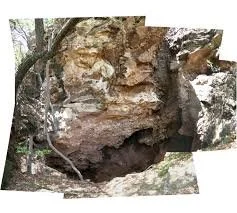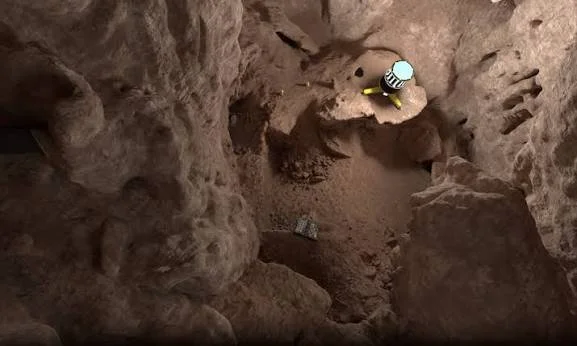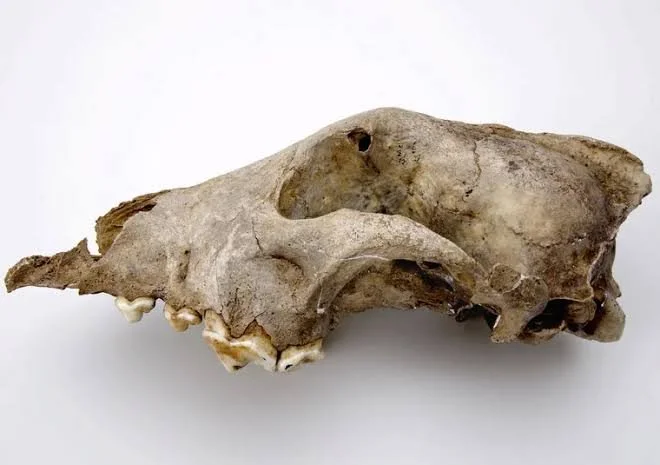
The isolated, uninhabited island of Youra, located in the northernmost reaches of the Sporades archipelago, is a rugged, wind-blasted limestone rock defined by vertical sea cliffs and dense wild goat populations. Near the island's southern ridge sits the legendary "Cave of the Cyclops," a massive subterranean cavern system that has yielded some of the most important prehistoric discoveries in southeastern Europe. While the cave is famous for its early maritime fishhooks, current zooarchaeological focus has centered on an extraordinary, well-preserved cache of 7,000-year-old canine skeletons excavated from a secure Neolithic context.
Known colloquially among field researchers as the "Dog Cave" layer, this stratigraphic horizon has yielded multiple nearly complete skeletons of domesticated dogs (Canis lupus familiaris). Finding intact canine fossils from this era is rare in the Mediterranean, making the Youra specimens a crucial evolutionary and historical link for understanding how dogs were integrated into the early maritime economies of Europe.
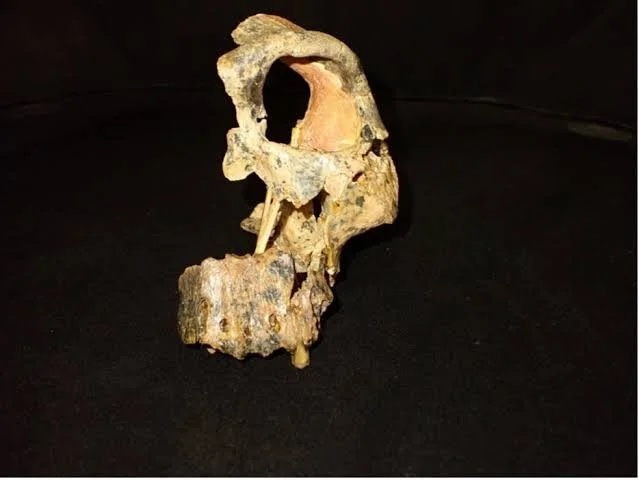
Osteological profiling and 3D geometric morphometrics of the skulls and jawbones indicate that these were medium-sized, athletic animals, standing roughly 45 to 50 centimeters at the shoulder. They possessed strong, robust jaws with a distinct dental crowding pattern that is characteristic of domestic dogs, differentiating them clearly from wild European wolves or jackals. The physical build of the Youra canines suggests they were highly agile animals, built for navigating the steep, treacherous limestone karst terrain of the island.
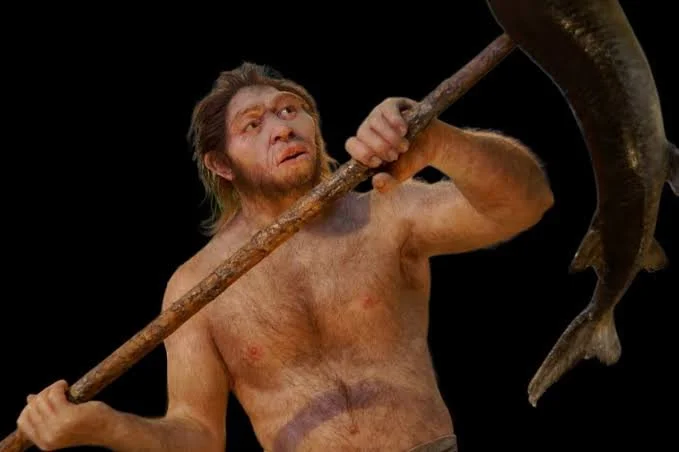
The real breakthrough came from stable isotope analysis of the bone collagen extracted from the canine ribs. The isotopic signatures revealed a diet that was surprisingly high in marine protein, consisting almost entirely of deep-sea fish scraps and marine mammal meat. This matches the exact dietary profile of the human hunters who occupied the cave during the Mesolithic and Neolithic periods.
This dietary overlap proves that these dogs were not feral scavengers living on the margins of human camps. They were fully domesticated companions, completely integrated into the human social unit and systematically fed from the community’s primary catches. On an isolated island like Youra, where the primary human survival strategy relied on hunting wild goats across cliff faces and launching open-sea fishing trips, these dogs would have been invaluable assets. They likely functioned as tracking animals, sentinels protecting camps from predators, and active hunting partners, showing that the human conquest of the Aegean islands was a multi-species effort from its very inception.