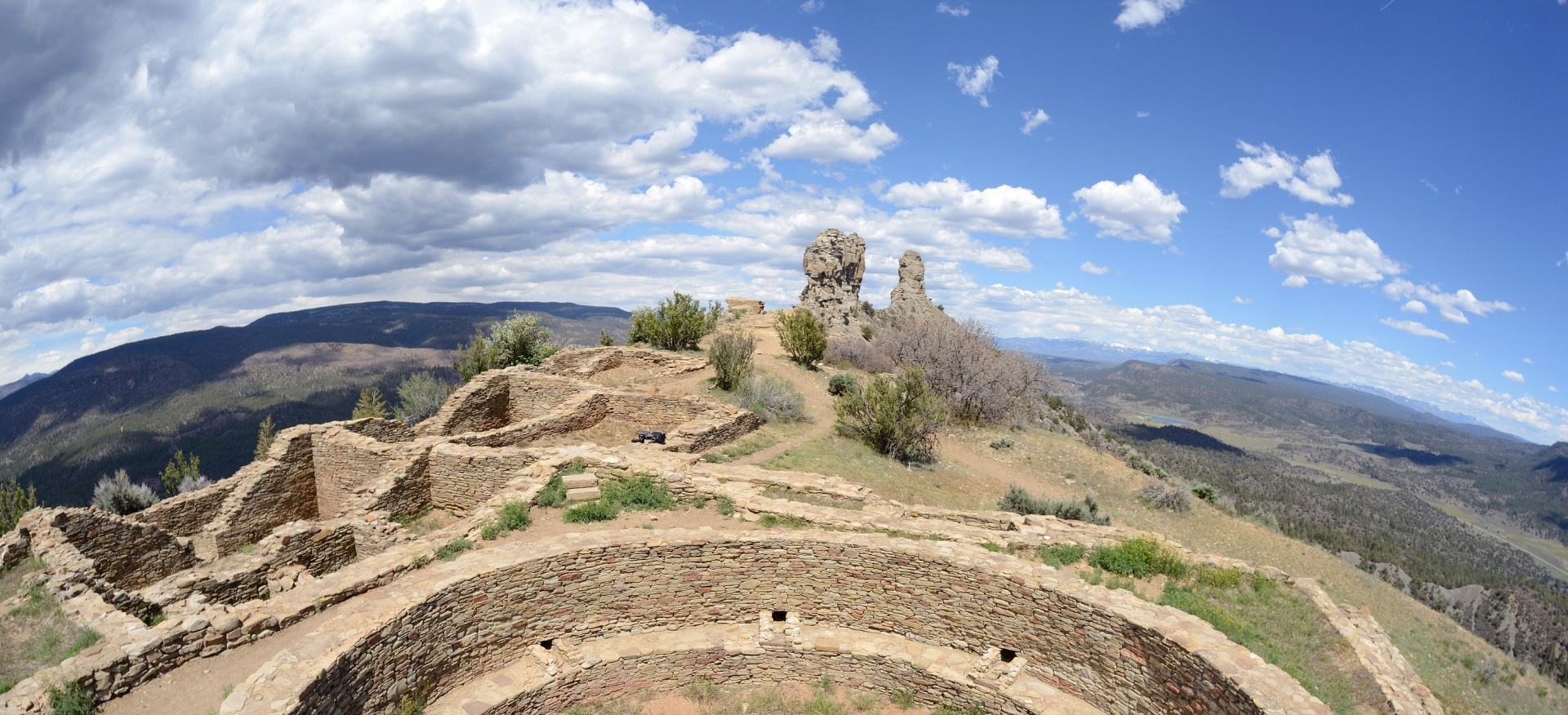
In this video, we will discuss quite a bit about ancient and prehistoric human migration and evolution into East Asian, specifically Japan. We will examine the strange and somewhat mysterious case of the Ainu tribe and other members of Y-Haplogroup D, and in doing so break down what exactly happened in Asia during our prehistory. Enjoy!
Huge Landslide Fossil Hunting! Biggest Outdoor Hunts Of 2022!
Today, we will be showing Crocodile Bones. This is an insight into the past, what life was like 180 Million Years Ago even before many of the most famous land-dwelling Dinosaurs ever existed.
Abandoned History: The Greek Buddhist King Who Conquered India
Demetrius I “The Unconquered”, King of Bactria took the Bactrian throne in 200 BC after the death of his father Euthydemus I. Bactria is a region that encompasses parts of modern-day Afghanistan, Tajikistan, and Uzbekistan. One fascinating aspect of the Greco-Bactrians was their eventual conversion to and development of “Greco-Buddhism”. Demetrius I “the Unconquered” Was himself a Buddhist. But he and many other Greco-Buddhists still venerated the greek pantheon as well. At the time of his death, his realm was said to span from the Aral sea in the north to the Kathiawar peninsula in the south to the mountains of Daylam in the west to the deserts of Xinjiang in the far east.
13,000 Years Ago: How Bad Was the Younger Dryas in the Fertile Crescent?
The Pleistocene-Holocene transition is a very significant period of time, because it marks what I believe is the true foundartions for the origins of civilisation, when we see the first permanent settlements in the Fertile Crescent followed by the onset of agriculture, and from then on humanity has developed exponentially.
From an archaeological point of view, it’s truly a fascinating time period, with so many incredible sites discovered in the past century, from Ancient Jericho in the West Bank, to Mureybet and Tell Qaramel in Syria, and Kortik Tepe, Gobekli Tepe and Karahan Tepe in Turkey.
The foundations of these sites were laid either just before, during or just after the Younger Dryas cold snap, which, according to platinum spike in the Greenland Ice Core data, began around 12,822 years ago and many parts of the world returned to glacial or near-glacial conditions, a change in climate that lasted around 1,000 or so years.
Not every part of the planet was affected in the same way. In Western Europe and Greenland, the Younger Dryas is a well-defined and synchronous cold period. South America had a less well-defined initiation but a sharp termination. Australia and New Zealand were seemingly unaffected but interestingly, around 100 years or so before the onset of the Younger Dryas as recorded in the Greenland data, Antarctica showed the opposite trend and started to rapidly warm up.
With this in mind, with my personal interest in the Pre-Pottery Neolithic, I really wanted to know what was happening in the Fertile Crescent. How did the Younger Dryas affect the climate from Anatolia down to the Levant, the area which really is the true cradle of civilisation? In this video we'll find out!
This 1000 Foot Long Secret Passage Was Built Below Israel And Forgotten About For 700 Years
It’s the time of the Crusades, and Christian forces in Acre are all too aware that an attack from Muslim armies may be just around the corner. There are certainly no guarantees that the Christians will hold onto the Israeli city, either, despite the fortifications they have built up. So, one of the Crusaders’ military orders, the Knights Templar, decide to build themselves a secret escape: a passage beneath the bowels of Acre that leads in turn to the ocean. And the tunnel itself is so well concealed that it ultimately remains undiscovered for 700 years…
A Mesmeric 2000 Year Old Mural Has Revealed The Hidden History Of An Ancient Italian City
An acropolis that has kept its secrets for thousands of years is being investigated by archaeologists in what was once the greek colony of que me in italy. The elite of the region are typically buried in long, sealed tombs here, according to these specialists. However, inside one of these vaults, the group finds a complex mural that brings to light a long-forgotten past. The hidden history of an ancient italian city has been revealed by the mesmerizing 2000-year-old mural. Ever since the phoenicians first arrived on the shores of what is now italy in the 10th century bc, this mediterranean country has been a melting pot of different cultures. But even though the romans arguably take up most of the pages in school history books today, the truth is that many different civilizations have left their marks on this part of the world. Back in the eighth century bc, for example, the homeland of the ancient greeks was under threat. So spurred on by crises such as climate change and famine, the greek spread out to colonize and trade with other lands, and soon enough, greek settlements had sprung up in sicily and on the italian peninsula.
The prehistoric origins of the Silk Road
In an expedition through the Central Asian steppe, a group of Kazakh and European archaeologists search for clues left by early Humans and Neanderthals - they are investigating the prehistoric origins of the legendary Silk Road.
Far before its emergence in the 2nd Century BC, and well before the silk trade, this expansive network of routes had already been 50,000 years in the making. Traversing over 2,500 km from the Uzbek to the Russian border, scientists search for traces that may hold the missing key to how extreme climatic events spurred prehistoric mass migrations, bringing an unprecedented encounter between Neanderthals and Homo sapiens.
These discoveries will help explain how climate change and geography fueled key genetic exchanges in human evolution, helped shape the structure of modern Asian populations, and later enabled the explosion of culture and trade along these routes. Their findings show how humans coped with inhospitable environments and cemented the nomadic cultures still present in modern-day Kazakhstan.
The Most Unbelievable Discoveries Made In The Ice
In today’s video we will be exploring the most unbelievable discoveries made in the ice. Enjoy!
What If Vesuvius Volcano Erupted in 2020?
How massive will the destruction be if the most famous volcano erupts again? What cities will suffer, how many people will die and what will it cost all of humanity? Watch the video to find out more!
Around 200 medieval skeletons unearthed at Pembrokeshire beach
Around 200 well-preserved medieval skeletons have now been recovered from one of Britain's best beaches, archaeologists say, including 90 in the last three weeks alone.

The bodies, believed to belong to an early Christian community, are thought to date back as far as the 6th century and were laid to rest in the cemetery of a former chapel at Whitesands Bay in Pembrokeshire, Wales.
They are well preserved because they have been buried in sand at what was once a medieval trading post with Ireland.

Excavation work is ongoing at Whitesands Bay, a Blue Flag beach near the city of St David's, which used to be the location of the chapel, called St Patrick's.
The skeletons were found just below the surface of the dunes where the chapel's cemetery used to be, exposed by natural erosion and storms.
They are now being preserved by experts at the University of Sheffield.
Preservation of the bones is 'absolutely incredible' because the skeletons have been immersed in sand, according to Jenna Smith at Dyfed Archaeological Trust, which is leading the dig.

'We've lifted over 90 burials in the last three weeks,' Smith told the BBC.
'It's really important that we do so because it gives that snapshot in time which we don't normally get in Wales. The bone doesn't normally exist.
'And the main reason that we're here is because we are here to stop the bones and the burials from eroding into the sea.'

Analysis by the University of Sheffield revealed the burials were of all ages and a mix of men, women and children and are likely to date between the 6th and 11th centuries.
All the graves were aligned with the head pointing west and with no possessions, in keeping with early Christian burial traditions.
Some of the skeletons were found to be in cists – graves lined and capped with stone slabs, a burial tradition common across western Britain in the early medieval period.
Some of the child burials were also found with white quartz pebbles placed on the top of the cists.
Whitesands Bay has been the focus for archaeologists since the early 1920s, because of St Patrick's Chapel and its associated cemetery.

It reads: 'Capel Patrick [is] full west of St Davids and placed as near his country, namely Ireland, as it could well be. It is now wholly decayed.'
Although the cemetery is thought to have been in use from the 6th century, the chapel is believed to have been built in the 11th century and was reportedly decayed by the 16th century.
Remains of the building were first excavated in 1924 when a cross-incised stone was found.
As for the burial ground, erosion continued to affect the site so badly that human remains periodically became exposed from the sand, before finally the graves were excavated in 1970.
There was an attempt by Pembrokeshire Coast National Park Authority to protect the burial site in 2004 when large boulders were placed on the dunes to try to slow erosion.
However, in 2014 stormy weather ripped the boulders away and exposed further burials, leading to a large-scale rescue excavation by Dyfed Archaeological Trust, followed by two further seasons of excavation in 2015 and 2016.

By 2016, efforts had revealed over 100 burials, but more found remains over the six-week excavation has brought the total to about 200.
The Dyfed Archaeological Trust said there is 'still a significant amount of evidence left to excavate', including an 'intriguing stone structure which pre-dates the burials'.
The excavations from Whitesands Beach are set to be stored at the National Museum of Wales.
The Lost Civilization of Atlantis: Separating Fact from Fiction
The idea of the lost civilization of Atlantis has captured the imagination of people for centuries, but there is no concrete evidence to support its existence. The story of Atlantis was first described by the ancient Greek philosopher Plato in his dialogues "Timaeus" and "Critias," where he presented it as a powerful and advanced society that disappeared in a single day and night of catastrophic earthquakes and floods.
However, there is no archaeological or geological evidence that Atlantis ever existed, and scholars believe that Plato's story was likely a work of fiction or a moral allegory. Some theories propose that Atlantis was based on the Minoan civilization on the island of Crete, which was destroyed by a massive volcanic eruption and subsequent tsunami around 1600 BCE.
Despite the lack of evidence, the story of Atlantis continues to be a popular topic in popular culture and pseudoscientific theories. However, it is important to distinguish between fact and fiction and approach the story of Atlantis with a critical and evidence-based perspective.
The Rosetta Stone - Key to Decoding Ancient Egyptian Hieroglyphs
The story of human civilization is richly embedded with codes, secrets, and mysteries. Among these, the enigma of ancient Egyptian hieroglyphs stands tall, not only for the beautiful artistry but also the knowledge they encompass. For centuries, these symbols remained an uncrackable puzzle, locking away tales of a grand civilization. That is, until the discovery of the Rosetta Stone—a monumental find that unlocked the key to deciphering hieroglyphs.
Discovery of the Rosetta Stone
In the summer of 1799, during Napoleon Bonaparte's Egyptian campaign, a French soldier named Pierre-François Bouchard chanced upon a slab of granodiorite while reinforcing a fort near the town of Rosetta (modern-day Rashid). The black slab bore inscriptions in three scripts: Ancient Greek, Demotic, and Hieroglyphs. Realizing the potential significance, the stone was sent to Cairo for further examination.
The stone's trilingual inscription was intended for priests, government officials, and the common folk of ancient Egypt. The Ancient Greek part was decipherable, prompting scholars to believe that the inscriptions contained the same message. This speculation made the stone an invaluable tool for understanding hieroglyphs.
Decoding the Hieroglyphs
The Rosetta Stone's discovery captured the imagination of linguists and scholars. One man, in particular, stood out in this quest—Jean-François Champollion, a French scholar passionate about ancient Egypt. He wasn't the only one working on the puzzle; Thomas Young, an English polymath, made significant inroads by identifying certain hieroglyphic sounds.
However, it was Champollion who made the groundbreaking discovery. By comparing the hieroglyphs to the known Greek text, he deciphered the phonetic characters and unlocked the sounds of the Egyptian language. He announced his findings in 1822, and by 1824, he had published a paper, offering the world its first glimpse into the meanings of hieroglyphs after over a millennium.
Significance of the Rosetta Stone
1. Unlocking Egyptian History: The Rosetta Stone bridged the vast chasm of time, reconnecting modern civilization to its ancient counterpart. Deciphering the hieroglyphs paved the way for understanding Egyptian history, religion, culture, and administration.
2. A Symbol of Multicultural Recognition: The trilingual inscription signifies a time when diverse cultural groups coexisted in Egypt. It underscores the importance of clear communication and mutual recognition between different civilizations.
3. Influence on Linguistics: The Rosetta Stone emphasized the importance of comparative linguistics. By comparing different scripts, researchers could uncover hidden linguistic structures, broadening our understanding of language evolution.
The Stone Today
Today, the Rosetta Stone resides in the British Museum in London. Since its arrival in 1802, it has been the cornerstone of the museum's Egyptian collection, drawing millions of visitors eager to witness the key that unlocked the language of the pharaohs.
However, the stone's stay in Britain hasn't been without controversy. Egypt has repeatedly requested its repatriation, arguing that the stone is an integral part of its cultural heritage. While discussions continue, the stone remains emblematic of the quest for knowledge and the enduring allure of ancient civilizations.
The Rosetta Stone's narrative is a testament to human curiosity and the indomitable spirit of discovery. It serves as a reminder of the interwoven threads of history and how, sometimes, a single artifact can illuminate an entire era. In unlocking the secrets of the hieroglyphs, the stone not only revived ancient stories but also underlined the significance of shared history and collective memory.
A Lost Continent Eliminated Millions Of Years Ago Turned Up In A Very Unlikely Place
When geologists from the University of British Columbia were searching for diamonds, they stumbled upon something much more precious: evidence of a lost continent here on Earth. Incredibly, some geologic samples they obtained contained fragments of material from a long-lost chunk of land that has since disappeared beneath the ocean Millions Of Years Ago. It was indeed a once-in-a-lifetime find, and the location of this lost continent is catching many historians off guard.
Mysterious Temples Found Underground
In the following video we will be exploring mysterious temples found underground. Enjoy!
Day In The Insanely Tough Life Of A Roman Slave
What was life really like for a Roman slave? Well, it depended on what kind of slave you were. If you were a household slave, you might have had it better than some others. You would have had a place to sleep and regular meals. But you would still be expected to work long hours doing things like cooking, cleaning, and running errands. And if you didn't do your job well, you could be beaten or even killed.
There is no doubt that slaves were the backbone of the Roman Empire. They were an important part of the Roman social and economic system and played a big role in the lives of Romans. Roman slavery was a horrible way to treat people.
Vampire Biology Explained | The Science of Vampirism
In today’s video someone (presumably an academic or scientist) dives into great detail regarding the science of vampires. Watch the video to find out more!
Horrific Things That Were Normal To Chinese Concubines
In the video below we will analyze how Victorian women used the bathroom in those huge dresses. Watch the video to find out more!
Strange Theories About The Ancient World
In the following video we will investigate strange theories about the ancient world. Watch the video to find out more!
How Old is Written Sanskrit?
In the video below we will investigate how old is written Sanskrit. Watch the video to find out more!
Etruscans: Italian Civilization Before Ancient Rome
The Etruscans were a fascinating and enigmatic civilization that flourished in central Italy prior to the rise of Rome, from the 8th century BCE until their culture was subsumed into the Roman Empire. They inhabited the region known as Etruria, roughly equivalent to modern Tuscany, western Umbria, and northern Lazio. The origins of the Etruscans have been a subject of much scholarly debate, with theories ranging from autochthonous development to migrations from the Near East or the Aegean region.
Etruscan society was complex and highly developed. They were known for their rich mineral resources, particularly iron, which contributed to their wealth and influence in the Mediterranean. Their trade networks were extensive, exchanging goods with Greek and Phoenician civilizations, from whom they also absorbed cultural and artistic influences. This is evident in the similarities between Etruscan and Greek pottery and the adoption of a Greek-styled alphabet that they adapted to their own Etruscan language—a language that remains only partially understood today due to the lack of substantial textual evidence.
Politically, the Etruscans were organized into city-states, much like the Greeks. These cities, such as Tarquinia, Veii, and Cerveteri, were ruled by powerful, hereditary elites. The Etruscan political system is noted for its influence on Rome, particularly the establishment of a republic and the concept of the division of powers. Moreover, several of the Roman kings during the monarchy period were of Etruscan origin, which further embedded Etruscan customs and practices into the foundation of Roman culture.
In terms of religion, the Etruscans were deeply spiritual and had a rich pantheon of gods, with which they again shared some similarities with the Greeks and Romans. They practiced divination and believed in the interpretation of omens. One of their most lasting legacies is the discipline of haruspicy, the reading of entrails, which was adopted by the Romans.
Archaeologically, the Etruscans are best known for their funerary practices, which included elaborate tombs rich in grave goods, wall paintings, and sarcophagi. The tombs provide a wealth of information about Etruscan life, beliefs, and art. They celebrated death as a transition to a different form of life, which is reflected in their joyful and colorful tomb paintings, contrasting with the more somber Greek depictions of the afterlife.
The decline of the Etruscan civilization is attributed to a combination of factors, including internal strife among city-states, resource depletion, and pressure from external forces, particularly the Romans and the Greeks in southern Italy. By the 4th century BCE, many Etruscan cities had fallen to Rome, and by the 1st century BCE, Etruscan cultural identity had largely merged with that of the Roman Empire.
In conclusion, the Etruscans were integral to the tapestry of ancient Italian history. Their legacy is seen in the cultural and political foundations of Rome and in the archaeological remnants that continue to captivate historians and archaeologists. The Etruscans serve as a testament to the cultural dynamism of ancient Italy and remind us of the complex interplay of societies in the Mediterranean basin. Their civilization provides an invaluable perspective on the ancient world, one that challenges the traditional Greco-Roman narrative and enriches our understanding of pre-Roman Italy.