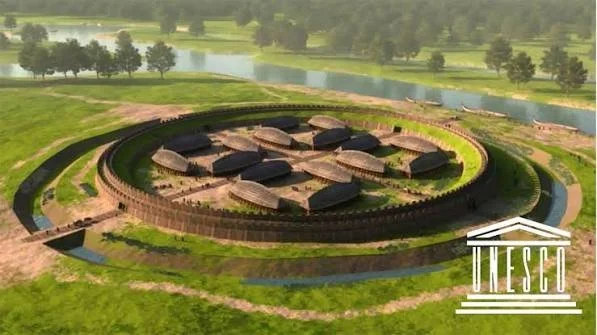
Everyone knows about the four main river valley civilizations: Egypt, Sumer, the Indus Valley, and the Yellow River Civilizations. What you may not know, however, is that there was a fifth river valley civilization. Situated in Central Asia, in a region known in antiquity as Bactria and Margiana, the Oxus Civilization, otherwise known as the Bactria-Margiana Archaeology Complex, flourished between about 2250 and about 1700 BC. The civilization was in contact with everyone in the region, especially the Indo-European speakers living to the north, and appears to have played a major role in the migration of some of those Indoeuropeans into South Asia. The Oxus Civilization was quite literally lost to history, no records of it have survived, and it was only discovered in the 1970s by Soviet archaeologists.
Giant Encounters in the Old Americas
When European explorers and conquistadors came to the Americas, many encountered giants and recorded this as fact. From mighty chiefs to entire tribes, some New World goliaths were friendly while others thirsted for bloodshed. And Europeans weren’t the only ones to meet them… 500 years earlier, the Aztecs almost drove the giants to extinction.
The Lost City in the Amazon
Redmond OHanlon, a world-renowned naturalist, explorer, and bestselling author, asked for my help on his quest to discover what happened to his hero, Col. Percy Fawcett, who disappeared in the Amazon jungle while looking for a lost city of immense wealth.
As part of his award-winning series “O’Hanlon’s Heroes,” we travel into the region where Fawcett disappeared and where I was kidnapped and held hostage by a tribe in 1996, while also searching for answers about Fawcett’s disappearance.
The term "Lost City in the Amazon" often alludes to a mythical ancient city located deep within the Amazon rainforest. Its idea has been a part of numerous tales and legends, fueling many exploratory expeditions. Here's a brief overview of the subject:
The Legend of El Dorado:
Origins: The most famous of all legends linked to lost cities in the Amazon is that of "El Dorado," which initially referred to a man (a king or chieftain) who covered himself in gold dust and then dove into a sacred lake. Over time, the legend evolved to represent a city of gold.
European Expeditions: In the 16th and 17th centuries, many European explorers journeyed into the heart of South America in search of this fabled city, driven by tales of vast wealth. These often perilous journeys rarely yielded the treasures they sought, but they did lead to the mapping and exploration of much of the continent.
Ancient Geoglyphs:
In recent years, with the use of satellite imagery and deforestation, hundreds of ancient geoglyphs have been discovered in the Brazilian Amazon. These earthworks, which date back around 2,000 years, suggest sophisticated pre-Columbian cultures that could sustain large populations, challenging previous notions that the Amazon was a "counterfeit paradise" with sparse, primitive inhabitants.
Kuhikugu:
Discovered near Brazil's Xingu River, the remains of this ancient city suggest that the region once supported a population of tens of thousands. This civilization, which existed between 1250 and 1500 AD, had complex infrastructure, including plazas, ceremonial centers, and even a network of ancient roads.
Challenges in the Search:
Dense Rainforest: The thick canopy and dense undergrowth of the Amazon rainforest make it extremely difficult to locate ancient ruins or artifacts.
Environmental Factors: The warm and wet conditions in the Amazon lead to rapid decomposition of materials. Thus, many artifacts or remains, if they existed, could have decayed over time.
Modern Threats: Deforestation, illegal mining, and agriculture are continually altering the Amazon's landscape, possibly destroying undiscovered archaeological evidence.
Modern Interpretation:
The fascination with the lost cities, while often romanticized, highlights the rich history and advanced pre-Columbian civilizations of South America. Today, researchers continue to find evidence that ancient societies thrived in the Amazon, developing complex societies long before European contact.
It's essential to approach legends like El Dorado with skepticism but also respect for the Indigenous cultures and histories from which these stories originate. The search for these lost cities has broadened our understanding of ancient civilizations in the Americas, even if the mythical city of gold remains elusive.
50 Rare Historical Photos That Will Leave You Speechless and you need to see!
In the video below we will be going through 50 rare historical photos that will surely leave you all speechless and you definitely need to see. Enjoy!
11,034 m below Sea Level! The Most Terrifying Places in the Ocean
The water conceals some of the world's most unsettling locations that you should avoid visiting. Here are a few of the strangest, most unusual, and eeriest underwater locations.
Thoth's Apocalyptic Prophecy about the Dark Ages to come! Ancient Egyptian Hermetic Text - Inspiring
Graham Hancock ends his lecture by narrating Herme's (Thoth) conversation with Asclepius, in which Hermes prophesizes the departure of the Gods, the disconnect of humans with their spiritual core, and the subsequent soul catharsis and rescue by God. Enjoy!
One In a Billion Moments In Nature
In this compilation video, we take a look at some of the most unusual moments in nature from all around the world. Featuring one of the world's rarest natural phenomena, to lucky and strange occurrences that are hard to explain. Sit back as we take a look at one in a billion moments in nature.
Plastic rocks found on remote island alarm scientists
The geology of Brazil's volcanic Trindade Island has fascinated scientists for years. But the discovery of rocks made from plastic debris in this remote turtle refuge is sparking alarm.
12 Most Amazing Ancient Artifacts Finds
The greatest archaeological discoveries usually end up in museums, but that's not where the story of their discovery begins. Instead, it usually starts with a team working in a muddy field or someone walking on a beach with a metal detector! There's no way of knowing when the next great archaeological discovery will be made, but we do know that we have plenty of them in this video.
Joe Rogan Reveals The Terrifying Connection Between Ancient Egypt And The Hermetic Traditions
Joseph James Rogan is a UFC commentator, podcaster, and former television host from the United States. He broadcasts The Joe Rogan Experience, a podcast in which he and his guests debate current events, history, politics, philosophy, science, and hobbies. Joe Rogan recently explored Egyptian history and revealed several previously undisclosed truths. He has discussed the connection between ancient Egypt and hermetic traditions. We'll talk about the relationship in this video.
A more open-ended term is Hermeticism, which may refer to a broad number of philosophical systems drawing on Hermetic texts, or even solely on subject matter typically connected with Hermes ,most notably, alchemy sometimes went by the moniker of "the Hermetic art" or "the Hermetic philosophy". The most famous use of the term in this broader sense is in the concept of Renaissance Hermeticism, which refers to a wide range of early modern philosophies inspired by, on the one hand, Marsilio Ficino's and Lodovico Lazzarelli's translation of the Corpus Hermeticum, and on the other, Paracelsus' introduction of a new medical philosophy drawing upon astrological, alchemical, and magical Hermetica, such as the Emerald Tablet.
Meet a Jurassic Killer: Temnodontosaurus
Temnodontosaurus fossils prove that this large predator fed on small ichthyosaurs. Watch the video below to find out more!
Advanced Ancient Tech & Engineering
In the following video we will be exploring advanced ancient tech and engineering. Enjoy!
The Genes Of This Tribe Carry DNA Of A Third Unknown Human Species
The internet is filled with people looking for the mysterious. They always want to uncover the next big thing. And one of the most mysterious parts of the world are tribes that have been uncontacted or otherwise super elusive. From the Apache, all the way down to the sentinelese, Today we bring you 20 scariest tribes who don't want to meet.
Archaeologists Discover What is Underneath Egypt’s Great Sphinx
Deep within the shadows of the Giza Plateau, the Great Sphinx stood as an eternal guardian, its inscrutable gaze fixed on the horizon. This colossal limestone monument, with the body of a lion and the head of a pharaoh, had confounded scholars for generations, its true purpose and origins shrouded in mystery. Today we dive in right into the Mysterious and Creepy Secrets of the Sphinx!
An Ancient ship full of Gold Coins was Found in the Desert
When we hear the words “ghost ship,” what we usually imagine is an abandoned ship with torn sails somewhere far out in the ocean. But sometimes, these ships get thrown ashore where they stay forever, getting gradually covered with sand.
Scientists follow a ‘yellow brick road’ in a never-before-seen spot of the Pacific ocean
The path to the Emerald City might travel along the ocean’s bottom. The crew (researerchers) of the Exploration Vessel Nautilus caught sight of a strange-looking formation while studying an area called Liliʻuokalani Ridge in the Papahānaumokuakea Marine National Monument in the Pacific Ocean.

“The yellow brick road?” a scientist mused in an interview of the discovery in April 2022. Others remarked that the rocks were reminiscent of a very different fictional world: “It’s the road to Atlantis,” one researcher said.
The golden boulders, separated by perfect 90-degree angles, form a small strip that appears to have been chiseled and organized by human hands. The seemingly paved street, however, was merely the natural product of old volcanic activity hundreds of feet below the water’s surface, according to the researchers.
“At the summit of Nootka Seamount, the team spotted a ‘dried lake bed’ formation, now IDed as a fractured flow of hyaloclastite rock (a volcanic rock formed in high-energy eruptions where many rock fragments settle to the seabed),” the researchers said.
“The remarkably brick-like divisions between the rocks are likely the coincidental result of heating and cooling stresses from multiple volcanic eruptions over millions of years”, the team added.
While piloting a remotely operated vehicle (ROV) around the Papahnaumokuakea Marine National Monument, a protected conservation area encompassing approximately 582,578 square miles (1,508,870 square kilometers) of the Pacific Ocean northwest of Hawaii, the researchers took a detour down this eerie undersea road.

The expedition is part of the Ocean Exploration Trust’s Nautilus Exploration Program, and its goal is to examine the ancient seamounts at Liliuokalani Ridge, which is located on the monument’s western boundary.
One of the team’s primary objectives is to gather geological samples from the area’s seamounts, which are underwater mountains generated by volcanic activity, in order to better understand their ages and origins. The crew will also gather microbial samples to see what types of strange creatures have managed to live near the Pacific’s deep, underwater volcanoes.
“Our exploration of this never-before-surveyed area is helping researchers take a deeper look at life on and within the rocky slopes of these deep, ancient seamounts,” the researchers added. Previous expeditions aboard the Nautilus research vessel have unearthed a plethora of eerie aquatic anomalies.
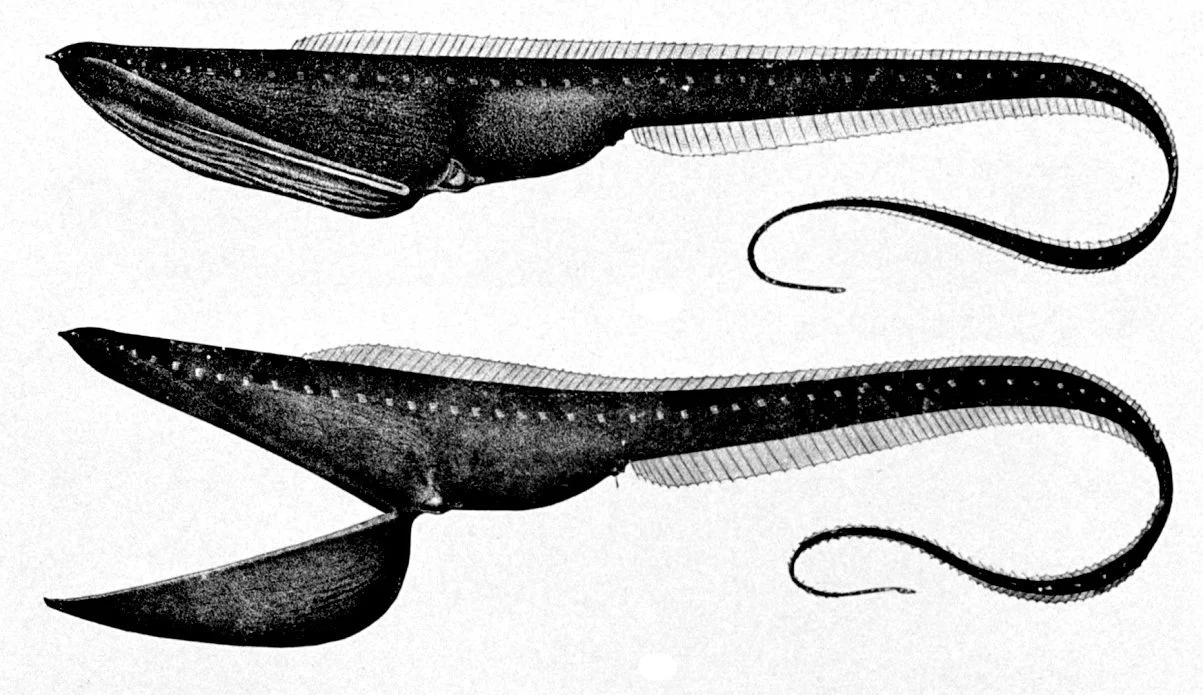
During a trip to the Papahnaumokuakea Marine National Monument in 2018, researchers were taken aback by a wiggling, googly-eyed creature that appeared to change shape in front of the camera.
The species was eventually recognized as a gulper eel (Eurypharynx pelecanoides), a gigantic-mouthed fish that can unhinge its enormous jaw to consume anything larger than itself.
The researchers in command of the ROV during that voyage also made a cultural allusion in response to the unexpected scene in front of them. “Looks like a Muppet,” one researcher said.
Underwater ruins of 3,000-year-old castle discovered in Turkey
Archaeologists in Turkey's eastern Van province discovered the ruins of a 3,000-year-old Urartu castle during underwater excavations in lake Van.

The excavation led by Van Yüzüncü Yıl University and Governorship of Turkey's eastern Bitlis Province revealed that the underwater ruins are supposedly from the Iron Age Urartu civilization, also known as the Kingdom of Van, thought to date back to the eighth to seventh centuries B.C.
"There was a rumor that there might be something under the water but most archaeologists and museum officials told us that we won't find anything," the head of the diving team Tahsin Ceylan said, adding that they proceeded with the research and discovered the ancient castle.

The current water level of Van Lake, which has a history of 6,000 years, is reportedly several hundred meters higher than it was during the Urartu civilization.
Civilizations living around the lake set up large villages and settlements while the water level of the lake was low, but they had to leave the area after it increased again, Ceylan said.
The research couldn't determine how much of the walls of the castle are buried, but about three to four meters are seen above the water.

"We will have to hold underwater excavations to find out about that" he added.
The underwater ruins are expected to attract the interest of thousands of tourists due to its unique historical worth.

Lake Van is the largest lake in Turkey and the second largest in the Middle East. It's also the biggest sodium water lake in the world. The lake lies on the high grounds of Eastern Anatolian region near the border with Iran. It was formed by a crater caused by a volcanic explosion of Mount Nemrut near the province of Van.
'Extremely rare' fossilized dinosaur voice box suggests they sounded birdlike
A fossilized ankylosaur voice box reveals that these beasts may have sported a far more sophisticated vocal range than scientists originally thought.
The "extremely rare" discovery of an 80 million-year-old fossilized voice box that belonged to an armored dinosaur reveals that the ancient beast may have sounded more birdlike than experts previously thought, new research suggests.

Pinacosaurus grangeri — a squat, armor-plated and club-tailed ankylosaur unearthed in Mongolia in 2005 — was discovered with the first fossilized voice box (larynx) found in a non-avian dinosaur.
Now, a new analysis, published Feb. 15 in the journal Communications Biology, suggests that the creature's vocalizations may have been far more subtle and melodious than its previously assumed crocodilian grunts, hisses, rumbles and roars.
"Our study finds the larynx of Pinacosaurus is kinetic and large, similar to birds that make a variety of sounds," study first author Junki Yoshida, a paleontologist at the Fukushima Museum in Japan, told Live Science. Dinosaurs are archosaurs, a group whose living members include crocodilians and birds. These animals use sound for a variety of purposes, including courtship, parental behavior, defense against predators and territorial calls. "So, these are the candidates for its acoustic behavior," Yoshida said.
At the beginning of the Triassic period roughly 250 million years ago, archosaurs split into two broad groups: a birdlike group that later evolved into dinosaurs, birds and pterosaurs, and a second group that later branched out into crocodiles, alligators and a number of extinct relatives.
Most animals that produce sounds do so through specially adapted organs connected to the lungs by the windpipe. In crocodiles, mammals and amphibians, the larynx — a hollow tube located at the top of the windpipe and crammed with folds of resonating tissues — is adapted to produce sounds. But in birds, the syrinx — a two-piped structure resting near the lungs, at the bottom of the windpipe — creates the foundations for complex melodies.
To assess the range of sounds P. grangeri might have made, the researchers studied two parts of the fossilized larynx that would have worked with muscles to elongate the airway and alter its shape, comparing them with structures in the voice boxes of living birds and reptiles. They found that P. grangeri had a very large cricoid (a ring-shaped piece of cartilage involved in opening and closing the airway) and two long bones that were used to adjust its size — a layout that turned the P. grangeri voice box into a vocal modifier.
This anatomical setup likely meant that the ancient herbivore was capable of making a large array of sounds — including rumbles, grunts, roars and possibly even chirps — while also bellowing them out across vast distances, the researchers said.
That said, it's unlikely that ankylosaurs chirped or warbled like modern-day birds, mainly because they were much bigger and had very different vocal mechanisms.

"It's really hard to even begin to infer what Pinacosaurus sounded like, because this is likely a completely novel vocal organ that produced its own kind of characteristic sound," James Napoli, a vertebrate paleontologist at the North Carolina Museum of Natural Sciences who was not involved with the study, told Live Science. "I think chirpy birdsong is unlikely, despite functional similarities to a syrinx, just because of how large ankylosaurs were. In my head, I imagine low, reptile-y rumbles and grunts and roars with an intricate birdsong-like complexity."
The researchers said their future research will focus on narrowing down the possible range of P. grangeri vocalizations while searching for other specimens that may contain preserved larynges or even a syrinx.
"Dinosaur sounds are one of those persistent unknowns that make this paper all the more exciting," Napoli said. "Without fossilized vocal organs, which are extremely rare, it's really hard to even begin to estimate the limits of dinosaur vocal behavior, much less what they really sounded like."
Lasers reveal massive, 650-square-mile Maya site hidden beneath Guatemalan rainforest
While conducting an aerial survey of northern Guatemala, researchers detected a sprawling Maya site.
Geologists in northern Guatemala have discovered a massive Maya site that stretches approximately 650 square miles (1,700 square kilometers) and dates to the Middle and Late Preclassic period (roughly 1000 B.C. to 250 B.C.).

The findings were the result of an aerial survey that researchers conducted via airplane using lidar (light detection and ranging), in which lasers are beamed out and the reflected light is used to create aerial imagery of a landscape. The technology is particularly beneficial in areas such as the rainforests of Guatemala's Mirador-Calakmul Karst Basin, where lasers can penetrate the thick tree canopy.
Using data from the scans, the team identified more than 1,000 settlements dotting the region, which were interconnected by 100 miles (160 kilometers) of causeways that the Maya likely traversed on foot. They also detected the remains of several large platforms and pyramids, along with canals and reservoirs used for water collection, according to the study, which was published Dec. 5 in the journal Ancient Mesoamerica.
The lidar data showed "for the first time an area that was integrated politically and economically, and never seen before in other places in the Western Hemisphere," study co-author Carlos Morales-Aguilar, a postdoctoral fellow in the Department of Geography and the Environment at the University of Texas at Austin, told Live Science in an email. "We can now see the entire landscape of the Maya region" in this section of Guatemala, he said.
So, what made this region so enticing that the Maya would want to settle there in the first place?
"For the Maya, the Mirador-Calakmul Karst Basin was the 'Goldilocks Zone,'" study co-author Ross Ensley, a geologist with the Institute for Geological Study of the Maya Lowlands in Houston, told Live Science in an email. "The Maya settled in [this region] because it had the right mix of uplands for settlement and lowlands for agriculture. The uplands provided a source for limestone, their primary building material, and dry land to live on. The lowlands are mostly seasonal swamps, or bajos, which provided space for wetland agriculture as well as organic-rich soil for use in terraced agriculture."

Researchers have previously used lidar to scan Maya sites in Guatemala. In 2015, an initiative called the Mirador Basin Project conducted two large-scale surveys of the southern portion of the basin, focusing on the ancient city of El Mirador. That project led to the mapping of 658 square miles (1,703 square km) of this section of the country, according to the study.
"When I generated the first bare-earth models of the ancient city of El Mirador, I was blown away," Morales-Aguilar said. "It was fascinating to observe for the first time the large number of reservoirs, monumental pyramids, terraces, residential areas and small mounds."
Researchers hope lidar technology will help them explore sections of Guatemala that have remained a mystery for centuries.
"Lidar has been revolutionary for archaeology in this area, especially if it's covered in tropical forest where visibility is limited," Marcello Canuto, director of the Middle American Research Institute at Tulane University and an anthropologist who wasn't involved in the study, told Live Science. "While surveying, we tend see a small part of the causeway, but lidar lets us see things that are big and linear. This research lets us see the area for the first time; the fact that we have this data is transformative."
'Prehistoric' mummified bear discovered in Siberian permafrost isn't what we thought
The bear, unearthed in 2020, was originally assumed to be an extinct cave bear that dated back at least 22,000 years. But a new necropsy reveals it is actually a brown bear that lived 3,500 years ago.

A perfectly preserved, mummified bear found entombed in the Siberian permafrost in 2020 isn't what scientists thought it was, a new analysis reveals. It turns out that the eerily intact carcass is much younger than first assumed and belongs to an entirely different species.
Reindeer herders unearthed the remains, which include the bear's intact skin, fur, teeth, nose, claws, body fat and internal organs, on Bolshoy Lyakhovsky Island, a remote Russian island located in the East Siberian Sea. Researchers named it the Etherican bear, after the nearby Bolshoy Etherican River.
When the Etherican bear was first uncovered, researchers at the Lazarev Mammoth Museum Laboratory at North-Eastern Federal University (NEFU) in Yakutsk, who have led the analysis of the remains, thought that the mummy was an extinct cave bear (Ursus spelaeus). Fossils of this long-lost species suggest that the enormous ancient bears, which are closely related to brown bears (Ursus arctos) and polar bears (Ursus maritimus), grew to around 11.5 feet (3.5 meters) tall and weighed a whopping 3,300 pounds (1,500 kilograms). U. spelaeus went extinct around 22,000 years ago, toward the end of the Last Glacial Maximum, the coldest part of the last ice age, so the researchers believed that the mummy was at least this old.

However, subsequent analysis revealed that their assumptions about the Etherican bear were way off: In reality, the beast was a brown bear that dated to around 3,460 years ago, the NEFU team said in a statement in December 2022.
The NEFU team recently conducted a full necropsy, or animal autopsy, on the Etherican bear, which has revealed even more about the mysterious mummy, Reuters reported.
The bear was a female that was 5.2 feet (1.6 m) tall and weighed around 172 pounds (78 kg), suggesting it was likely around 2 to 3 years old when it died. It is unclear how the bear perished, but its mummy showed signs of significant spinal injuries that likely contributed to its demise.
The Etherican bear was so well preserved that its stomach contents were still partly intact, which revealed that the bear had been dining on a mix of unidentified plants and birds, some of whose feathers were still inside the bear's belly. This fits with what we know about living brown bears that are omnivores, meaning they have a mixed diet of plants and animals.

The researchers also removed the bear's brain after cutting through its skull, which they hope to study in the future.
One of the biggest remaining mysteries about the Etherican bear is how it ended up on Bolshoy Lyakhovsky Island.
The island is currently separated from the mainland by around 31 miles (50 kilometers) of water, so the most likely explanation is that brown bears moved to the island when it was still connected by sea ice during the Last Glacial Maximum, according to Reuters. But if this was the case, then researchers would have expected to find many more brown bear remains on the island, which is a hotspot for paleontological treasures, including mammoth remains.