If you've ever had questions about scalping, hopefully this video answers some of them. Watch the video below to find out more!
Is a secret gold mine hidden in the B.C. mountains? This treasure hunter says so!
Adam Palmer has spent 10 years chasing a tantalizing legend — even though it comes with a curse.

Every summer for the past decade, Adam Palmer, 39, has spent weeks scouring the mountains near Pitt Lake, B.C., in search of a mythic lost mine known as Slumach's gold. He's hiked countless miles on logging roads, crossed icy glaciers and bushwhacked through thick coastal forest, only to return home empty-handed each time.
That is, until now.
On a clear morning in late July, Palmer showed me where he believes one of Canada's most famous lost gold mines is hidden.
We were standing in a remote alpine meadow, surrounded by jagged mountains, some 50 kilometres east of Vancouver. In the centre of the meadow were the remnants of an abandoned log cabin and beside it a rusted shovel and chisel — the tools of a gold prospector from decades ago.
"We think that this prospector was after Slumach's gold, if he hadn't already found it," Palmer explained, his voice brimming with optimism.

Closing in on a legend
Over the past century, hundreds — maybe even thousands — of people have looked for the fabled mine, which is said to be worth billions. Several prospectors have died trying to find it, others have gone missing. To date, no one has ever conclusively located it.
But with his discovery of the prospector's cabin, Palmer believes he is finally getting close. In addition to the cabin and mining tools, Palmer found an old glass jar that contained ore and what appeared to be gold.
We'd flown to the cabin site in a helicopter (he works for the company as an outdoor guide) so he could show me these clues first-hand, on the ground.
Palmer planned to return a few weeks later to search the surrounding mountains for the mine. Slumach's gold, he believed, was finally within reach.

I had one niggling question — does this mythic mine actually exist?
Who was Slumach?
The story of Slumach's gold is a curious mix of fact and folklore. It begins in the late 1800s, when an Indigenous man known only as Slumach was found guilty of murder and hanged in New Westminster, B.C.
Not long after his death, rumours began to surface that Slumach had discovered a lucrative — and hidden — stash of gold in the mountains, near Pitt Lake. Slumach, it was said, would bring walnut-sized nuggets of gold into saloons in New Westminster.

Just before Slumach was hanged, it was rumoured that he muttered a curse on anyone who dared to search for his gold mine: "Nika memloose, mine memloose." Loosely translated from the Chinook language, the words mean, "When I die, the mine dies."
There's little evidence to support any of the story, particularly the curse, but rumours of Slumach's gold began to attract more prospectors to the area.
In the 1930s, hundreds of prospectors travelled into the mountains around Pitt Lake every summer in search of the gold, according to Rick Antonson, co-author of the book Slumach's Gold: The Search for a Legend.
And they didn't all make it back.
"The tally done by mainstream media years ago was that 33 or more [people] had fallen victims to the curse," said Antonson, who, along with his brother Brian, has been fascinated with the Slumach story since he was a kid.
"We know the curse didn't exist, but we also know that it's treacherous territory."

Several prospectors have even claimed to have found the gold. In the 1970s, for example, a forest surveyor named Stu Brown said he stumbled onto a stream near Pitt Lake that was ankle-deep with gold nuggets. But Brown was never able to pinpoint the location again.
An elaborate hoax?
But for all those who believe in Slumach's gold, there are others who think it's just a hoax. Fred Braches, a local historian who recently published a book titled Searching for Pitt Lake Gold: Facts and Fantasy in the Legend of Slumach, says there's no evidence for most of the story.
Slumach was real, Braches says, "but he had nothing to do with gold." Braches believes that the story of Slumach's gold was created by locals in the Pitt Lake area to draw prospectors. More prospectors meant more jobs for guides and outfitters.

"There is no gold," says Braches, "but it is gold in somebody's mind, and that is important. People are looking for what they believe is there."
But even today, there's still a small community of people searching for the lost mine, sharing trip reports and swapping clues through Facebook and online message boards.
"You meet up and another story, another piece of the puzzle, comes out," Palmer says.
The thrill of the hunt
For these modern-day searchers, like Palmer, it's not about the money. Not anymore, at least. Much of the area where Slumach's gold is supposedly hidden is within the boundaries of Pinecone Burke and Golden Ears provincial parks, where mining for gold is prohibited.

For Palmer, the search for Slumach's gold is about the thrill of the hunt — trying to solve a mystery that no one else has been able to.
"If someone finds this gold," he said, "you are now the hero of a bunch of men who have been looking for so many years."
More than that, he says the search for the lost gold — all the dead ends and long days — has been about sharing the adventure with friends, some of whom he does trips with year after year.

"It's all about the time that you spend," he said. "It adds memories and those memories — that's the real gold."
After our helicopter trip in July, Palmer returned to the cabin site a few weeks later to search for the lost mine. And that's when he made another surprising discovery: gold.
Not a lot of gold — just a few tiny flakes, but still. He found it while panning a stream near the abandoned cabin.

"I thought I was gonna drop it," said Palmer, "and I knew that no one would believe me."
He plans to go back again next summer, to find Slumach's mine once and for all.
The Celestial Secrets of the Maya Ruler Pakal's Tomb
The tomb of Pakal the Great, also known as the Temple of the Inscriptions, is one of the most significant archaeological discoveries of the Maya civilization. Located in the ancient city of Palenque, in present-day Mexico, the tomb was discovered in 1952 by Mexican archaeologist Alberto Ruz Lhuillier.
The tomb of Pakal, who ruled Palenque from 615 to 683 AD, is renowned for its intricate carvings and decorations, which depict various scenes from Maya mythology and cosmology. One of the most striking features of the tomb is a large sarcophagus lid, which shows Pakal in a reclining position, surrounded by various celestial symbols and figures.
According to Maya cosmology, the universe was divided into three levels: the underworld, the earthly realm, and the heavens. The heavens were further divided into thirteen layers, each of which was associated with a different deity and had its own set of astronomical and astrological symbols.
The carvings on Pakal's sarcophagus lid depict the ruler's journey through the underworld and his eventual ascension to the heavens. The central figure on the lid is Pakal himself, who is shown with a headdress that represents the Milky Way. Surrounding Pakal are various celestial symbols, including a large bird that represents the sun, a serpent that represents the underworld, and a jaguar that represents the night sky.
The carvings on the lid also contain numerous references to the Maya calendar, which was based on a complex system of interlocking cycles. The calendar was used to track the movements of the sun, moon, and planets, as well as to predict the future and determine auspicious dates for important events.
Overall, the tomb of Pakal the Great is a testament to the sophistication and complexity of Maya cosmology and astronomy. The carvings and decorations provide a window into the beliefs and practices of this ancient civilization, and continue to fascinate and inspire scholars and visitors alike.
Pompeii | Secrets Buried in Ash
The ancient Roman city of Pompeii was destroyed by the eruption of Mount Vesuvius in 79 AD, burying it in layers of ash and pumice. The city lay buried and forgotten for centuries until its rediscovery in the 18th century. Since then, archaeologists have uncovered a wealth of information about life in Pompeii before the eruption, including secrets buried in the ash.
One of the most significant discoveries made in Pompeii is the extent to which the city was a hub of commerce and trade. Pompeii was home to many wealthy merchants and traders who imported goods from all over the Mediterranean, including spices, wine, and luxury goods like silk and ivory. The excavations have also revealed the presence of brothels, taverns, and other establishments that catered to the city's visitors.
Another secret buried in the ash of Pompeii is the city's religious practices. Pompeii was home to several temples and shrines dedicated to various gods and goddesses, including Jupiter, Venus, and Apollo. Archaeologists have uncovered many artifacts related to religious practices, including statues, altars, and offerings.
The ash has also preserved a wealth of information about daily life in Pompeii. The city's streets and buildings have been preserved almost exactly as they were at the time of the eruption, giving us a glimpse into the everyday lives of its inhabitants. We can see how they lived, worked, and socialized, and how they decorated their homes and public spaces.
Perhaps the most poignant secrets buried in the ash of Pompeii are the remains of its inhabitants. The ash has preserved the bodies of some of the people who were caught in the eruption, giving us a haunting reminder of the suddenness and violence of their deaths. The casts made from these remains have become some of the most iconic images of Pompeii, and a powerful symbol of the fragility of human life.
Overall, the secrets buried in the ash of Pompeii offer a unique and valuable window into the past, allowing us to understand the culture, society, and daily life of an ancient civilization in a way that few other archaeological sites can match.
The ENTIRE Story of Greek Mythology Explained (Documentary)
Greek Mythology and the Greek Gods have had a profound impact on the world, with the tales of Zeus, Pandora’s Box, Prometheus, Icarus, Medusa, Orpheus, King Midas, Sisyphus, Narcissus, Perseus, The 12 Labours of Hercules, Jason and the Argonauts, Theseus, The Trojan War, The Odyssey, and many more having spread to every corner of the globe.
From the very beginnings of Chaos to the adventures of Odysseus, this video takes you through, in chronological order, the entire story of Greek Mythology. No stone is left unturned, with every Greek God from Zeus to Hades and every Hero from Hercules to Achilles having their share of the limelight.
Sit back, relax, and enjoy everything you've ever wanted to know about the Greek Myths.

Unique thousand-year-old gold treasure discovered by 27-year-old Dutchman with metal detector
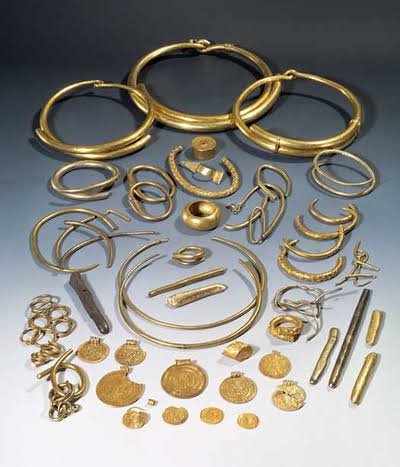
A unique medieval gold treasure was discovered by a Dutch historian using a metal detector. He mainly found four gold earrings, two strips of gold leaf and 39 silver coins that are a millennium old. The discovery was announced by the Royal Museum of Antiquities of the Netherlands.
The 27 years old historian Lorenzo Ruijter, said he discovered this impressive treasure in Hoogwoud, a small town in the province of North Holland.
In an interview with Reuters, Ruijter said, "It was very important that I discovered something so valuable. I really can not describe it. I never expected to discover something like this," adding that it was very difficult to keep his discovery under wraps for almost two years until the museum fully evaluated it.
However, experts at the Royal Museum of Antiquities took time to clean, examine and date the objects, and only now have they discovered that the youngest coin in the collection dates from around 1250 AD, leading them to conclude that the treasure was buried at that time.
By that time, the jewelry was already two centuries old, the museum said in a statement, adding that it must have been an "expensive and treasured acquisition".
While it will remain a mystery exactly why the treasure was buried, the museum pointed out that at the time, in the mid-13th century, Hoogwoud was at the center of a war between the Dutch regions of West Frisia and the Netherlands.
Lorenzo Ruijter believes it is possible that an influential figure of the time buried the precious items to protect them and in the hope of recovering them when he thought they were safe.
Because of its archeological value, the treasure has been given to the museum where it will be exhibited, but it remains the official property of Lorenzo Ruijter, who discovered it.
Golden Mountains Showed Up After The Euphrates River Finally Dried Up
Imagine a world where myths from long ago come true. Where the secrets of history are uncovered in the most unexpected places. Welcome to the mysterious site where the Euphrates River once flowed. But now, something extraordinary has emerged from the parched riverbed. A sight so stunning, it has left experts baffled and visitors in awe. Join us on an unforgettable journey as we explore the Golden Mountains that appeared after the dried-up Euphrates River. You won't believe your eyes!
The Tigris is the other big river that defines Mesopotamia. The Euphrates is the westernmost of the two.
Joe Rogan Reacts To Archaeologists Discovering a Mummified Monk in China
In today’s video Joe Rogan discusses the discovery of the mummified monk inside the statue on his podcast, The Joe Rogan Experience. He was amazed at the discovery, saying that it was unreal and crazy. Joe Rogan went on to say that he had heard of a Buddha statue that had been discovered with an actual Yogi in a Lotus position inside it, and the statue had been covered up around him.
NASA Just Announced The African Continent Cracked & It's Going To Cause Record Flooding
In the video below we will be talking about how NASA has now revealed that the African continent has cracked, resulting in record flooding. Enjoy!
This Archaeological Discovery Changes Everything About Denisovans
Forget everything you thought you knew about human evolution. Archaeologists just Discovered Who really Lived in Denisova Cave in Siberia. Denisova Cave in the Altai Mountains was home to archaic humans for a quarter-million years, including Denisovans, Neanderthals and Homo sapiens. The question is, who lived there when and in what order?
Denisova Cave is a crossroads of human evolution, deep in Siberia's Altai Mountains. Over tens of thousands of years, it was inhabited by various hominin species, not necessarily in this order: Homo sapiens, Neanderthals, and, of course, Denisovans - the elusive group discovered only recently at this site.
Denisovans are an ancient human group. The genetic analysis of a tooth and a tiny finger bone discovered in Denisova Cave in Siberia's Altai mountains provided our first tantalizing glimpse of the Denisovans. The fossil record of these mysterious humans is extremely limited, with only four fragments of bone and teeth and a jawbone discovered in Tibet.
How Hygienic were People in the Past?
In today’s video we will analyze how hygienic people were through the ages. Watch the video below to find out more!
Great Pyramids & Atlantis on 7,000 YEAR Ancient Relic? Ancient Egypt is Far Older Than They Say...
There’s a 7,000 year old drawing of Pyramids on a 7,000 year old ancient relic? How can this possible if the Great Pyramids of Giza are said to be 4,500 years old? This relic is referred to as the ‘Nubian Egg’. Does this Ostrich egg also depict the Lost City of Atlantis? In this video I share three pieces of evidence that “suggest” that the Ancient Egyptians are thousands of years older than what we were taught.
Secrets of a Medieval Castle | Chepstow Castle
Chepstow Castle, one of the first stone built castles in Wales, construction began in 1067, a year after the Norman invasion. Kevin Hicks has taken students around Chepstow for almost 30 years. Today, he takes us on a special tour of his favourite castle and shares with us some of the secrets he's discovered over that time.
Bizarre Discoveries Made In The Vatican
In the following video we will be exploring bizarre discoveries made in the Vatican. Watch the video to find out more!
Experts found a 4,500-year-old palace in Iraq, and it may be the key to a lost civilization
Have you ever wondered what secrets lie hidden beneath the sands of Iraq? Experts have recently made an astonishing discovery that might change our understanding of ancient civilizations. So, let’s reveal the incredible find of a 4,500-year-old palace in Iraq that may hold the key to a lost civilization. What secrets does this palace hold? Who were the people that built it?
Today we will explore the fascinating world of ancient Mesopotamia and uncover the mysteries of this incredible archaeological discovery.
Shocking Discovery: Massive Pyramids Unearthed in Antarctica's Icy Depths
In this video, we reveal the shocking discovery of massive pyramid structures buried deep in Antarctica's frozen wasteland. Join us on a journey of exploration as we delve into the mysterious history of these ancient structures and uncover the secrets they hold. We'll share the latest scientific findings and theories about the possible origins and purpose of these enigmatic pyramids. Could they be evidence of a lost civilization, or even extraterrestrial influence? Watch this video to find out!
Discovering Petra: Jordan's Ancient Hidden Gem
Petra, a UNESCO World Heritage Site and one of the New Seven Wonders of the World, is an ancient city carved into the red sandstone cliffs in the southwestern desert of Jordan. Often called the 'Rose City' due to the color of the stone, Petra was once the thriving capital of the Nabataean kingdom.
This archaeological marvel remained hidden to the Western world until it was rediscovered by Swiss explorer Johann Ludwig Burckhardt in 1812. Today, Petra attracts visitors from all over the globe, who come to marvel at its unique architecture and learn about its rich history.
The last known sabertooth skull was discovered in Iowa, according to researchers
According to researchers, a well-preserved sabertooth cat skull discovered in southwest Iowa may have been one of the last specimens of the species to roam the earth as glaciers retreated and temperatures increased.

According to Matthew Hil, an associate professor of archaeology at Iowa State and specialist in animal bones, radiocarbon dating reveals that the male cat perished at the end of the Ice Age between 13,605 and 13,460 years ago before being interred in the East Nishnabotna River.
David Easterla, an emeritus biology professor at Northwest Missouri State University, and Hill examined the specimen. Quaternary Science Reviews just released their research findings.
According to Hill, there is a very tiny possibility of discovering any sabertooth cat fossils, and locating one in Page County is even more unusual.
He continued, "The skull is a tremendously major deal. "Findings of this species are dispersed widely and typically consist of a single tooth or bone. This East Nishnabotna River skull is in very pristine condition. It's beautiful."

The skull provides proof that the animal was 2 to 3 years old and well over 500 pounds when it died. This shows that the sabertooth cat may have been larger than the majority of cats found in southern California, according to the university.
Hill and Easterla believe that southwest Iowa at this time resembled central Canada today in that it was a parkland with patches of trees scattered across grassland spaces.
The dire wolf, enormous short-faced bear, long-nosed peccary, flat-headed peccary, stag-moose, muskox, giant ground sloth, and possibly some bison and mammoth would have all coexisted with the cat, according to the expert.
A shattered canine on the skull may provide a hint as to how the sabertooth cat perished, according to researchers. Hill and Easterla suggest that the animal was fatally wounded by the prey, which resulted in a serious injury.

"These kinds of fossils can teach us a lot. They contain information on the ecology of the animals and how they react to a changing climate, as well as the advent of new predators and competitors, such as people "explained Hill.
Hill stated that he intends to use chemical markers in the fossil itself to discover more about the diets of animals in Iowa.
According to him, Iowa is an excellent place to conduct research on extinct Ice Period creatures and the people who were only beginning to coexist with them.
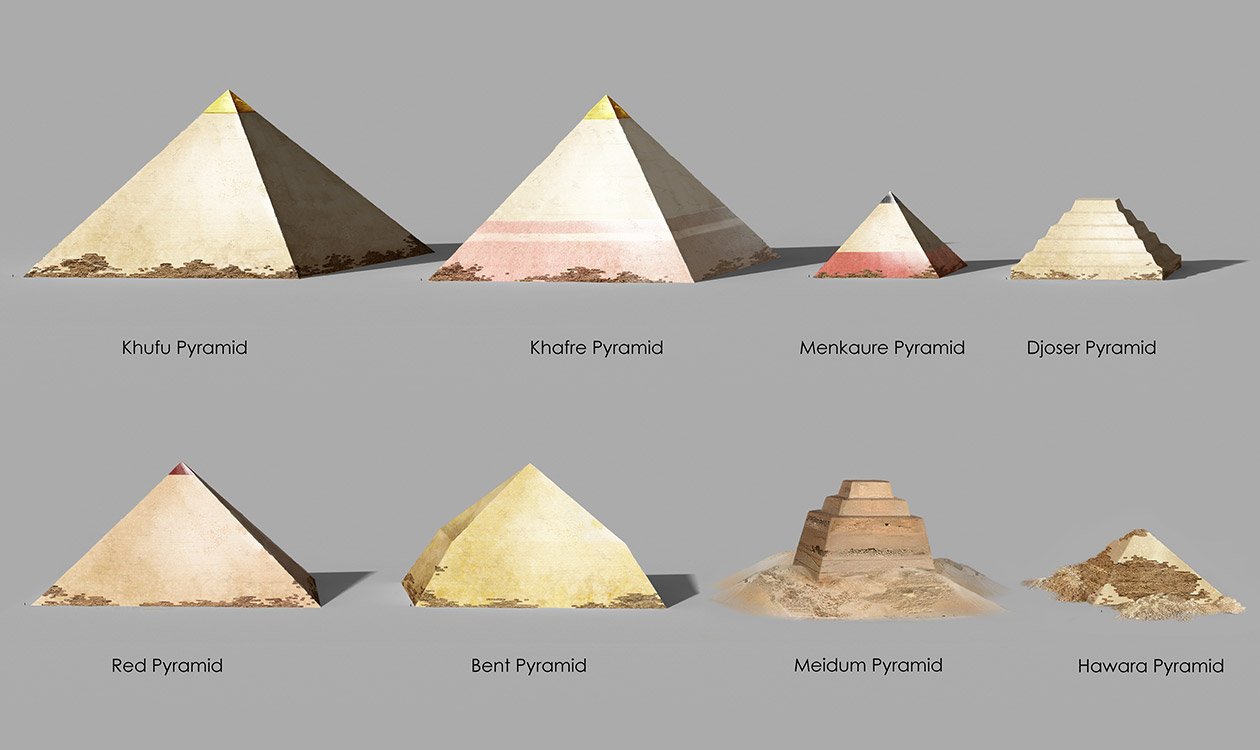
Egyptian Pyramids size comparison concept art from The Art of Assassin’s Creed: Origins book
The Evolution of Egyptian Pyramid Structures: From Mastabas to the Great Pyramid of Khufu
The Egyptian pyramids are among the most iconic and enduring symbols of ancient civilization. Over the centuries, these monumental structures have captivated the imagination of millions, inspiring both awe and curiosity. The development of pyramid structures in ancient Egypt spanned several centuries and evolved from simple pre-dynastic tombs to the grandiose constructions that we associate with the term "pyramid" today. This article will explore the evolution of Egyptian pyramid structures, beginning with the mastaba tombs of the pre-dynastic period and culminating with the Great Pyramid of Khufu.
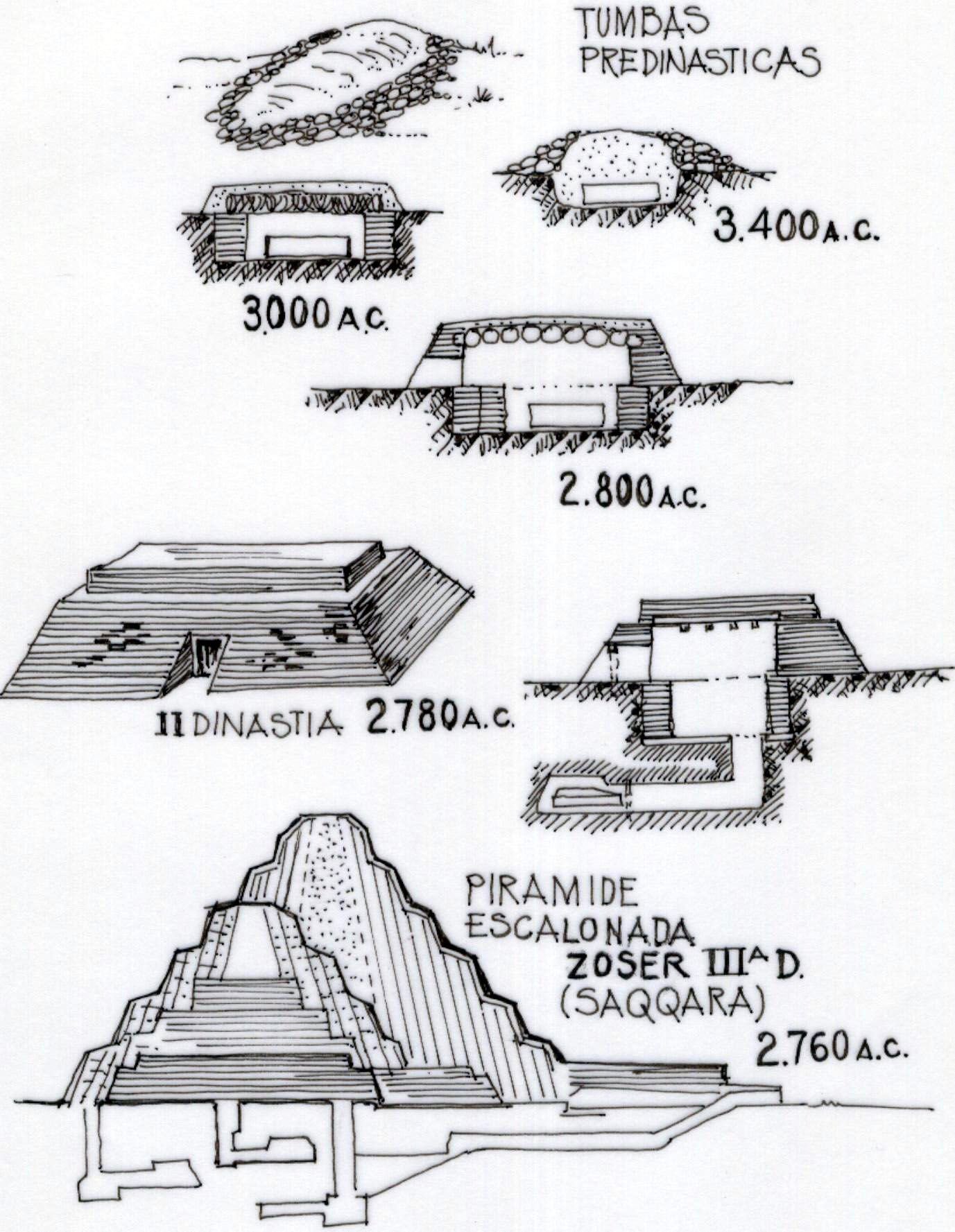
I. Pre-Dynastic Mastaba Tombs

Before the construction of the first pyramids, the people of ancient Egypt buried their dead in structures known as mastabas. These flat-roofed, rectangular structures were made of mud-brick and served as tombs for the elite members of society. The word "mastaba" is derived from the Arabic word for "bench," reflecting the bench-like shape of these structures. Mastabas featured an underground burial chamber accessed through a vertical shaft and a chapel above ground where family members could perform rituals and leave offerings for the deceased.
II. The Step Pyramid of Djoser: A Monumental Leap
The construction of the first pyramid in Egypt is attributed to Pharaoh Djoser, who ruled during the 3rd Dynasty (circa 2667-2648 BCE). His vizier, Imhotep, is credited as the architect behind the innovative design of the Step Pyramid, which is considered the first large-scale stone monument in the world. The Step Pyramid, located in Saqqara, represented a significant departure from the mastaba tombs that preceded it.

The Step Pyramid consists of six distinct mastaba-like layers, stacked one on top of the other, with each subsequent layer smaller than the one below it. This design gave the structure its distinct stepped appearance. The pyramid was initially intended as a traditional mastaba tomb, but Imhotep expanded the design, transforming it into a revolutionary new architectural concept. The Step Pyramid served as a template for future pyramid construction and marked the beginning of the Old Kingdom era of pyramid building.

III. The Transition to True Pyramids: Sneferu's Innovations
During the reign of Pharaoh Sneferu (circa 2613-2589 BCE), the father of Khufu, the design of pyramids underwent further evolution. Sneferu was responsible for the construction of three major pyramids: the Meidum Pyramid, the Bent Pyramid, and the Red Pyramid.
The Meidum Pyramid began as a step pyramid, but was later modified into a true pyramid by filling in the steps with limestone casing stones. However, the structure experienced a catastrophic collapse, likely due to the unstable foundation and steep angle.
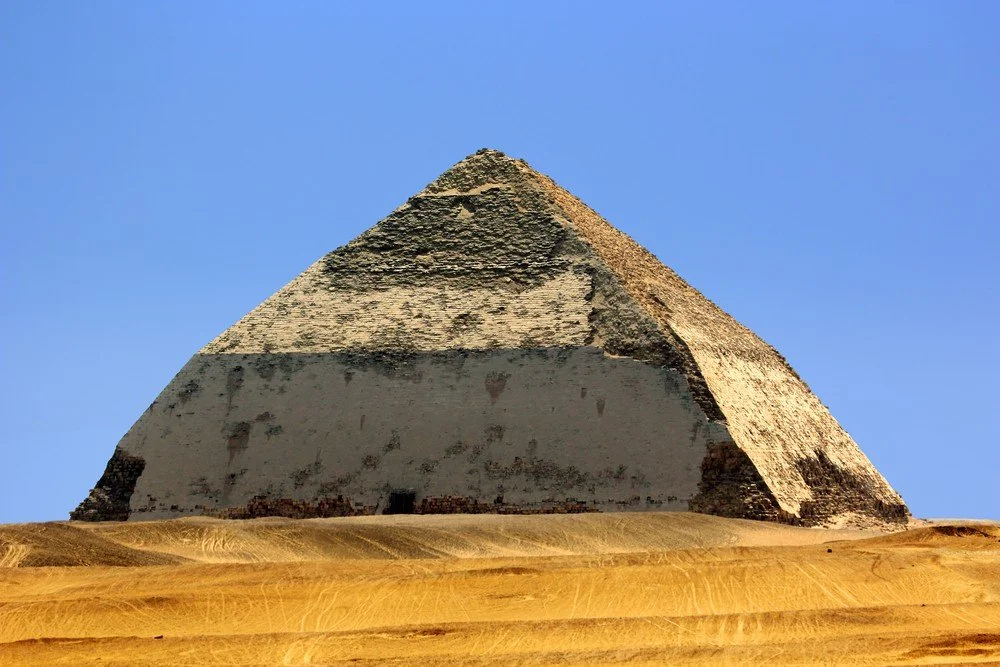
Learning from the failure at Meidum, Sneferu's architects designed the Bent Pyramid, which featured a change in the angle of inclination midway through its construction. This adjustment likely prevented a collapse, but resulted in the pyramid's unique bent shape.
Sneferu's final pyramid, the Red Pyramid, is considered the first successful true pyramid. Its smooth sides and consistent angle of inclination set the standard for future pyramid construction, paving the way for the Great Pyramid of Khufu.

IV. The Culmination: The Great Pyramid of Khufu
The pinnacle of pyramid evolution is undoubtedly the Great Pyramid of Khufu (circa 2580-2560 BCE), which remains one of the Seven Wonders of the Ancient World. Located in Giza, the Great Pyramid stands at approximately 481 feet tall and was the tallest man-made structure in the world for nearly 4,000 years. It is constructed from an estimated 2.3 million limestone blocks, some of which weigh over 15 tons. The precision and craftsmanship exhibited in its construction continue to baffle modern engineers and architects.
The Great Pyramid was built as a tomb for Pharaoh Khufu, and its original purpose was to serve as a stairway to the heavens, allowing the pharaoh's soul to ascend to the afterlife. The pyramid features three burial chambers: the King's Chamber, the Queen's Chamber, and an unfinished subterranean chamber. The King's Chamber contains a granite sarcophagus, presumably for Khufu, but no remains have ever been found inside.

The construction methods used to build the Great Pyramid remain a subject of debate and speculation. It is believed that a large workforce of skilled laborers and engineers was required to complete the pyramid over a 20-year period. Some theories suggest the use of ramps or levers to move and lift the massive stone blocks into place.
V. The Legacy of Egyptian Pyramid Structures
The pyramids of Egypt stand as a testament to the architectural and engineering prowess of ancient Egyptian civilization. Although the construction of pyramids declined after the reign of Khufu, their influence is still evident in later structures, such as the Nubian pyramids of Sudan and the Meroe pyramids.

The evolution of pyramid structures, from simple mastaba tombs to the awe-inspiring Great Pyramid of Khufu, represents a fascinating journey through the architectural advancements and cultural beliefs of ancient Egypt. Today, these iconic monuments continue to captivate visitors from around the world, serving as a powerful reminder of humanity's enduring drive to create, innovate, and leave a lasting legacy.

Where do the names of the days of the week come from?
The names of the days of the week in English have their origins in ancient mythology, specifically from Roman, Norse, and Germanic traditions. The Romans initially named the days of the week after the seven classical planets, which were associated with their respective gods. When Germanic and Norse cultures adopted the Roman calendar, they replaced some of the Roman gods with their own deities. Here's a breakdown of the origins of the names of the days of the week in English:
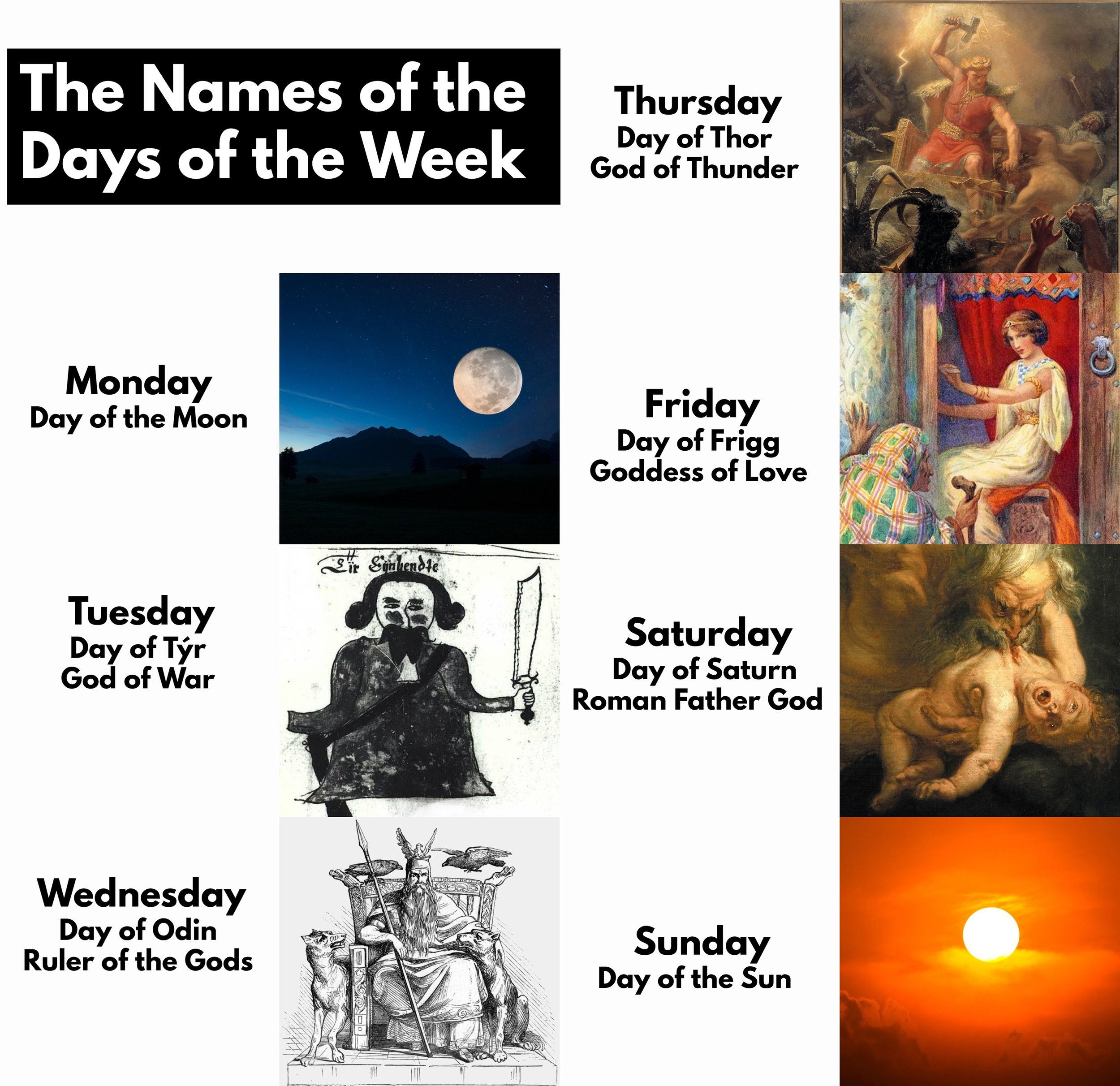
Sunday: Derived from "Sun's day" or "Day of the Sun." The day was named in honor of the Sun, which was considered a deity in various ancient cultures, including Roman and Norse mythology.
Monday: Derived from "Moon's day" or "Day of the Moon." This day was dedicated to the Moon, another celestial body that was revered as a deity in many ancient cultures.
Tuesday: Derived from "Tiw's day" or "Tyr's day." Tiw (also known as Tyr) was a Norse god of war and the sky. The Romans named this day "dies Martis," after Mars, their god of war. The Germanic and Norse people replaced Mars with their own god of war, Tiw or Tyr.
Wednesday: Derived from "Woden's day" or "Odin's day." Woden (also known as Odin) was the chief god in Norse mythology, associated with war, wisdom, and poetry. The Romans named this day "dies Mercurii," after Mercury, their god of commerce and travel. Germanic and Norse cultures replaced Mercury with their own chief god, Woden or Odin.
Thursday: Derived from "Thor's day." Thor was the Norse god of thunder and strength. The Romans named this day "dies Jovis," after Jupiter, their king of the gods and god of the sky and thunder. Germanic and Norse people replaced Jupiter with their own god of thunder, Thor.
Friday: Derived from "Frigg's day" or "Freya's day." Frigg (or Freya) was the Norse goddess of love, fertility, and beauty. The Romans named this day "dies Veneris," after Venus, their goddess of love and beauty. Germanic and Norse cultures replaced Venus with their own goddess of love, Frigg or Freya.
Saturday: Derived from "Saturn's day" or "Day of Saturn." This day was named in honor of the Roman god Saturn, who was associated with agriculture and time. In this case, the Germanic and Norse people did not replace the Roman god with one of their own, so the name "Saturday" retains its Roman origin.
These names have been passed down through history and evolved over time, becoming the names we use for the days of the week in English today.