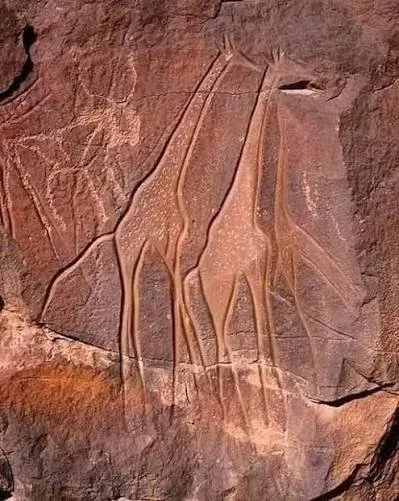
The Heliopolis Hegemony, a realm where the ancient and the futuristic converge, stands as a testament to the eternal struggle between tradition and progress. As the descendants of Greece grapple with the weight of their storied past and the lure of an uncertain future, the tale of the Heliopolis Hegemony continues to unfold in the ever-expanding tapestry of the multiverse.
An Iraqi palace discovered by archaeologists could offer insights into an ancient civilization
Have you ever wondered about the ancient civilizations that existed long before our time? The ones that have left their mark on history, but whose stories have been lost to the sands of time? Well, prepare to be amazed, as experts have recently made an incredible discovery in Iraq that could shed light on a long-lost civilization.
They have unearthed a 4,500-year-old palace that has been hidden for centuries, and it could hold the key to unlocking a fascinating chapter of human history. Join us as we delve into the secrets of this incredible archaeological find, and explore the tantalizing possibilities of what we may learn about the past from this amazing discovery.
The director of the British Museum called it one of the most fascinating sites he has ever visited. However, the archaeologist who led the discovery of a lost Sumerian temple in the ancient city of Girsu said he was accused of making it up and wasting funding. This is despite the fact that the director of the British Museum called it one of the most fascinating sites he has ever visited.
Dr. Sebastien Rey was the leader of the team that led to the discovery of the palace in modern-day Iraq that dates back 4,500 years and is considered to hold the key to additional knowledge about one of the earliest known civilizations.
During research that took place in 2017, British and Iraqi archaeologists found what is now known as the Lord House of the Kings of the ancient Sumerian city Girsu, which is today situated near Tello, in the southern region of Iraq. More than two hundred cuneiform tablets were unearthed nearby the old city. These tablets included administrative records of the ancient city and were written in cuneiform.
According to what Rey has claimed, when he first presented the idea of the initiative at international conferences, nobody believed him. He shared his thoughts by stating, Everyone essentially told him that you're making it up and wasting your time as well as spending British Museum UK government cash.
Ancient Sumerians established Girsu, one of the first known cities in the history of humans. Between 3,500 and 2,000 BC, the ancient Sumerians developed writing, built the first towns, and wrote the first codes of law. Girsu is one of the earliest known cities in the history of humankind. The old city was found for the very first time 140 years ago, but ever since then, the location has been subject to plundering as well as illicit excavations.
The Girsu Project is an archaeological partnership that was initiated in 2015 and is being headed by the British Museum. The Getty Museum in Los Angeles, California, is providing funding for the project.
The major temple that was devoted to the Sumerian deity Ninirsu was also found, and its discovery occurred at the same time as that of the palace and the tablets. Until these ground-breaking fieldwork efforts, the sole evidence of its existence was found on ancient inscriptions that were uncovered concurrently with the first successful excavation of the ancient city.
As a direct reaction to the destruction of significant historic sites in Iraq and Syria at the hands of Islamic State, this effort is modeled after a similar initiative that was first supported by the British government. Throughout the course of its history, Girsu has provided training to more than seventy Iraqis, who have gone on to complete eight field seasons.
Since their discovery the previous year, the initial mud brick walls of the palace have been kept at the Iraq Museum in Baghdad.
The Sumerians were an ancient people who lived in the area of Mesopotamia that is now known as the eastern Mediterranean. They were responsible for several scientific accomplishments, such as the development of writing and the measurement of time.
The location of the ancient city in southern Iraq was described as one of the most intriguing locations he had ever seen by Hartwig Fischer, the director of the British Museum.
He said that the partnership between the British Museum, the state board of antiquities and heritage of Iraq, and the Getty offers an important new manner of constructing worldwide cooperative cultural heritage initiatives.
They are thrilled that the recent discoveries that are the result of this collaboration can be celebrated during today's visit, and they look forward to continuing the long-term commitment of the British Museum to the preservation of the cultural heritage of Iraq, the support of innovative research, and the education of the next generation of Iraqi archaeologists at Girsu.
Into the Abyss: Chemosynthetic Oases (Full Movie)
In this video we will be exploring hydrothermal vents, cold-seep habitats, and food-falls including whale-falls and the communities at shipwrecks. Enjoy!
What A Pistol Duel Really Looked Like
The grim reality of formal dueling as told through the story of England’s last fatal duel (between Englishmen). When Lt. Henry Hawkey discovers his wife has become the obsession of a man named James Seton, he resolves to deal with the matter by means of a gentlemanly duel. The video will also touch on the history of sword duellists, honor culture and more!
Salt, Sewage and Sinkholes: The Death of the Dead Sea
It’s the lowest place on earth. A sea in the middle of a desert. Fed by the waters of the Jordan River, nestled on the borders of Israel, Jordan and the West Bank, the Dead Sea has supported life and provided spiritual healing for millennia.
But today the Dead Sea is disappearing, its waterline receding year by year. And the fight over this diminishing resource is fueling tensions between Palestinians and Israelis.
In a visually stunning story, correspondent Eric Tlozek travels through this ancient land to unravel the mysteries of this vanishing sea.
Upstream in the Jordan Valley, the waters which feed into the Dead Sea have been diverted for agriculture and now there’s not enough to go around.
Zeyad, whose family lives in the Jordan Valley, says Palestinian farmers aren’t getting their fair share of water.
“They have a very big shortage of water. The water allocated for this village actually is less than 50% of the needed water.”
David, an Israeli farmer, says the Jewish settlers have used the water well, making an arid land productive and fertile.
‘When we came to the Jordan Valley, we found a desert’, says David, a spokesperson for settlers in the West Bank. ‘Nothing was growing here. So now the Jordan Valley is green.’
Downstream, as a result of less water, the landscape around the Dead Sea is being dramatically transformed and is collapsing in on itself. It’s creating a strange phenomenon - ‘sinkholes’.
Highways which once teemed with traffic are now buckled and broken. Holiday resorts which once hosted families are abandoned and ruined.
“It’s a spectacular landscape that developed in a few years”, says an Israeli government geologist.
Meanwhile, the faithful still believe in the waters’ healing powers even though much of the water they bless now comes from sewage pipes.
“Once the water of the river is blessed…anyone that has any kind of pain or any kind of bad feelings he can wash himself with this water and he can be healed”, says an Armenian Orthodox priest.
There’s debate about schemes which could halt the sea’s decline but there’s little political will.
“Who will pay the price for this water?”, asks one geologist.
This is an epic journey through a land with a rich history, a troubled present and an uncertain future.
“If our children will say that they wanted to save it, they can't even do it because it's too late. Everything that's happening here, it's because of us,” says Carmit, an Israeli hydrologist.
Inca Drilling Machine?
This is an exclusive video of drilling machines cuts located in Quenqo Grande in Cusco. Did the Incas had a drilling machine? Do copper chisels can do this job? Or it belongs to ancient more technically advance society.
The Bizarre Lifestyle of Assyrian Empire's Male Concubines
Assyria was a major civilization in Mesopotamia from the 21st century BC to the 7th century BC. It started as a city-state and eventually became an empire from the early Bronze Age to the late Iron Age. Watch the video to find out more!
When Polish Workers Were Renovating A Saint’s Tomb, They Made An Astonishing Discovery Inside
Workers are restoring the tomb of St. Jadwiga in Poland when they notice a slab that appears different. Curious, they decide to lift the section and find a cavity underneath filled with charcoal and plaster. And as the conservators begin to hack away at this mix, they discover the answer to a centuries-long mystery.

After Alexander the Great: A Look at the Emperors Who Inherited His Empire
The death of Alexander the Great in 323 BC left a void that echoed through the ages, marking the beginning of a tumultuous era that reshaped the ancient world. His sudden demise at the tender age of 32 thrust his vast empire into a vortex of power struggles, leading to the emergence of new rulers who would carve their own legacies from the remnants of his conquests. This article delves into the chaotic aftermath of Alexander's death, focusing on the key figures who inherited his empire and the dynasties they founded.
The Wars of the Diadochi: A Prelude to Division
Alexander's unexpected death left his empire without a designated heir, propelling it into a series of conflicts known as the Wars of the Diadochi. These wars were fought among his generals, each vying for supremacy and a piece of the vast territories that stretched from the Balkans to the Indus Valley. The initial struggle saw a division of power that favored not unity but fragmentation, leading to the eventual disintegration of the empire into separate Hellenistic kingdoms.
The Division of an Empire
The empire's division culminated in the rise of four powerful successors, or Diadochi, each carving out their own realm from Alexander's conquests. Philip III, though nominally a ruler, was sidelined due to mental illness, and Roxanna, Alexander's widow, faced challenges due to her Persian lineage. This period marked the fracturing of an empire that had been unified under Alexander's rule.
Antigonus: The Last Bid for Unity
Antigonus, one of Alexander's most ambitious generals, made a valiant attempt to preserve the unity of Alexander's empire. Despite his efforts, he was ultimately defeated, allowing the empire to disband into separate kingdoms. His descendants would go on to rule Macedonia until the Roman conquest, marking the end of Hellenistic sovereignty in the region.
Lysimachus of Thrace: Conspiracies and Revolts
Lysimachus, who had served as one of Alexander's bodyguards, proclaimed himself king of Thrace. His reign was marred by continuous conspiracies and revolts, particularly from Macedonian nobles and subjects in Asia Minor. Despite these challenges, Lysimachus's rule exemplified the struggles of Alexander's successors to maintain control over their territories.

Seleucus: Founder of the Seleucid Empire
Seleucus emerged as one of the most successful successors, inheriting a vast empire that stretched from the Mediterranean to India. His military and diplomatic prowess allowed him to consolidate his rule, founding the city of Seleucia as his capital. The Seleucid dynasty, initiated by Seleucus, would remain a significant force for centuries, despite facing internal and external challenges.
Ptolemy Soter: A Cultural Beacon in Egypt
Ptolemy Soter, declaring himself pharaoh of Egypt, founded the Ptolemaic dynasty, which would leave a lasting cultural legacy. Under his rule, Alexandria became a center of Hellenistic culture, housing wonders such as the Great Library and the Lighthouse of Alexandria. The dynasty, though ending with Cleopatra's death in 30 BC, significantly influenced the spread of Hellenistic culture across the Mediterranean.
Legacy of the Successors
The successors of Alexander the Great played pivotal roles in the dissemination of Hellenistic culture throughout the ancient world. Through their conquests and rule, they ensured that Greek culture, language, and traditions permeated the societies they governed. The dynasties they founded, despite the eventual rise of Rome, contributed to a cultural and intellectual renaissance that would influence subsequent generations.
In conclusion, the era following Alexander's death was marked by significant turmoil and transformation. The generals who succeeded him, each with their own vision and ambition, laid the foundations for new kingdoms that would carry forward the legacy of Hellenistic culture. Their reigns, fraught with conflict and conquest, illustrate the complex legacy of Alexander the Great, whose empire, in its division, gave birth to a new era in ancient history.
1177 B.C.: When Civilization Collapsed | Eric Cline
In the 12th century BCE the great Bronze Age civilizations of the Mediterranean—all of them—suddenly fell apart. Their empires evaporated, their cities emptied out, their technologies disappeared, and famine ruled. Mycenae, Minos, Assyria, Hittites, Canaan, Cyprus—all gone. Even Egypt fell into a steep decline. The Bronze Age was over.
The event should live in history as one of the great cautionary tales, but it hasn’t because its causes were considered a mystery. How can we know what to be cautious of? Eric Cline has taken on on the mystery. An archaeologist-historian at George Washington University, he is the author of "1177 B.C.: The Year Civilization Collapsed." The failure, he suggests, was systemic. The highly complex, richly interconnected system of the world tipped all at once into chaos.
Terrifying Rapture Sign Found At The Euphrates River
Attention all conspiracy theorists, A groundbreaking discovery has been made at the Euphrates River and it's sending shockwaves across the globe. The symbol etched into the riverbed has sparked intense debates and speculation. Is it a sign of the impending Rapture or a symbol of hope for a brighter future? As the world watches in suspense, we set out to uncover the truth behind this mysterious find. Join us on this nail-biting journey as we unravel the secrets of the symbol and reveal what it truly means for the future of humanity.
Searching for a King: Israel's United Kingdom: the Complete Series
There are stories and people in the Bible that are easy to take for granted. The question is, do these narratives describe real events or are they (as the critics claim) merely legends? Take a front-row seat as Jeremy Dehut & Barry Britnell travel to Israel and talk to archeologists and connect the geography, history, and archeology to the events surrounding Israel's first kings in this epic documentary series from Appian Media. “Searching for a King: Israel's United Kingdom" is a 5 part docu-series that will being perspective to the Biblical account like you've never seen before!
New Robots to Explore the Great Pyramid
The Great Pyramid of Giza continues to surprise us with hidden secrets and intriguing anomalies that have yet to be properly investigated. The visual inspection of the North Face Corridor announced on March 2, 2023 is hopefully the beginning of many more revelations to come.
The ScanPyramids ‘Big Void’ above the Grand Gallery is now more promising than ever before, but reaching this space will be a significant challenge.
Since drilling into the core of the pyramid for 7+ meters to reach the Big Void is a daunting proposition, there are other methods of investigation that can occur which are minimally invasive.
New soft-bodied robots powered by compressed air have the ability to investigate previously-inaccessible areas of the Great Pyramid. Near the Queen’s Chamber a drilling from 1986 by Gilles Dormion hit a large cavity of anomalous sand that has never been explained. Innovative and inexpensive robots can now easily burrow through this sand to determine the physical parameters of this hidden area.
These robots can also be used within the ScanPyramids North Face Corridor, and even the Big Void if an access point is ever found or created.
Scientists Reject Finds of Archaeologists, Which Contradict the Official Ones
In this video, the finds of archaeologists are waiting for you, which the official science denies. Why scientists are doing this is difficult to say, and there are many reasons for this. One of the first - that all these finds are really fake. Therefore, scientists have no desire and time to study and confirm these remains or artifacts. But there are findings that scientists purposefully reject, and soon they even disappear!
Divers Scouring The Pacific Discovered A Wreck Containing Billions Of Dollars’ Worth Of Treasure
A research team just off the coast of Colombia is awaiting confirmation of a monumental discovery. And as the images finally come back from a camera nearly 2,000 feet below the surface of the Caribbean Sea, the group finally know that they’ve found something special. Yes, the “Holy Grail” of sunken treasure ships lies beneath them – one that hasn’t been seen for 300 years. Welcome to the final resting place of the San José.

Illustration by Dimosthenis Vasiloudis
The Evolution of the Holy Tomb: From a Simple Tomb to the Church of the Holy Sepulchre
The Church of the Holy Sepulchre, located in Jerusalem's Old City, is one of the most revered and significant sites in Christianity. It houses the Holy Tomb, also known as the Holy Sepulchre, where Jesus Christ is believed to have been buried and resurrected. The history of this sacred site spans centuries, marked by destruction, restoration, and architectural marvels. In this article, we will explore the historical structure process of the Holy Tomb, from a simple tomb to the magnificent Church of the Holy Sepulchre.

Rocío Espín Piñar, Collaboration for National Geographic magazine, December 2017.
The Early Years: A Simple Tomb
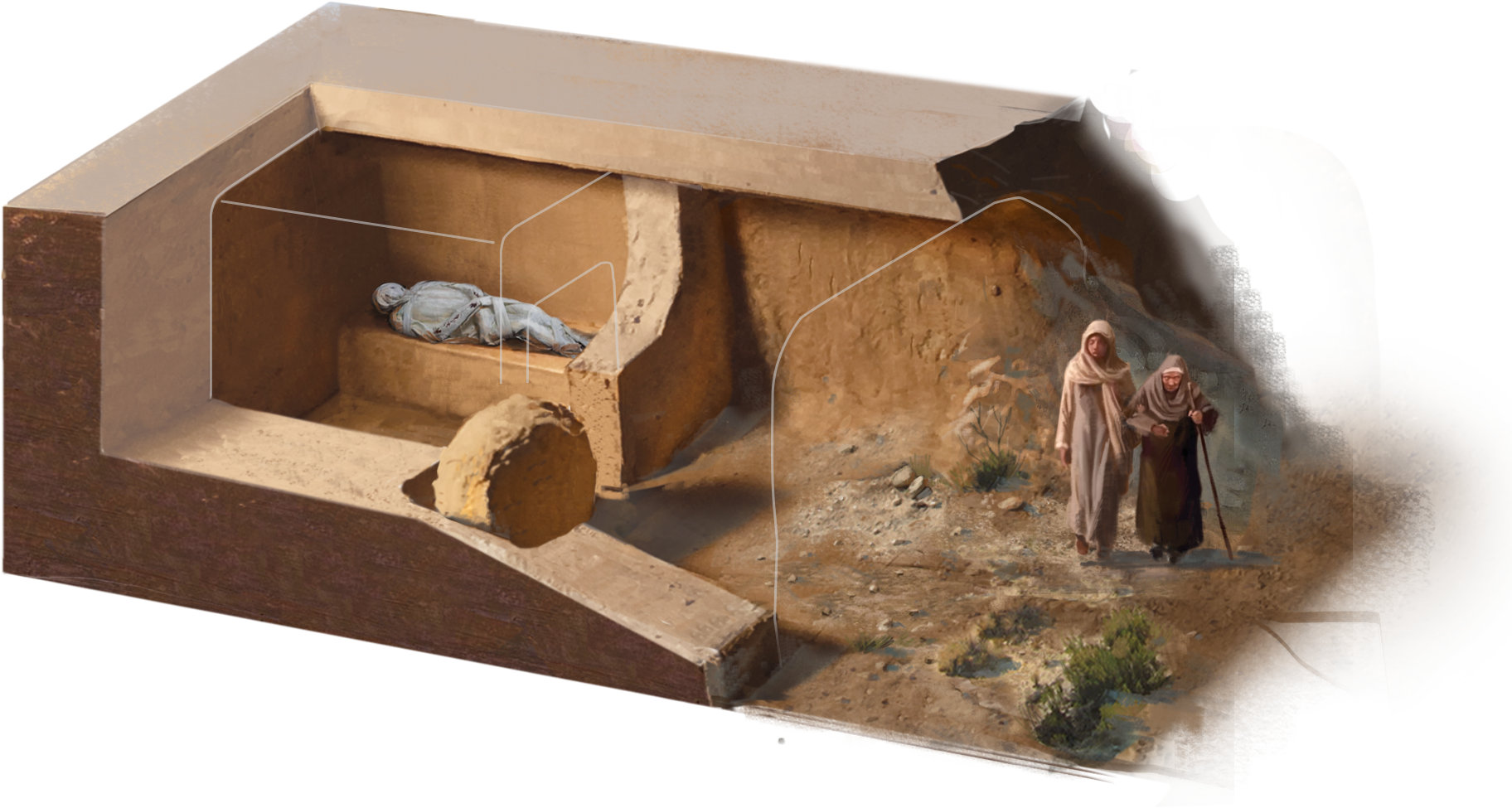
Rocío Espín Piñar, Collaboration for National Geographic magazine, December 2017.
The story of the Holy Tomb begins around 30-33 AD when Jesus Christ was crucified and subsequently buried in a new tomb, hewn out of rock. Located just outside the walls of Jerusalem, the tomb was believed to be owned by Joseph of Arimathea, a wealthy man who had become a follower of Jesus. Initially, the tomb was a simple, modest structure with a burial chamber and a rolling stone to seal the entrance.
The Roman Period: The Temple of Venus
In 135 AD, following the Bar Kokhba Revolt, the Roman Emperor Hadrian sought to suppress Jewish and Christian religious activities in Jerusalem. He ordered the construction of a temple dedicated to Venus, the Roman goddess of love, on the site of the Holy Tomb. This act of desecration obscured the tomb's location for almost two centuries.
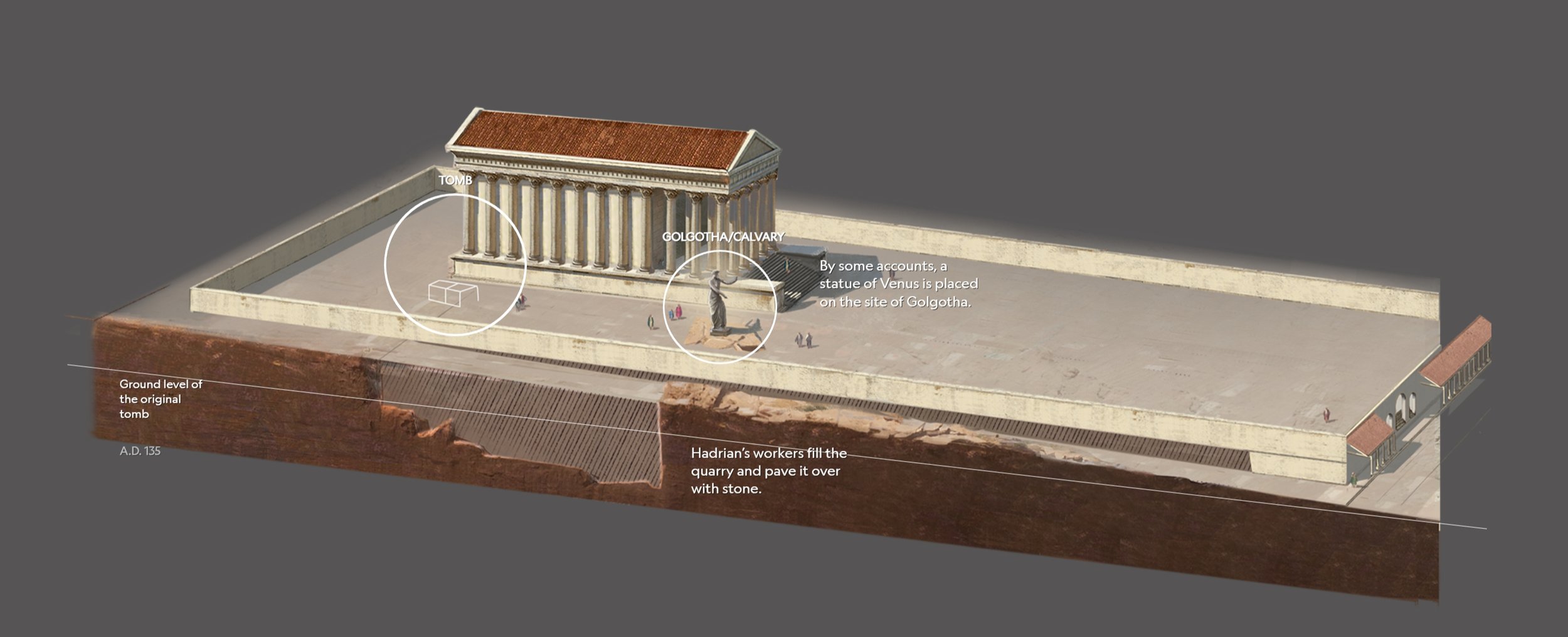
Rocío Espín Piñar, Collaboration for National Geographic magazine, December 2017.
The Constantinian Era: Rediscovery and the First Church
In 325 AD, Emperor Constantine the Great embraced Christianity and embarked on a mission to locate the Holy Tomb. His mother, Helena, traveled to Jerusalem and ordered the demolition of the Temple of Venus. Excavations at the site uncovered the tomb, which was identified as the Holy Sepulchre. In 326 AD, Constantine commissioned the construction of the first Church of the Holy Sepulchre. The church complex included the Rotunda, an octagonal structure housing the tomb, and the Martyrium, a basilica for worship.
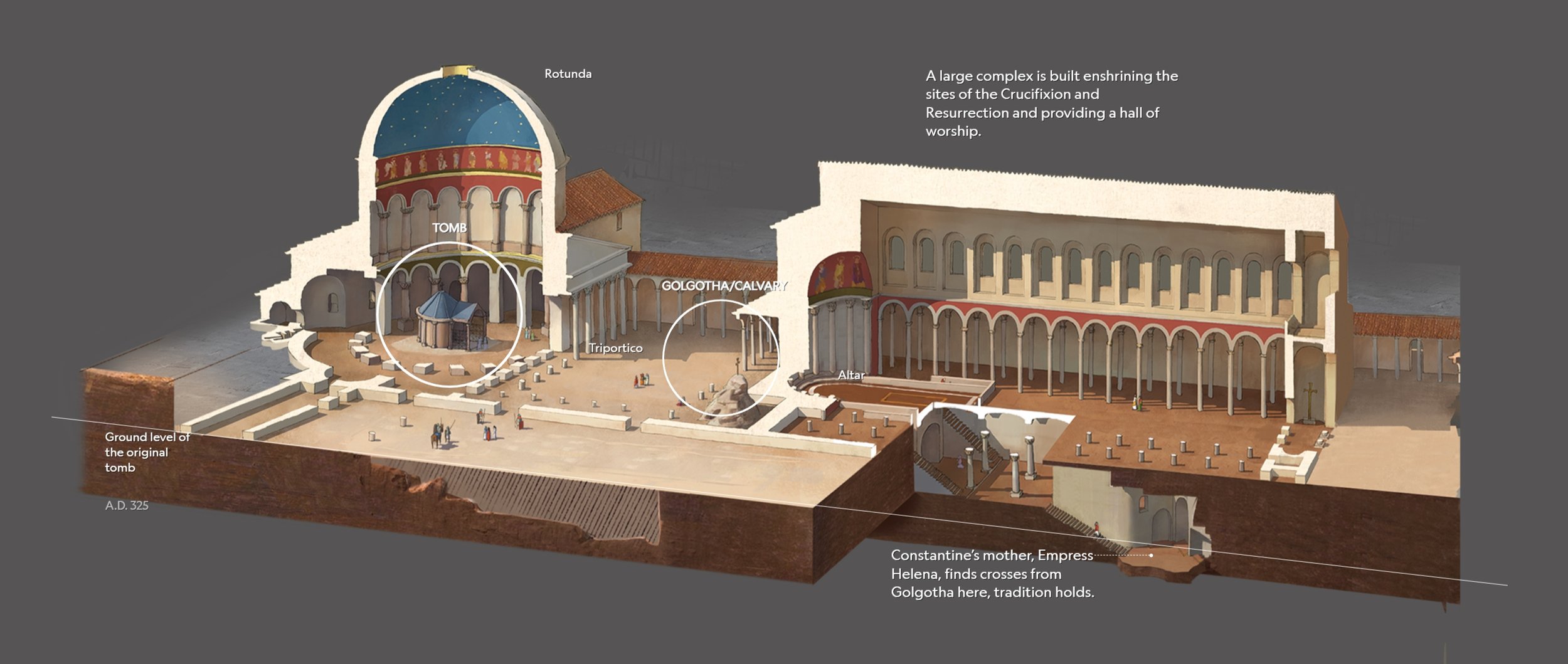
Rocío Espín Piñar, Collaboration for National Geographic magazine, December 2017.
The Early Islamic Period: Preservation and Modifications
In 614 AD, Jerusalem was conquered by the Persian Empire, and many Christian sites were destroyed. However, the Church of the Holy Sepulchre was spared, thanks to a letter of protection reportedly signed by the Prophet Muhammad. The Islamic Caliphates that ruled Jerusalem after the Persians made some modifications to the church, but the Holy Sepulchre remained largely unaltered.
The Crusader Period: Reconstruction and Expansion
In 1099, during the First Crusade, the Crusaders captured Jerusalem and set about restoring and expanding the Church of the Holy Sepulchre. They added several chapels, enlarged the Rotunda, and connected the church to the city's walls. The Crusader-era church was a magnificent structure, reflecting the wealth and power of Western Christendom.

Rocío Espín Piñar, Collaboration for National Geographic magazine, December 2017.
The Ayyubid and Mamluk Periods: Decline and Disrepair
Following the Crusaders' defeat by the Muslim forces of Saladin in 1187, the Church of the Holy Sepulchre fell into decline. While the site remained a pilgrimage destination, the church itself suffered from neglect, vandalism, and damage caused by earthquakes and fires.
The Ottoman Era: Restoration and the Status Quo

Rocío Espín Piñar, Collaboration for National Geographic magazine, December 2017.
In the 16th century, under the rule of the Ottoman Empire, the Church of the Holy Sepulchre was extensively repaired and restored. A decree issued by Sultan Suleiman the Magnificent established the Status Quo, a set of rules governing the shared custody and use of the church by the various Christian denominations. This agreement, which remains in effect today, has preserved the delicate balance between competing religious factions and has ensured the continued conservation and maintenance of the church.
The Modern Era: Preservation and Ongoing Challenges
In the 19th and 20th centuries, various international stakeholders took an interest in the preservation and restoration of the Church of the Holy Sepulchre. The British Mandate authorities carried out important structural work during the 1920s and 1930s, while in 1959, the Orthodox, Catholic, and Armenian Apostolic communities agreed to a major restoration project, which included the removal of centuries-old layers of accumulated debris and the installation of a new marble cladding on the exterior of the tomb.

Rocío Espín Piñar, Collaboration for National Geographic magazine, December 2017.
More recently, in 2016, a multinational team of experts carried out an extensive restoration of the Edicule, the small chapel that encloses the Holy Tomb. The project involved the removal of a supporting iron cage, which had been in place since the early 20th century, as well as the cleaning and consolidation of the original stone surfaces.

The history of the Holy Tomb, from a simple tomb to the magnificent Church of the Holy Sepulchre, reflects the complex and often turbulent history of Jerusalem itself. Over the centuries, the site has been a symbol of unity and division, a place of worship, and a battleground for competing religious, political, and cultural forces. Today, the Church of the Holy Sepulchre stands as a testament to the resilience of faith and the power of cooperation among diverse communities, as well as a reminder of the importance of preserving our shared heritage for future generations.
How 99% of Ancient Literature was Lost
During the Middle Ages, all but a tiny fraction of Greek and Roman literature disappeared. In the video below we will be explaining why. Enjoy!
Bizarre Genetic Disease Found In Royalty
In this video we will be exploring the bizarre genetic disease found in royalty. Watch the video to find out more!
Ukrainian Origins | A Genetic and Cultural History
The Eurasian region north of the Black Sea and Sea of Azov has long been a crossroads of history, conquest, and migration. The Steppe nations that have formed on the doorstep to Central Asia have built their identities and cultures over millennia. This vast territory has been ruled by a multitude of peoples over the ages. It has always been a challenge to define Ukraine and its surrounding countries.
Modern Ukraine is the largest country located fully in Europe. Its current population is the result of millennia of different populations arriving from every corner of the world. And yet, in the world of genetic research, Ukraine remains woefully understudied. 97 Ukrainian individuals currently living in Ukraine comprise the genome study’s dataset. The specific genetic groups, or haplotypes, that these people possess can be traced back through history, across the Steppe, and back into Africa, from which all our ancestors emerged 60,000 years ago. These first modern humans perhaps displaced or replaced the Denisovan populations of pre-modern humans who lived in caves. Denisovan remains have been found in Central Asia, specifically in a Siberian cave called Denisova, that are over 110,000 years old.
Linguistic and genetic evidence suggests that the Yamnya were the first speakers of Proto-Indo-European languages to arrive on the Steppe. Along with Hittite elements from Anatolia and Maykop from the Caucasus, these cultures forged the backbone of most modern languages spoken from India to Ireland, from Hindi to Persian to Gaelic to Latin. For a thousand years the speakers of Proto-Indo-European dwelled on the Steppe before charging outward, usually to the west and south, in a series of waves known as the Indo-European Expansion from c. 2000-1000 BCE.
Today, while ethnic Ukrainians comprise over 75% of the population of modern Ukraine, the genomes of many other ethnicities are present. The Russian genetic minority is approximately 20%, with a concentration in the southeast of the country, along with other smaller minority groups historically present in different parts of the country: Belarusians, Bulgarians, Crimean Tatars, Greeks, Gagauz, Hungarians, Jews, Moldovans, Poles, Romanians, Roma (Gypsies), and others.
The modern world is shaped by more than just a collection of ancestral peoples and events. Yet we can never escape our past. As genetics are used more and more to individualize medicine and discover the roots of our past migrations, it is imperative that we identify actual distinct populations whose genetics may respond differently to treatment than others. In the study Genome Diversity in Ukraine, the authors conclude that there are very specific genetic signatures that define the Ukrainian genome. As the authors state, “To our knowledge, this study provides the largest to-date survey of genetic variation in Ukraine, creating a public reference resource aiming to provide data for medical research in a large understudied population.”
This is the ancient history of the land of modern Ukraine. It is a tale of endless migration and conquest, of mixing cultures and ethnicities from every corner of the globe into a unique identity. These layers of history are the rich legacy of the peoples of the mighty rivers, endless Steppe, and Black Sea.
The 400-Year-Old Turtle Shaped Ancient City Yongtai Fortress
Yongtai Fortress is a village and turtle-shaped historical fortress town in Gansu, China.
Built in 1608 by the Ming dynasty rulers to defend against attacks from northern minorities, it stationed 2000 infantrymen and 500 cavalry units. The entire fort is enclosed by a rammed earth wall including defensive towers. Due to desertification, the village is now mostly abandoned, dropping from 1500 people in the 1950s to around 100 today.
The influence of the ancestors and grandsons of Yue Zhenbang, Yue Shenglong and Yue Zhongqi on the Turtle City has made Yongtai Turtle City famous. Movies and TV dramas such as Beautiful Big Feet and Snow Flakes Gone were filmed here.