Ever since their discovery in 1947, the Dead Sea Scrolls have captured the imagination and interest of scholars and the public. After more than fifty years of research, the diverse perspectives of biblical scholarship, science, and technology will bring this legendary find to life.
Scariest & Creepiest Archaeological Discoveries
In the following video we will be exploring some of the scariest and creepiest archaeological discoveries. Watch the video for more!
15 Incredible Underwater Discoveries
Beneath the waves of our planet’s oceans lies a huge, virtually unexplored world that researchers freely admit could contain almost anything. Over the past few years there have been countless incredible discoveries that have revealed long lost mysteries and secrets. Today, we'll be looking at the top 15 most amazing underwater discoveries!
History of Ancient Israel and Judah Explained in 5 Minutes
In this 5 minutes video we will be explaining the history of ancient Israel and Judah. Enjoy!
The Lost Town of the Uncle Sam Mine - Has Nobody Been Here in a Century?
So very little is known about this town deep in this remote canyon. We aren't actually even certain of the name! My friend, Alan, spotted marks for four vacant buildings on a 1957 map and what they were was completely unknown. For his new book, we had to hike in and find out just what was there!
Does this town date back to 1875, when the very first claim was worked in this canyon? Or is it later working from the 1920's? In the summer heat just beyond Death Valley, CA, we had to hike down and find out.
Between Alum Creek and Uncle Sam Creek in Nevada, just south of Goldfield, we found several collapsed structures and even an old automobile.
Legendary Lost Cities Rediscovered
In this video we will be exploring legendary lost cities that have been rediscovered. Watch the video for more and enjoy!
The Euphrates River Dried Up And This Mysterious Tunnel Appeared
The Euphrates, one of the longest and one of the historically important rivers of Western Asia, on which the various lives of the ancients depended heavily, has dried up.
This drying up is not just a biblical prophecy, but it has actually come true in these times.
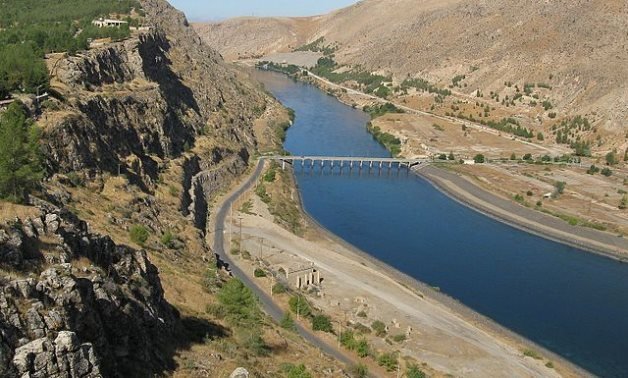
Along with its drying up, many ancient discoveries, which have shocked the world, have emerged. A recent video shows a man showing a drastic drop in the water level of the Euphrates River. Only in the last few years the river water was almost completely drying up. In addition, the man also showed an ancient tunnel that leads to the underground with a very perfect building structure, which also has stairs which are neatly arranged and are still intact to this day.
Who has built all of this?
Some say that this is a relic of ancient people that is still preserved today. However, a rumour among the locals is that the tunnel leads to where the angels are imprisoned. As mentioned in the bible, to be precise, in Revelation 9:13-19: “Then the sixth angel blew his trumpet, and I heard a voice from the four horns of the golden altar before God, saying to the sixth angel who had the trumpet, “Release the four angels who are bound at the great river Euphrates.” So, the four angels, who had been prepared for the hour, the day, the month, and the year, were released to kill a third of mankind. The number of mounted troops was twice ten thousand times ten thousand; I heard their number. And this is how I saw the horses in my vision and those who rode them: they wore breastplates the color of fire and of sapphire[c] and of sulfur, and the heads of the horses were like lions’ heads, and fire and smoke and sulfur came out of their mouths. By these three plagues a third of mankind was killed, by the fire and smoke and sulfur coming out of their mouths. For the power of the horses is in their mouths and in their tails, for their tails are like serpents with heads, and by means of them they wound.”
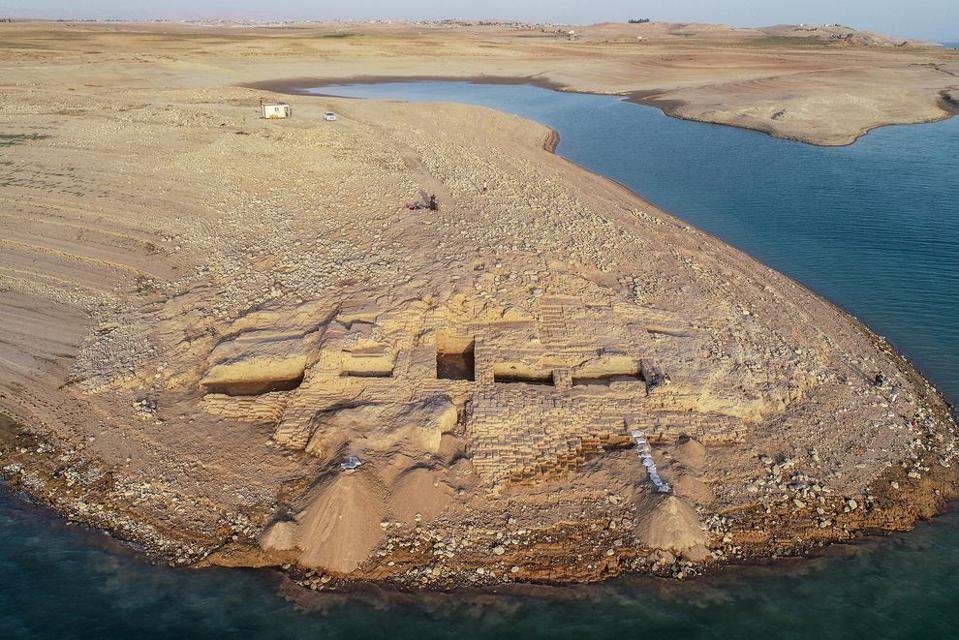
Revelation 16:12-16: “The sixth angel poured out his bowl on the great river Euphrates, and its water was dried up, to prepare the way for the kings from the east. And I saw, coming out of the mouth of the dragon and out of the mouth of the beast and out of the mouth of the false prophet, three unclean spirits like frogs. For they are demonic spirits, performing signs, who go abroad to the kings of the whole world, to assemble them for battle on the great day of God the Almighty. And they assembled them at the place that in Hebrew is called Armageddon.”
I truly hope that these sturdy structures, of impressive craftsmanship, are explored in detail, revealing other unknown historical information and knowledge to us. Is it possible that there are more discoveries to be made, in rivers and oceans elsewhere around the world?
The documentation which I managed to find about this tunnel in Wikipedia is that is known as the legendary Euphrates Tunnel, purportedly built between 2180 and 2160 BCE under the Euphrates River to connect the two halves of the city of Babylon in Mesopotamia.
Wikipedia states that “the existence of the Euphrates Tunnel has not been confirmed”. I guess now, we have the confirmation.

It is written in the Bibliotheca Historica (Book II, 1) by Diodorus in 50BCE that the tunnel was built and used by Queen Semiramis: “After all these in a low ground in Babylon, she sunk a place for a pond, four-square, erery square being three hundred furlongs in length, lined with brick, and cemented with brimstone, and the whole five-and-thirty feet in depth: into this having first turned the river, she then made a passage in form of a vault, from one palace to another, whose arches were built of firm and strong brick, and plaistered all over on both sides with bitumen, four cubits thick. The walls of this vault were twenty bricks in thickness, and twelve feet high, beside and above the arches; and the breadth was fifteen feet. This piece of work being finished in two hundred and sixty days, the river was turned into its antient channel again, so that the river flowing over the whole work, Semiramis could go from one palace to the other, without passing over the river. She made likewise two brazen gates at either end of the vault, which continued to the time of the Persian empire.”
Philostratus (d. 250 CE) also describes the tunnel’s construction in the Life of Apollonius of Tyana as Babylon being cut asunder by the river Euphrates, into halves of similar shape; and there passes underneath the river an extraordinary bridge which joins together by an unseen passage the palaces on either bank. However, he mentions that it was Queen Medea who asked for its construction.
Sun Tzu's Quotes which are better to be known when young to not Regret in Old Age
Sun Tzu was a Chinese general, military strategist, writer, and philosopher. Sun Tzu is traditionally credited as the author of The Art of War, an influential work of military strategy that has affected both Western and East Asian philosophy and military thinking. Sun Tzu's works focus much more on alternatives to battle, such as stratagem, delay, the use of spies and alternatives to war itself.
1 Hour Of The Greatest Motivational Quotes From History
This video is a 1 hour compilation of the greatest quotes from the Stoics, Socrates, and other thinkers spanning our history and geography. Watch the video for more!

From Ancient Warriors to Modern Athletes: The Evolution of the Haka
BY THE ARCHEOLOGIST EDITOR GROUP
The haka, a form of traditional Maori war dance, has deep historical roots and significant cultural meaning. Maori people, native to New Zealand, are thought to have created the haka and used it for ceremonial and ritual purposes, as well as in times of war and hunting.
Before going into battle, the haka was traditionally used to strike fear into the hearts of the enemy. Maori warriors would perform the dance in order to impress upon their enemies their superior strength and bravery. The haka was performed to get the warriors amped up for the battle ahead and to get them in the right frame of mind to win.
The haka served as both a physical and a spiritual workout. It was believed that by performing the dance, the warriors would gain strength and courage from their ancestors and the spiritual world, which would in turn help them in battle. The haka's spiritual and emotional power was amplified by the inclusion of chanting and singing.
The haka was also performed at other significant events in ancient times. The haka was traditionally performed at special events like weddings and funerals. For similar reasons, the dance was also performed before and during hunts to gain the favor of the animals being pursued.
The haka came to symbolize much of what it meant to be Maori as a people as their culture and society flourished. Each succeeding generation incorporated their own distinctive touches and variations into the dance as they passed it down.
As the haka was exposed to new cultural and social contexts, it gradually began to adopt new characteristics and aesthetics. European settlers brought with them new musical instruments and dance styles to New Zealand, which led to the haka's gradual adaptation to include elements from both. Likewise, the dance developed a more rigid structure with predetermined steps and motions.
As time has progressed, the haka has gained worldwide recognition as a symbol of Maori heritage. The New Zealand rugby team, the All Blacks, are known to perform the dance before games. The dance is also popular at cultural events and festivals. The haka is performed to celebrate and honor the distinctive cultural history of the Maori people, and it has become a potent symbol of Maori national pride and identity.
Many questions remain unanswered about the haka's history and development, despite its length and depth. In this regard, scholars continue to disagree on whether or not the haka was brought to New Zealand by the Polynesian ancestors of the Maori people, or whether it emerged independently in that country.
In addition, there are numerous haka styles, each with its own rich heritage and tradition. While some haka are only performed by members of certain tribes or regions, others have gained widespread popularity. The context in which a haka is performed can also affect its meaning and significance.
The haka continues to represent Maori culture and identity despite the many questions and arguments surrounding it. As more and more people learn about and appreciate the distinctive history and customs of the Maori people, New Zealand and the Maori culture as a whole continue to grow in prominence.
In sum, the haka can trace its roots all the way back to ancient times. Traditionally, Maori warriors would perform the dance just before entering battle to both psych themselves up for the fight and scare off their opponents. It was also believed that the dancers' participation in the haka forged a bond between them and their ancestors and the spiritual realm, so it was performed at other significant events, such as weddings and funerals. The haka has become an integral part of modern Maori life and is widely recognized as a symbol of the people's devotion to their culture and history.
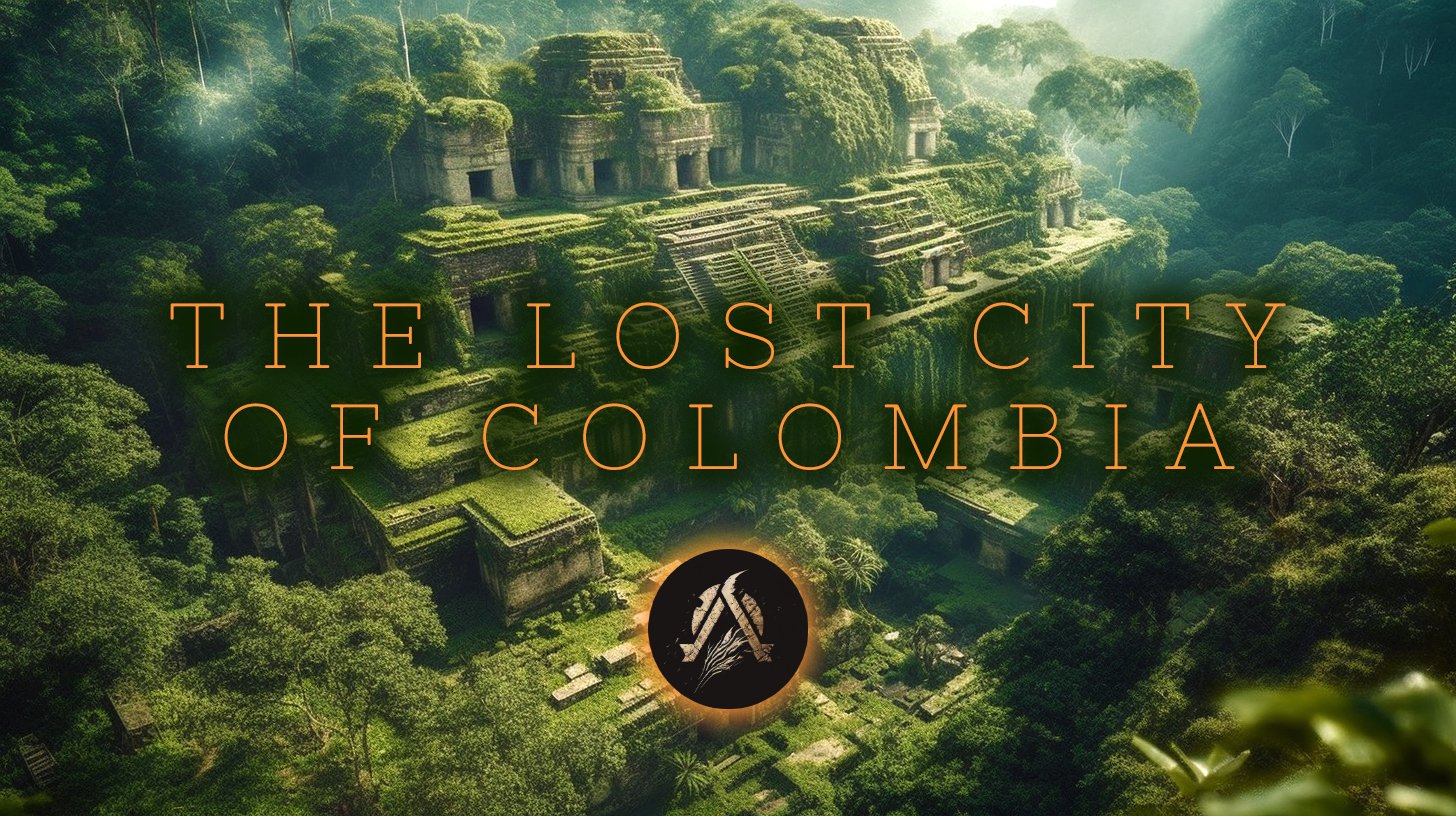
Ancient Metropolis of Teyuna: The Lost City in the Colombian Jungle
Step into the forgotten world of Teyuna, the mysterious 'Lost City' nestled deep within Colombia's Sierra Nevada. Known as the heart of the ancient Tayrona civilization, this magnificent city was abandoned and swallowed by the jungle, only to be rediscovered in the 1970s. This YouTube video takes you on a virtual tour through its remarkable terraces and stone pathways, unravels the secrets of its creation, and delves into the fascinating rituals and daily lives of its original inhabitants. So get ready to embark on this thrilling exploration and witness the rich cultural heritage of this hidden gem in the heart of Colombia!
Embark on a thrilling exploration of Teyuna, the forgotten 'Lost City' of the Tayrona civilization hidden in Colombia's dense jungle. From its dramatic discovery to its ancient history and architectural grandeur, this YouTube video unravels the enigmatic tale of this metropolis in the mist.
In the heart of Colombia's Sierra Nevada lies a hidden wonder, the ancient city of Teyuna, often referred to as 'The Lost City'. Nestled amidst lush rainforests and untamed jungles, Teyuna stands as a testament to the engineering prowess and cultural richness of the pre-Hispanic Tayrona civilization.
In this exploration, we embark on a trek through dense foliage, challenging terrains, and time itself to unveil the mysteries of Teyuna. From its majestic terraced formations to its intricate network of tiled paths and plazas, the Lost City offers fascinating insights into a civilization that once thrived and mysteriously vanished.
Alongside breathtaking aerial views and immersive ground footage, this documentary delves into archaeological findings, highlighting the significance of artifacts and architectural marvels discovered within Teyuna. We discuss the city's spiritual importance, its role in trade and politics, and its eventual decline and abandonment.
For adventurers, history enthusiasts, or anyone enchanted by the tales of lost civilizations, "Ancient Metropolis of Teyuna: The Lost City in the Colombian Jungle" is a journey not to be missed.
Ancient Greek Philosophers' Life Lessons for a Life Without Regrets
In the video below we will be going through ancient Greek philosophers’ life lessons for a life without regrets. Watch the video for more and enjoy!
It’s Time to Rewrite Our History: Amazing Finds by Archaeologists
In this riveting video we plunge deep into the chronicles of the past, shining a light on recent breakthrough discoveries that challenge the boundaries of our knowledge. Our journey traverses across continents and civilizations, revealing treasures and secrets long-hidden in the dust of time. Enjoy!
In Siberian permafrost, a perfectly preserved 32,000-year-old wolf head was discovered
The head of an ancient wolf was discovered in its entirety in summer 2018 by a mammoth tusk hunter in Siberia's Yakutia area while spelunking along the Tirekhtyak River. The specimen is the only adult Pleistocene steppe wolf partial carcass ever discovered and has been preserved for almost 32,000 years by the region's permafrost, or permanently frozen ground.

The specimen is the first (partial) carcass of an adult Pleistocene steppe wolf—an extinct lineage distinct from modern wolves—ever found Courtesy of Dr. Tori Herridge
The discovery, which was initially published by the Siberian Times, was expected to aid experts in understanding how steppe wolves differed from modern wolves and why the species eventually became extinct.
The wolf in issue was fully grown, perhaps between the ages of 2 and 4, according to Marisa Iati of the Washington Post. Love Dalén, an evolutionary geneticist at the Swedish Museum of Natural History, was filming a documentary in Siberia when the tusk hunter arrived on the scene with the severed head in tow. She says that media reports touting the find as a "giant wolf" are false, despite photographs of the severed head measuring 15.7 inches long and showing clumps of fur, fangs, and a well-preserved snout.
“If you disregard the frozen clump of permafrost adhered to where the neck would [usually] have been”, Dalén told Smithsonian magazine that “the animal was not significantly larger than a current wolf.”
In order to create a digital model of the animal's brain and the interior of its skull, a Russian team led by Albert Protopopov of the Republic of Sakha's Academy of Sciences was working on the project, according to CNN.
Given the head's level of preservation, David Stanton, a scientist at the Swedish Museum of Natural History who was conducting the genetic investigation of the remains, told Smithsonian that he and his team were optimistic that they could extract viable DNA and use it to decode the wolf's genome.
It is now unknown precisely how the wolf's head came to be detached from the rest of its body. In an interview with Smithsonian, evolutionary biologist Tori Herridge of the Natural History Museum in London said that Dan Fisher of the University of Michigan believes that scans of the animal's head may reveal evidence of its deliberate severance by humans, possibly "contemporaneously with the wolf dying." Herridge points out that if this is the case, the discovery would provide "a unique example of human interaction with carnivores." Yet she ends her Twitter post by saying, "I am reserving judgment until more investigation [is] done."
Herridge was hesitant, and Dalén repeated him, claiming that he had "seen no evidence convincing" him that people chopped off their heads. After all, fragmentary sets of bones are frequently discovered in the Siberian permafrost. For instance, if an animal was only partially buried and then frozen, the remainder of its body might have rotted or been consumed by scavengers. Alternately, it's likely that the corpse split into several pieces due to changes in the permafrost over thousands of years.

A Russian team is currently building a digital model of the animal’s brain and the interior of its skull Albert Protopopov
Stanton claimed that steppe wolves were "probably slightly larger and more robust than modern wolves." The animals, which had a powerful, broad jaw designed for hunting giant herbivores like woolly mammoths and rhinos, vanished between 20,000 and 30,000 years ago, or approximately the same period that modern wolves first appeared, according to Stanton, who spoke to N'dea Yancey-Bragg of USA Today. If the scientists are successful in obtaining DNA from the wolf's head, they will try to use it to ascertain whether the prehistoric wolves interbred with contemporary ones, how inbred the older species was, and whether the lineage possessed—or lacked—any genetic adaptations that contributed to its extinction.
As of now, a variety of well-preserved prehistoric animals have been discovered in the Siberian permafrost, including a 42,000-year-old foal, a cave lion cub, a "exquisite ice bird complete with feathers," as noted by Herridge, and "even a delicate Ice Age moth." These discoveries, in Dalén's opinion, can be largely due to a rise in mammoth tusk hunting and accelerated permafrost melting associated with global warming.
"The warming climate... means that more and more of these specimens are likely to be found in the future," Stanton stated in his interview with Smithsonian.
He also noted that "it is also likely that many of [them] will thaw out and decompose (and therefore be lost) before anyone can find... and study them."
Archaeologists In Israel Claim They’ve Discovered The Place Where Jesus Turned Water Into Wine
According to the New Testament’s Book of John, Jesus Christ turned water into wine at a wedding held in the village of Cana. Yet over the centuries several different sites in the Middle East have been mooted as the true location of Jesus’ first miracle. But now new archaeological discoveries might hold the key to this mystery.
Archaeologists discover Ancient Egyptian tombs and mummification workshops
In a press conference by the Ministry of Tourism and Antiquities, Ahmed Issa, Minister of Tourism and Antiquities, has announced the discovery of mummification workshops and decorated tombs at Saqqara in the Giza Governorate, Egypt.
Saqqara served as the necropolis for Ancient Egyptian royalty and their extended family during the Old Kingdom period. During the New Kingdom from the 18th Dynasty onward, the necropolis was used by many high-status officials from Memphis.
The mummification workshops have been described as “the largest and most complete”, for which the team found one that was used for embalming people, and the other for animals.
The Ancient Egyptians saw the preservation of the body after death as an important step to immortality and living well in the afterlife. Within the Ancient Egyptian concept of the soul, the “ka”, which represented vitality, leaves the body once the person dies.
Only if the body is embalmed in a specific fashion will the “ka” return to the deceased body, and rebirth will take place.
Strange Artifact Recovered At Machu Picchu Exposes One Of History's Darkest Practices
Archaeologists have squandered many lives and fortunes tracking down lost civilizations, and despite every fake and failure, the rare successes make all the risks worthwhile. That was certainly the case for these stunning South American ruins. Since their modern rediscovery, thousands of visitors have taken in the stone monoliths and awe-inspiring vistas. But now that the community's macabre origins are becoming impossible to ignore, what does the future hold for this mountaintop oasis?
Castrati - The Sad Story of the Boys who were Castrated to Become Singers
In the following video we will the explaining the sad story of Castrati, the boys who were castrated before puberty to become singers. Watch the video to find out more!
Unveiling Scotland's Ancient Treasures: Mind-Blowing Secrets in Kilmartin Glen's Mysterious Art!
In today’s video we will talk about mind-blowing secrets in Colmartin Glen's mysterious art! So stay tuned and watch the video till the end. Enjoy!
Mysterious & Bizarre Ancient Discoveries
From Edward Boland shipwreck to a horned kangaroo skull, in the following video we will be exploring mysterious and bizarre ancient discoveries. Watch the video to find out more!