Archaeologists scanning inside the great pyramid of Giza detected a hollow spot. That discovery made headlines a few years ago, but access to the chamber remained elusive - until now. A group of researchers has managed to insert a fiber optic camera into the secret chamber, bringing us sights not seen for thousands of years.
The Most Dangerous Books In The World
In the video below we will be exploring the most dangerous books in the world. Enjoy!
The Man Eating Spanish War Dogs That Crushed The Aztecs
During the Spanish conquest of the Aztec Empire, fearsome, armoured war dogs were utilized as weapons of war and instruments of terror with devastating results. Watch the video below to find out more!
Mysterious & Bizarre Discoveries
In this video below we will be exploring some more mysterious and bizarre discoveries. Watch the video to find out more!
Incredible Lost Worlds Revealed
In the following video we will be talking about incredible lost worlds that have been revealed. Watch the video below to find out more!
12 Most Incredible Ancient Technologies That Were Way Ahead Of Their Time
We have an unfortunate habit of underestimating the capabilities of the people who came before us. Some people even judge their grandparents for not being able to operate computers or smartphones properly, so imagine what they think of people who lived thousands of years ago! This lack of faith in our forefathers is unfair to them, and we’ll prove it with the content of this video.
Lost Secrets Revealed: Kailasa Temple Of India Mind-Boggling Mystery
Embark on an unforgettable adventure as we take you on a journey to explore the Kailasa Temple of India, a remarkable and enigmatic architectural wonder that has fascinated visitors from around the world for centuries.
Built in the 8th century by the Rashtrakuta dynasty, this magnificent temple carved out of a single piece of rock is a testament to human creativity, skill, and ingenuity. As we step inside the temple, we are immediately struck by the intricate designs and carvings that adorn its walls, ceilings, and pillars. From mythical creatures and deities to scenes from Hindu mythology, every inch of the temple is a work of art.
But the Kailasa Temple is more than just a beautiful sight to behold. Its engineering feats are equally impressive. The temple's complex design, including its multiple levels, underground chambers, and hidden passages, has left experts scratching their heads for years. How did ancient builders create such a massive structure without modern tools or machinery? How did they transport and carve such enormous rocks with such precision?
As we explore the temple's nooks and crannies, we'll discover the many legends and myths that surround this awe-inspiring structure. We'll learn about the temple's namesake, Mount Kailash, which is considered sacred in Hinduism, Buddhism, and Jainism. We'll also hear tales of how the temple was built in just 18 years, with the help of a thousand artisans and laborers working day and night.
Graham Hancock Just Announced The Terrifying Truth About Antarctica
In today’s video we will see Graham Hancock announcing a terrifying truth about Antarctica. Enjoy!
15 Unsettling Discoveries in Africa Nobody Can Explain
Africa is a continent with a lot of wealth. Most often, countries in this place are misunderstood, but Africa has been a beautiful and rich land since the dawn of mankind. Archeological evidence shows that humans and our hominid forebears have occupied the continent for about 4 million years. We still haven’t discovered all there is to know about the continent, but we are uncovering its secrets one by one.
Let’s explore and look at all the strange and amazing finds in Africa.
From mysterious elephant deaths to strange cave art, here are 15 unsettling discoveries in Africa nobody can explain!
Without the use of glue, these 30,000-year-old colossal megaliths fit like a puzzle
Sacsayhuaman (or Saqsayhuaman) is one of the most impressive Inca constructions in the City of Cusco in Peru. But it is also one of the most mysterious ancient constructions on the planet. Recently a kind of writing more than 30 thousand years old was discovered.

What mysteries does Sacsayhuaman hide?
Sacsayhuaman is one of the most mysterious places on the planet, even before the 30,000-year-old writing was discovered:
These are some reasons to consider Sacsayhuaman a mystery:
The stones used in Sacsayhuaman fit like a puzzle without the help of any kind of glue. The lace is so exact that in many cases you can not even insert a sheet of paper.
There are stones up to 8.5 meters high and almost 200 tons of weight. Even today it is not known how they did to move such a large rock.
In Sacsayhuaman there are 2 tunnels or ‘Chincanas’. One of them has a short route and is open to the public. The other, however, remains closed. It is said to lead to the Coricancha.
They find writing of 30 thousand years of antiquity in Sacsayhuaman!
Sacsayhuaman continues to be studied by specialists. The American researcher Derek Cunningham, for example, analyzed the design of the fortress and reached the following conclusions:
The mysterious zigzag of the walls of Sacsayhuaman reveal an ancient knowledge of astronomical alignments of the moon, the sun and the planet.
Dr. Cunningham proposes that this architecture system would be a type of writing more than 30 thousand years old.
In an article published by the magazine ‘Popular Archeology’, the American doctor proposes that this type of writing also existed in other ancient cultures of the world.
What proves the findings in Sacsayhuaman?
The placement and angles of the walls in Sacsayhuaman revealed an ancient and extraordinary secret:
In Sacsayhuaman there are 9 astronomical values in total, which serve to measure lunar and sun eclipses.
This type of pattern is repeated in other parts of the planet until 500 years ago so it would be a type of writing made continuously.
In what other places of the world are these astronomical values?
There are many sites that show an amazing ability to align exactly with the same angular values.
This includes the roads in front of the pyramids of Giza and the perimeter lines of the body of the Atacama Giant.
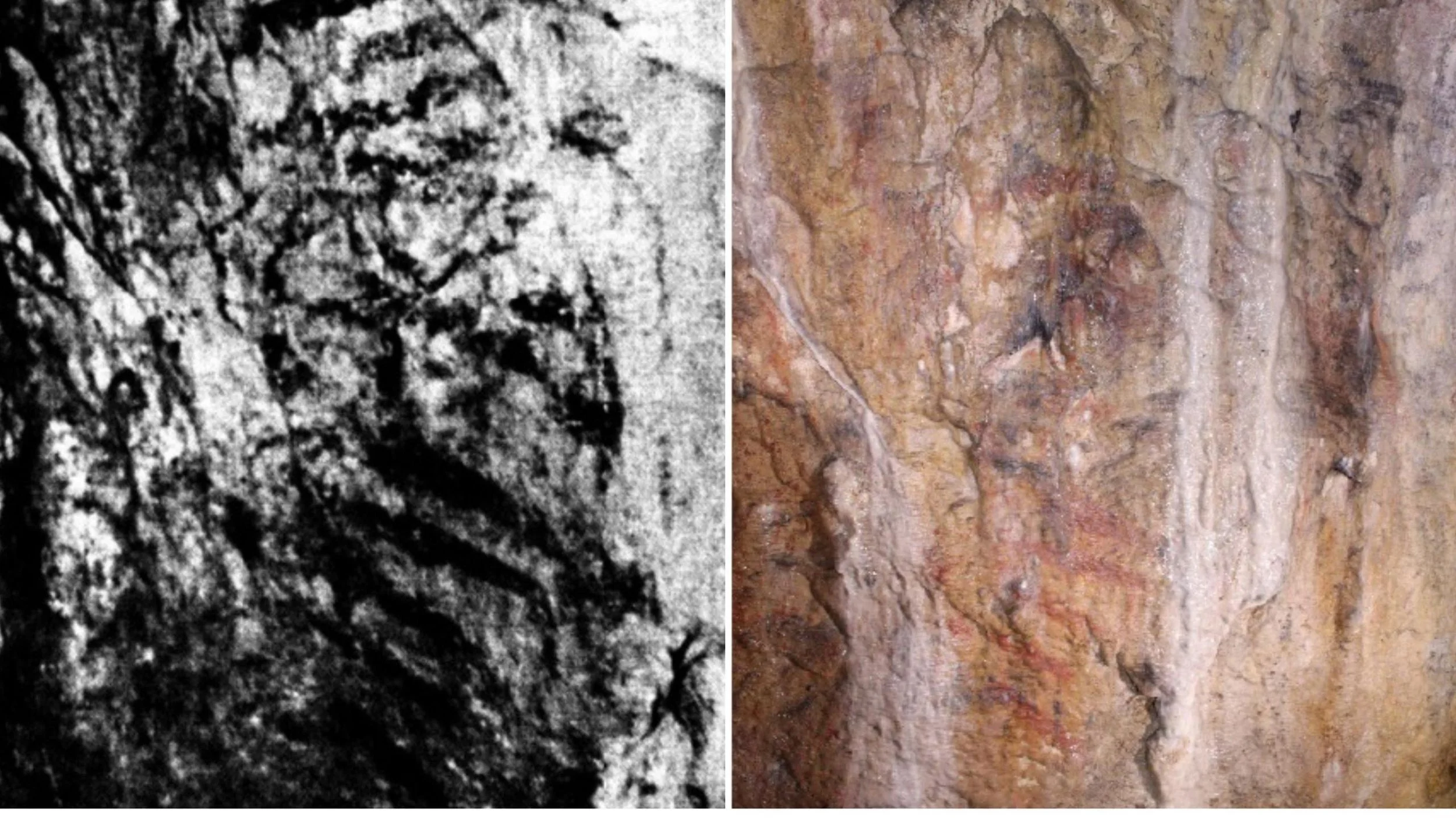
They can also be found in Ishango (Africa), in the Lascaux and Chauvet caves (Africa) in Europe and in other ancient sites.

What other discoveries were made in Sacsayhuaman?
Recently new discoveries were found in Sacsayhuaman as:
An Inca temple 500 meters from Sacsayhuaman. Inside, 11 enclosures of various sizes were found. It is believed that mummies were buried there.
The section of an alternate Inca road. This trail connected Sacsayhuaman with the huacas and other archaeological centers of the place.
A complex irrigation system with gutters, fountains, and water reservoirs.
An archaeological site in the upper part of Sacsayhuaman. Many buildings were completely destroyed during the Spanish conquest.
Where is Sacsayhuaman located?
The fortress of Sacsayhuaman is located on the slope of a steep hill north of the city of Cusco. From there you can see the city. The archaeological site is 4 kilometers from the Historic Center.
What was the importance of Sacsayhuaman?
The site had a great religious importance. It is possible that this amazing structure will inspire the Incas to build places like Machu Picchu.
Due to its enormous structures, the Spaniards believed that it was a fortress and destroyed a large part of its structures.
In 1536, Sacsayhuaman was the scene of a battle between the Spanish invaders and the rebel Incas of Vilcabamba.

How did they build Sacsayhuaman?
Despite numerous investigations, there is still no firm theory regarding the creation of Sacsayhuaman.
One belief is that the stones were cut and stacked but then merged due to a huge forest fire.
Another insane theory suggests that the Incas used complex crystals and lenses to take advantage of the sun’s rays to create enough heat to melt the stone.
One of the most popular theory tells that the technology that made possible the construction of Sacsayhuaman was revealed to the Inca by extraterrestrials.
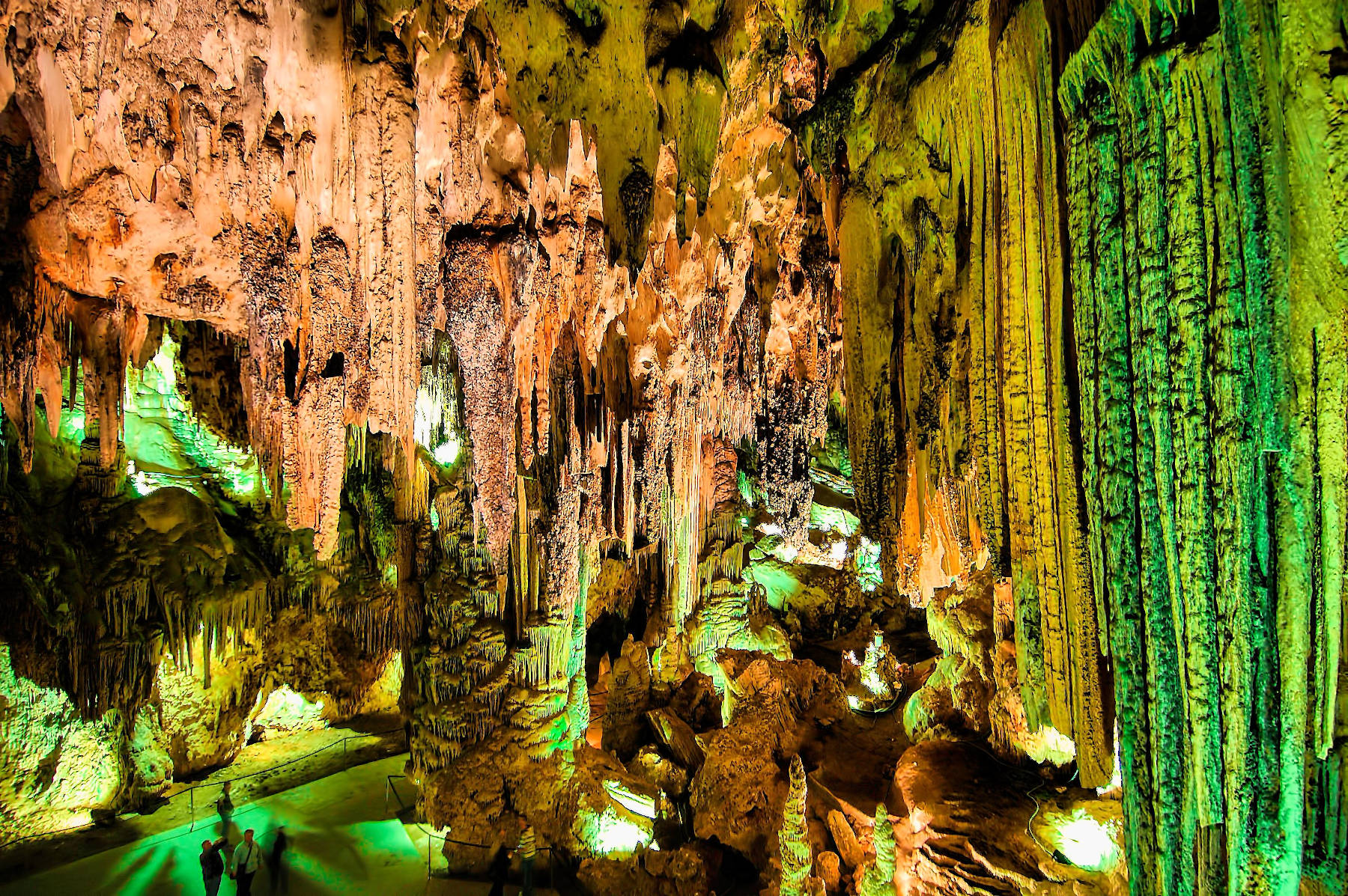
This cave in Mexico is breathtaking and is covered in colossal white crystals
Gypsum: It's the main ingredient in drywall and frequently added to the water when brewing pale ale and India pales. Humans have been using this mineral for literally thousands of years. But at the turn of the 21st century, the world renewed its appreciation for the stuff when miners discovered some spectacularly big crystals that were — in essence — massive gypsum pillars.

They're buried 984 feet (300 meters) beneath the Sierra de Naica Mountain in Chihuahua, Mexico. Anchored to the walls and floor of a sweltering cave, the crystals went through at least half a million years of uninterrupted growth. Many are long and wide enough to walk across, and honestly look like Superman's Fortress of Solitude.
Don't bother packing your bags, though. Visiting these crystalline wonders is pretty much impossible now. That honestly might be a good thing; for all its splendor, the Giant Crystal Cave once had the makings of a death trap.
Ideal Conditions
Regional fault lines pass right under the Sierra de Naica Mountain. About 26 million years ago, magma started pushing its way toward the Earth's surface through those faults. Ultimately, that process led to the mountain's formation. It also explains the massive crystals.
Giant Crystal Cave is a U-shaped cavity in the limestone below the Sierra de Naica. Roughly 98 feet (30 meters) long by 33 feet (10 meters) wide, it was filled with groundwater for tens of thousands of years. The water was originally driven upward into the opening by a magma chamber that's located deeper in the Earth. This intrusive water contained the mineral anhydrite.

Now at temperatures of 136 degrees Fahrenheit (58 degrees Celsius) or more, anhydrite remains stable. But at lower temperatures, the mineral is liable to dissolve and then reform as gypsum. (That's a reversible transformation, by the way.)
The magma underneath Giant Crystal Cave kept the water in the cave nice and hot. Eventually, however, the H2O's temperature dipped slightly below 136 degrees Fahrenheit (58 degrees Celsius). After that happened, the anhydrate started breaking down, filling the water with calcium and sulfate. The particles slowly began recombining into a kind of gypsum known as selenite.

White-tinted selenite crystals took over the cave. Because the crystals remained underwater — and because the water temperature stayed within a few degrees of 136 degrees Fahrenheit (58 degrees Celsius) — they were able to keep growing continuously.
Granted, the crystals didn't turn into giants overnight. A 2011 study argued that, under the conditions that were available in this cave, it would've taken anywhere from 500,000 to 900,000 years to grow a selenite crystal measuring 3.2 feet (1 meter) in diameter. Nevertheless, over time, a lot of these things attained breathtaking sizes. Many are 13.1 to 19.6 feet (4 to 6 meters) in length. The very largest, meanwhile, are up to 36 feet (11 meters) long and 3.2 feet (1 meter) thick.
Dangerous Turf
In 1794, prospectors discovered silver on the Sierra de Naica Mountain. Before long, troves of lead, zinc and gold turned up as well — and by the mid-19th century, the first mining operations broke ground along the slopes. One day in 1910, the Peñoles Mining Company discovered a wondrous cave just 394 feet (120 meters) below the surface. Much like Giant Crystal Cave, the chamber — dubbed "The Cave of Swords" — was lined with selenite crystals. But these were significantly smaller, only about 8.2 feet (2.5 meters) long at the most.

They probably formed in the same way the bigger crystals down below formed. However, the Cave of Swords apparently cooled down at a much faster rate. This put a cap on how large its selenite spikes could get.
Giant Crystal Cave itself wasn't found until the year 2000. The water was pumped out by the Peñoles Mining Company before anyone realized that it was full of gargantuan selenite columns. Brothers Pedro and Juan Sanchez — two miners with the organization — became the first people to lay eyes on its crystals when they entered the drying cave on foot.

It soon became clear that Giant Crystal Cave was an inhospitable place. Not only did the air temperature climb as high as 113 degrees Fahrenheit (47.1 degrees Celsius), but the humidity levels were also close to 100 percent. The place was so humid that a visitor who lingered too long risked having fluids condense inside his or her lungs. That can be fatal.
The Age of Exploration
At first, explorers were limited to 10-minute forays into the cave due to the justifiable safety concerns. But with specially designed cooling suits, teams of scientists were eventually able to slightly prolong their visits. Those who donned the outfits received a supply of chilled, breathable air from attached respirators. Suddenly, excursions lasting 15 to 60 minutes became possible.

NASA Astrobiology Institute director Penelope Boston journeyed into the Giant Crystal Cave in 2008, and again in 2009. She helped discover microbial life forms that had been trapped inside one of the crystals. Suspended in an air bubble, the tiny organisms may have laid dormant for up to 50,000 years before Boston and company came along.
The removal of water from this cave was a boon for the scientific community. Unfortunately, it may have bad news for the actual crystals. In 2017, Peñoles stopped the pumping and allowed groundwater to refill the cave. But before then, the crystals had been exposed to air for nearly two decades. Did that compromise their structural integrity? A series of experiments on gathered samples suggests as much. Now that the water's back, however, these otherworldly crystals might start growing again.
The Diabolical Things Apache Did During The Wild West
The most famous warrior tribe of the North American natives that went down in history for their great capacity in combat, coming to be called "The tigers of the human species" by American generals continue fighting to this day to preserve their language, beliefs and customs within a society that for the most part, is alien to them.
Capable of standing up to an entire army with only a few dozen men, the Apaches were feared for their cruelty, annihilation, and their assaults on men, women and children, sometimes even taking their scalps as trophies, only to be surpassed by the arms advances of their enemies and forced to live on reservations, never again being able to be free as the wind.
Today we will learn who these enigmatic warriors were and we will feel first-hand the heat of battle on the vast plain. Enjoy!
The Search For King Herod's Tomb Brought Archaeologists To An Incredible Site
A couple of thousand years ago, there was a truly magnificent sight outside Jerusalem. Back then, the thriving settlement of Herodium stood tall, protected by imposing walls that were visible for miles around. And inside this highly fortified space – built for the Judean king Herod – folks could while away the hours at the theater or soaking themselves at the local bathhouse. Herod even had his burial site here – or so legend had it, anyway. But these rumors remained unproved for decades until researchers finally made a truly momentous discovery.
Mysterious Underground 1500 Year old City Discovered in Iran - You Won't Believe What They Found
In this video, we embark on a journey to uncover the forbidden secrets of a mysterious 18 km long underground city found in Iran, dating back 1500 years. With its intricate tunnels, chambers, and unique architectural features, this underground city has remained a puzzle for archaeologists and historians for decades.
Join us as we explore the hidden tunnels and reveal the fascinating engineering feats that have gone into constructing this massive underground labyrinth. We'll also take a closer look at the mysterious artifacts found within the city, which offer clues to a lost civilization and ancient way of life.
As we delve deeper into this underground city, we'll encounter dark legends and stories that have been passed down for generations. From hidden treasures to secret chambers, the secrets of this underground city are waiting to be uncovered.
Don't miss this incredible journey into the unknown as we reveal the forbidden secrets of Iran's 1500-year-old underground city.
This Diver Revealed The Truth About What They Encountered While Working On This Deep Sea Oil Rig
This diver revealed the truth about what they encountered while working on this deep sea oil rig. Today, we take a look at what this diver encountered close to this oil rig.
Despite centuries of exploration and scientific research, much of the world's oceans remain unexplored, and we have only scratched the surface of our understanding of this vast, mysterious realm.
It is estimated that we have explored less than twenty percent of the world's oceans, with much of the remaining eighty percent still largely uncharted and unknown.
This is due in part to the sheer size and depth of the oceans, as well as the challenges involved in studying them.
The " not-so" secret life of concubines in old Rome
Imagine an elegant Roman villa with lush gardens and marble columns. Inside, wealthy men lounge on silk cushions, surrounded by exquisite art and decadent delicacies. But there's a catch: the men aren't alone. They're accompanied by male concubines, who meet their every need and desire. Welcome to the not-so-secret life of concubines in old Rome, a world where homosexuality was accepted but still shrouded in secrecy. While the image of scandalous orgies might come to mind, the reality was far more complex.
Today we will explore the hidden lives of male concubines in ancient Rome and uncover the dark truths behind the city's sexual liberation.
1,400-year-old shops and a neighborhood were discovered in the ancient city of Ephesus
During the excavations carried out in the Ancient City of Ephesus this year, a sensational find was obtained: Archaeologists of the Austrian Academy of Sciences managed to unearth shops and a local neighborhood dating to the Early Byzantine Period. This is the most important discovery in the ancient city since the hillside houses, which are now one of the city's cult buildings, were found 50 years ago.
Archaeologists of the Austrian Academy of Sciences, during their excavations in Ephesus, discovered a local neighborhood and shops dating to the early Byzantine Period, perfectly preserved. The region apparently disappeared abruptly in 615 AD. A thick and dense layer of fire covered all the household items in the rooms so that they were all preserved for future generations. This made it possible for us to witness unique snapshots of the living environment of that moment.
Even though they are dated chronologically to different times, the context of these finds is comparable to the archaeological site of Pompeii.
The newly discovered site is located in Domitian Square, an important square immediately adjacent to the Upper Agora, the political center of the Roman city. Excavations at the site in 2022 are part of a major project aimed at investigating the changes that took place in the city between the Roman Imperial Period and Late Antiquity.
15 Unbelievable Places that Actually Exist
Unbelievable and amazing places that you wouldn't believe actually exist! The places in today's video are not from some distant planet, they are places that exist here on Earth. Here are the 15 most unbelievable places.
Researchers find a golden mummy in a 4,300-year-old Egyptian cemetery
Among the astounding discoveries made inside a 4,300-year-old Egyptian "city of the dead" is a magnificent mummy that has been covered in gold.

It was discovered at the bottom of a 49-foot burial shaft near Saqqara, south of Cairo, at a recently discovered site. Egypt's former antiquities minister and Discovery team leader Zahi Hawass said on Thursday: "I put my head inside the sarcophagus. A gorgeous man mummy dressed in layers of gold was there.
It might be the oldest and most complete mummy ever discovered in Egypt.
The underground tombs also contained two sarcophagi, twelve exquisitely carved statues representing affluent priests, officials, and attendants, as well as twelve other statues.
Two burial tunnels, one of which contained the priceless golden mummy enclosed in a sarcophagus, however, were what Mr. Hawass was most intrigued by.

In the pyramid complex of Unas, the final monarch of the fifth dynasty, Mr. Hawass said: "The most important tomb belongs to Khnumdjedef, an inspector of the officials, a supervisor of the nobility, and a priest.
"The second largest belonged to Meri, who held many important titles, such as keeper of the secrets and assistant to the great leader of the palace."
There were statues of people, including two couples, in another grave at the location.
In the meantime, writing on another tomb indicated that it held the mummy of a guy by the name of Fetek.
The items, which were discovered within a historic stone enclosure close to the Saqqara pyramids, were dated by Egypt's ministry of tourism and antiquities to between 2500 and 2100 BC.
The famous Giza pyramids are located at the Saqqara site, which is a large necropolis near Memphis, ancient Egypt's capital.

In the 1970s, the ruins of Memphis were named a Unesco World Heritage site.
The discovery made on Thursday was the most recent in a string of recent discoveries disclosed in Egypt. Near the southern city of Luxor, a number of New Kingdom burial sites as well as the remains of an old Roman city were discovered.
Scientists from Cairo University reported in January 2023 that CT scans have revealed details about a teenage male from around 300BC that had been previously unknown.
He possessed a high social rank, as evidenced by the elaborate amulets implanted into his mummified body and the style of burial he got.
The Great Mammoth Hunters
In the following video we will be talking about the great mammoth hunters. Watch the video to find out more!