Which Civilization Invented Numbers? Unveiling the Origins of Numerical Systems

In the intricate tapestry of human history, the concept of numbers stands as a fundamental pillar that has shaped the way we perceive and interact with the world. The journey to inventing numbers was not a solitary path; instead, it emerged independently across diverse ancient civilizations, each weaving its own unique numerical tapestry.

Babylonian Numerals: Foundations in Mesopotamia

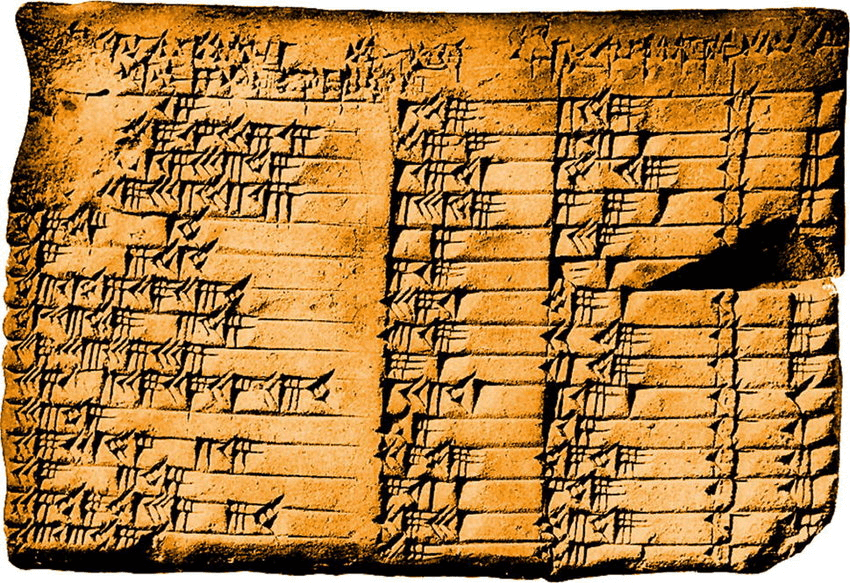
Mathematical cuneiform tablet with four columns and fifteen rows of numbers. Larsa, Mesopotamia (modern Tell Senkereh, Iraq), circa 1820–1762 BC.

Around 2000 BC, in the fertile lands of Mesopotamia (modern-day Iraq), the Babylonians were laying the foundations of numerical systems. Their base-60 numerical system left an indelible mark on human culture. This system, influenced by the cycles of the moon and their calculations of time, paved the way for the divisions of time we use today. Their ingenious combination of symbols and positional notation enabled the representation of a wide range of numbers and remains a testament to ancient mathematical creativity.


Egyptian Numerals: Hieroglyphic Representations

1,333,330 in Egyptian hieroglyphs from the Edfu Temple (237–57 BC) in Egypt.

The hieroglyph on the left is the Egyptian god Heh (chaos or infinity), representing one million. Next, a tadpole hieroglyph represents 100,000. The bent finger hieroglyph is 10,000; the lotus flower is 1000; the coil of rope is 100; and the hobble (used for cattle and missing the crossbar) is 10. Reading from left to right, the hieroglyph number is 1,333,330. The one missing numeric hieroglyph symbol in the photo is the stroke or tally mark for 1.

Contemporary with the Babylonians, the ancient Egyptians developed their own numerical system. Rooted in a base-10 system, the Egyptians created symbols to represent multiples of powers of 10. This unique numerical system, while not possessing the concept of zero, exemplified the practical nature of ancient mathematics. The legacy of their numerical prowess lives on in the grand structures they built, which bear witness to their advanced mathematical understanding.


Indus Valley Civilization: Traces of Early Numerical Notation

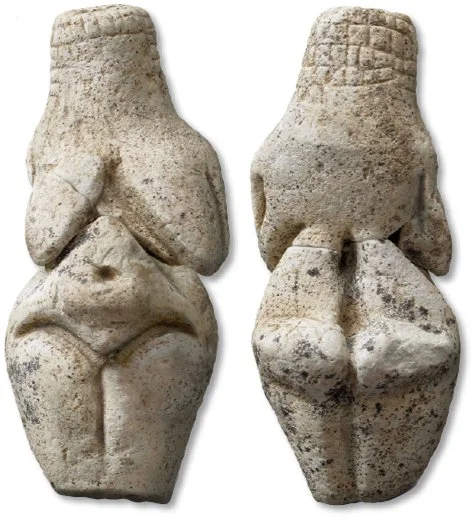
Indus Valley Civilization: Traces of Early Numerical Notation

During the period of 3300–1300 BC, the enigmatic Indus Valley Civilization played a role in the earliest development of numerical notation. While the specifics of their system remain elusive, their contributions paved the way for the numerical innovations that followed.


Hindu-Arabic Numerals: India's Gift to the World

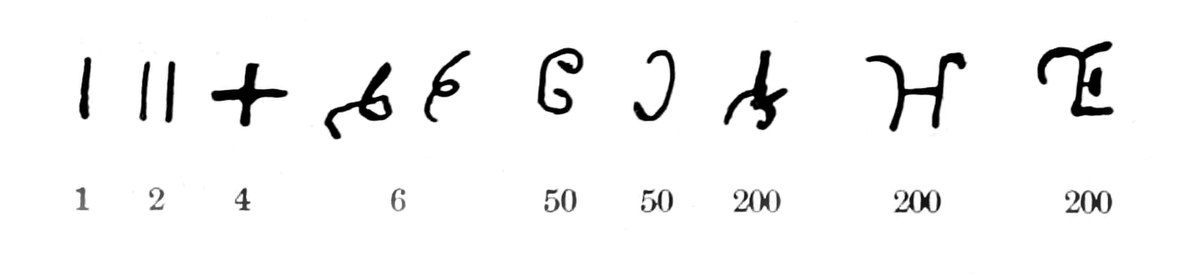
The first Brahmi numerals, ancestors of Hindu-Arabic numerals, used by Ashoka in his Edicts of Ashoka c. 250 BC

Around the 6th to 9th centuries AD, in the cultural crucible of India, a revolutionary leap was made with the introduction of the Hindu-Arabic numeral system. A base-10 system with the inclusion of zero as a placeholder, this innovation transformed the landscape of mathematics and commerce. The adoption of zero allowed for more efficient calculations and laid the groundwork for the intricate mathematical tapestries woven by future generations.

Each of these ancient civilizations crafted its own numerical story, contributing threads that continue to shape our mathematical understanding today. The diversity of these systems, emerging independently across the globe, highlights the universality of human curiosity and the ingenuity with which we have sought to quantify and comprehend our surroundings.

As we traverse through history, it becomes evident that the invention of numbers was not a linear progression but a mosaic of innovation. From Babylon's base-60 system to India's gift of zero, the ancient civilizations have given us a legacy that continues to influence the very foundations of our modern world. In celebrating these origins, we honor the diverse tapestry of human intellect and the quest for knowledge that unites us across time and space.

12 Most Mysterious Ancient Technologies Scientists Still Can't Explain

If you could travel back to the 1950s and stop somebody in the street of your hometown to show them your mobile phone, they would be fascinated and terrified. The fact that such technology could possibly exist would blow their minds. You’d assume that this time-travelling trick could only work in one direction, but we sometimes come across ancient technology that blows our minds here in the present day. In fact, we’re going to show some to you now.

The Entire History of Human Civilizations | Ancient to Modern (4K Documentary)

The history of our story began long ago. At one point in time, around three billion years ago, we were floating around as little, tiny atoms in the little Petri dish of the world.

Around 6 million years ago, and we see the emergence of the first hominoids - the family of primates that includes humans. 1.9 Million years ago, Homo Erectus was the first species to leave Africa and colonize other parts of the world. They had larger brains than their primate ancestors.

Around 400,000 years ago, the first evidence of the Neanderthals. Their bodies were adapted to the cold environments of Europe and Western Asia. Their distinctive facial features were some of the most human-like ever seen. They are famous for their massive body weight and big facial hair. These prehistoric ancestors were made for the cold.

Then came us; 300,000 years ago, the first Homo Sapiens roamed the earth. The Only surviving species of the Homo Genus. But how did Homo Sapiens rise into a global dominance through the mechanism of civilization?

Why were the Mongols so successful?

Why were the Mongols so successful? In today’s video we will analyze Mongol military history and battle tactics. Enjoy!

How dangerous was it to be a jester?

Explore the history of court jesters, from 7th century China to medieval Europe, and how they were able to speak truth to power.

Contrary to common belief, jesters weren’t just a medieval European phenomenon but flourished in other times and cultures. The first reliably recorded jester is thought to be You Shi, of 7th century BCE China. Jesters had unique relationships to power: they could be viewed as objects of mockery or as entertainers and trusted companions. Beatrice K. Otto digs into history's most infamous jokers.

Inside One of London's Oldest Medieval Crypts

If you imagine a Catholic military order from the Middle Ages, it’s likely to be the Knights Templar - popularised by Dan Brown’s fictional thriller, The Da Vinci Code

But in Medieval Europe, there was another, equally powerful religious society, which also had its English headquarters here in London. It was the Order of St John of Jerusalem. Better known, as the Knights Hospitaller.

In today’s video we will explore the history of the Order of St John, visiting their base of operations here in Clerkenwell, London. The priory is one of the city’s hidden gems, with surprises around every corner.

Formed in Jerusalem in the 11th century to care for pilgrims, the order went on to become an ambitious military organisation, owning lands and wielding influence across Europe.

How did Caesar Conquer Gaul and Destroy the Republic?

Caesar had been appointed as dictator back in Rome despite being in and out of Italy as a whole to engage in campaigns in the Middle East and Africa as well as his endeavors in Asia. He was also repeatedly named consul and his dictatorship renewed multiple times, having pardoned his enemies in the Senate and thus laying claim to very few opponents at home. Once he finally returned to Rome again in the 40s BC, Caesar began to roll out new legal reforms, even changing the Roman calendar. He was essentially the sole authority in the crumbling Roman Republic if one could even still call it that, holding the titles of dictator, tribune, and consul.

The Most Accurate Dinosaur Ever Reconstructed?

Have palaeontologists made the most accurate dinosaur reconstruction ever? Well, thanks to an incredible fossil of Psittacosaurus they very well may have, as this specimen preserves almost all of the animal's skin and colours - plus some surprising bits of anatomy you wouldn't think could ever be reconstructed.

Workers Digging Near A Medieval Monastery Just Uncovered A Mysterious Network Of Tunnels

It’s early spring 2021, and a team of electrical engineers are working amidst the picturesque scenery of Wales’ Wye Valley. Their task involves digging a trench, but soon they find themselves breaking into a strange tunnel hidden beneath the ground. This structure isn’t on any of their maps or plans, meaning it’s taken the workers totally by surprise. It seems that this eerie tunnel has been forgotten for untold centuries.

The Most Powerful and Important Gods of Mayan Mythology

The Mayan Civilization has influenced many aspects of culture, with its beliefs and religions that gave an explanation to the universe. According to studies, there are more than 200 gods in the Mayan culture, however, the Mayan gods manage to be unique and fascinating.

In this video we will see some of the most important and powerful Mayan Gods. Enjoy!

Philosophy of Aristotle: Top 5 Teachings

Discover the profound wisdom of one of history's greatest philosophers, Aristotle. In this video, we explore the top 5 teachings that shaped the foundation of Aristotle's philosophical legacy. From ethics and metaphysics to politics and virtue, Aristotle's ideas continue to inspire and influence modern thought.

4,000-Year-Old HEXAGONAL Pyramid Discovered

A huge 4,000-year-old Bronze Age hexagonal pyramidal structure has been discovered in Kazakhstan, which is apparently the first pyramidal structure ever discovered on the Eurasian steppes. Archaeologists have been researching and excavating the site for nearly a decade and now they’ve revealed their findings to the world.

Each face spans a length of 42 feet or 12.8 metres and is made up of eight rows of stacked stone. At each corner of the pyramid is a large upright stone with a flattened face on the outer surface. These larger stones are also made from a different rock type too.

The site also revealed other finds including pottery, gold earrings and other jewellery, which may indicate the site had important significance. Watch the video to learn more!

Uncovering the Oldest Archaeological Sites in History

In the realm of human history, there exist remarkable windows into our distant past– archaeological sites that whisper tales of civilizations long gone. In this enthralling exploration, we journey through time to uncover the three oldest archaeological sites that continue to captivate the world's imagination. Enjoy!

5 Unexplained Ancient Artifacts Found Hidden Underground

Beneath the imposing temples and pyramids of Mexico’s ancient city of Teotihuacan, an intriguing but toxic mystery lurks — shimmering pools of liquid mercury.

Teotihuacan, a pre-Columbian urban center dating back to 100 BC, was one of the largest cities in the ancient world, boasting a populace of over 100,000 at its peak. The city is noted for its architectural complexity, with structures like the Pyramids of the Sun and the Moon and the Temple of the Feathered Serpent all connected amongst numerous residences by the Avenue of the Dead.

It was beneath the Temple of the Feathered Serpent that a sealed-off passage was discovered in 2015, which led to a tunnel deep beneath the ground. When 21st-century archeologists dared to venture down into it, they could not, in their wildest dreams, have imagined what they would find.

Mexican archeologist Sergio Gomez Chavez led the subterranean expedition after chancing upon the tunnel himself. He later recalled the potent stench of the tunnels upon unsealing them. The smell was almost unbearable, but it confirmed that he was entering caverns that had lain undisturbed for millennia.

At first, the archeologists encountered undisturbed treasures exactly where ancient hands had placed them as divine offerings.

Amongst these eerie treasures were crystals that had been shaped into eyes, a collection of crocodile teeth, beetle wings which had been meticulously arranged in a box, hundreds of small metal spheres, and intricate sculptures of jaguars poised to pounce on any who might dare to disturb the ancient tunnel.

They found the most stunning feature fifty-six feet beneath the surface – a model of the region's mountainous landscape. The walls around this section of the tunnel had been painstakingly decorated with fool's gold and reflective stones so that, in the firelight, it would sparkle like a galaxy of stars.

A nearby rubber ball, once used for ancient sports games, represented the sun. However, most fascinatingly, between these miniature mountains were found lakes of liquid mercury -- molten, shimmering pools which had remained in their place since Biblical times.

One theory proposes that the pools were part of an elaborate representation of the underworld -- a realm of dark creation where souls are reborn. In this interpretation, the reflective quality of the mercury would have mimicked the sheen of watery realms associated with the afterlife in Mesoamerican mythology.

Mercury is a naturally occurring element, yet its presence in ancient contexts is unusual due to its rarity and toxicity. Control over mercury — a rare and precious substance — would have reflected and reinforced the status of Teotihuacan's elite.

The name 'Teotihuacan' translates to ‘the place where gods were created.' Standing above the tunnel's miniature underworld, where shimmering lakes of mercury meet a sparkling galaxy of pyrite overhead, one can easily imagine how its creators must have felt like gods themselves...