What Happened to the Vikings?

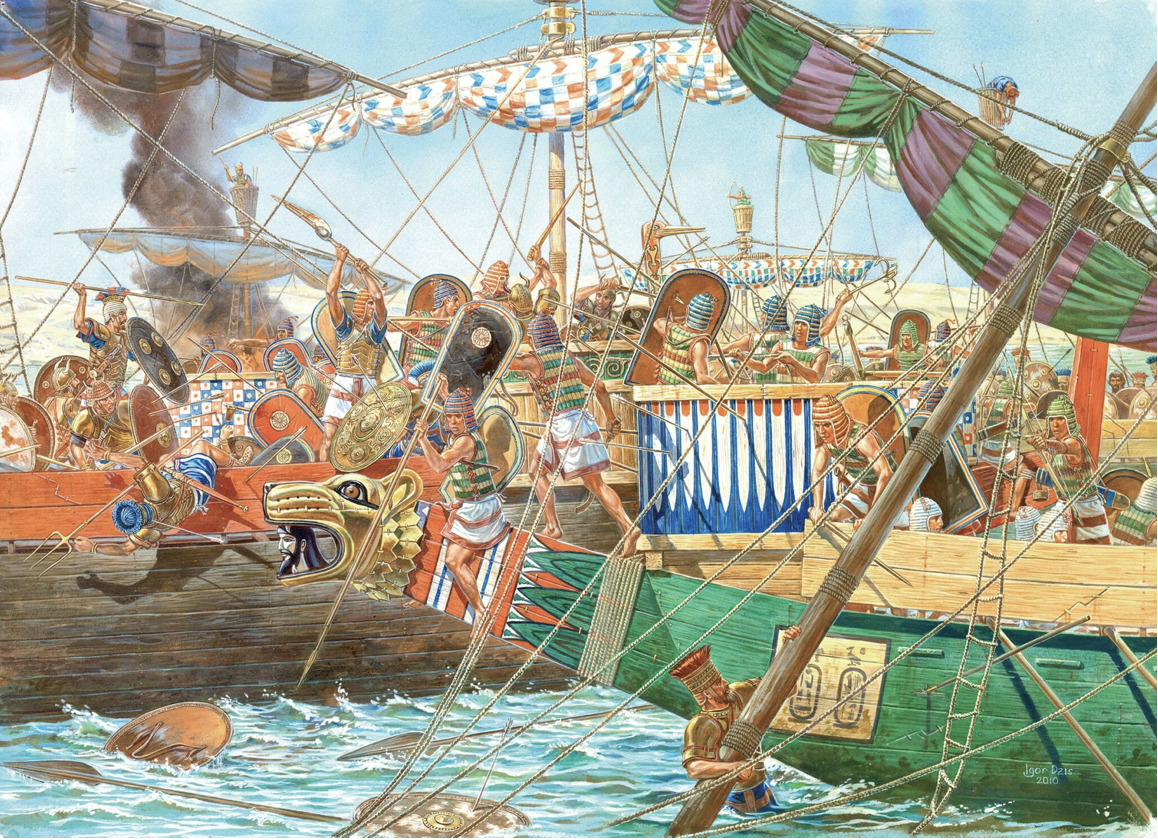
Welcome to our captivating video exploring the intriguing history of the Vikings and their legendary expeditions across Europe and beyond. In this informative presentation, we delve into the world of the Vikings, their culture, exploration, and their reputation as fierce raiders. Join us on a journey through time as we uncover the fascinating tales of these seafaring warriors.

Discover who the Vikings were, their origins, and the society they built. Gain insights into their advanced shipbuilding techniques, navigational skills, and the fearless spirit that drove them to explore uncharted territories. Explore their far-reaching expeditions, trading routes, and the impact they had on the regions they encountered.

Join us as we unravel the mysteries and stories of the Vikings, shedding light on their exploration, raiding, and their enduring impact on history.

The Animated History of Argentina

The huge Rio de la Plata, the wild open Patagonia, and the high peaks of the Andes.. In the following video we will be exploring the land of Silver, Argentina! Enjoy!

How Did Ancient Rome Begin?

Today’s video covers the origins of Rome, from a small Latin settlement, to the Roman Kingdom under its Seven Legendary Kings. It then goes through the early Roman Republic until the Sack of Rome and its rebirth in the early 300s BCE.

The Roman Kingdom (also referred to as the Roman monarchy, or the regal period of ancient Rome) was the earliest period of Roman history when the city and its territory were ruled by kings. According to oral accounts, the Roman Kingdom began with the city's founding c. 753 BC, with settlements around the Palatine Hill along the river Tiber in central Italy, and ended with the overthrow of the kings and the establishment of the Republic c. 509 BC.

The Roman Republic was a state of the classical Roman civilization, run through public representation of the Roman people. Beginning with the overthrow of the Roman Kingdom (traditionally dated to 509 BC) and ending in 27 BC with the establishment of the Roman Empire, Rome's control rapidly expanded during this period—from the city's immediate surroundings to hegemony over the entire Mediterranean world.

Roman society under the Republic was primarily a cultural mix of Latin and Etruscan societies, as well as of Sabine, Oscan, and Greek cultural elements, which is especially visible in the Roman Pantheon. Its political organization developed, at around the same time as direct democracy in Ancient Greece, with collective and annual magistracies, overseen by a senate. The top magistrates were the two consuls, who had an extensive range of executive, legislative, judicial, military, and religious powers. Even though a small number of powerful families (called gentes) monopolised the main magistracies, the Roman Republic is generally considered one of the earliest examples of representative democracy. Roman institutions underwent considerable changes throughout the Republic to adapt to the difficulties it faced, such as the creation of promagistracies to rule its conquered provinces, or the composition of the senate.

Unlike the Pax Romana of the Roman Empire, the Republic was in a state of quasi-perpetual war throughout its existence. Its first enemies were its Latin and Etruscan neighbours as well as the Gauls, who even sacked the city in 387 BC. The Republic nonetheless demonstrated extreme resilience and always managed to overcome its losses, however catastrophic.

Little is certain about the kingdom's history as no records and few inscriptions from the time of the kings survive. The accounts of this period written during the Republic and the Empire are thought largely to be based on oral tradition.

Disgusting Things That Was Normal in Ancient Rome

We all know that the Roman Empire lasted many years and is one of the significant examples of the rise and fall of a civilization throughout human history. And while it's fascinating to learn about epic Roman emperors like Caligula or Commodus, in reality, living in the time of their reigns was probably not good at all.

Today you will get to know what daily reality was like in Ancient Rome. Enjoy!

Human Sacrifice in Ancient Greece and Rome

Although the ancient Greeks and Romans believed that human sacrifice was barbaric, they occasionally practiced it themselves. Watch the video for more!

The oldest shipboard cannon in Europe may have been discovered off the coast of Sweden

What may be Europe's earliest shipboard cannon has been researched by an international research team under the direction of maritime archaeologist Staffan von Arbin of the University of Gothenburg. The 14th-century cannon was discovered in the water near Marstrand on Sweden's west coast.

The Marstrand Cannon – a unique 14th century shipboard cannon.

The results of the interdisciplinary study add to our understanding of the early development of artillery on land and at sea, but they also shed light on a trying time for mariners and coastal residents.

The small, muzzle-loading cast copper-alloy cannon was discovered by a recreational diver off the coast of Marstrand at a depth of 20 meters. It is thought to have been recovered from a shipwreck. Because it still had some of a charge in its powder chamber when it was discovered, the researchers believe that the cannon is one that was mounted on a ship rather than one that was being transported as cargo. This indicates that when the cannon landed up on the ocean floor, it was loaded and prepared for use in battle.

“Thanks to the preserved remains of the charge, it has been possible to use radiocarbon dating to establish the age of the find,” says Staffan von Arbin, maritime archaeologist at the University of Gothenburg.

“The study’s findings show that the Marstrand cannon is probably from the 14th century, making it one of the oldest artillery pieces ever found in Europe.”

An examination of the metal's chemistry

The item was 3D scanned by the researchers, who also chemically analyzed the metal that was utilized to cast the cannon. According to the examination, it was a copper alloy with just trace levels of tin and around 14% weight lead.

According to the experts, this alloy is far from ideal for casting cannon, and it is possible that the cannon would have broken and been useless if used heavily for a longer period of time.

“Clearly, the person who cast the cannon did not have the necessary knowledge and understanding of the properties of various copper alloys,” says Staffan von Arbin.

“This shows that the noble art of cannon casting had not yet been fully mastered at that time, and that production was largely based on trial and error.”

The investigation also shows that the lead most likely came from England or the area along the borders of Poland and the Czech Republic, while the copper ore used to make the cannon was mined in modern-day Slovakia.

The researchers report the findings of their investigations in this interdisciplinary study, which was published in the English maritime history magazine The Mariner's Mirror. They also discuss the discovery in light of historical, iconographic, and archaeological sources. The town of Marstrand, renowned for its superior harbor, served as a crucial commercial shipping hub between Western Europe and the Baltic Sea region in the fourteenth century. However, the sea served as a battlefield and a battleground, and civilian communities along the coast were frequently severely impacted. Additionally, there was always a possibility of pirate raids.

Which vessel did the gun belong to?

The novel rifle designs created at this period offered significant tactical benefits in naval warfare. The late Middle Ages saw the introduction of cannons aboard merchant ships as a means of self-defense against pirates and other hostile ships, so it wasn't just warships that were armed. The investigation of the Marstrand cannon offers fresh insights and viewpoints on the evolution of this military technology.

The Marstrand cannon type's funnel-shaped cannons are typically dated to the 15th and 16th centuries, however this discovery proves that the model was already in use in the 14th century. The cannon's powder chamber's well-preserved remnants of the charge also demonstrate that cartouches, a type of textile packing for the powder charge, were used considerably earlier than previously thought.

“Now, of course, we also want to try to locate and document the ship that the cannon belonged to. Although it is probably severely degraded and broken up, it should be possible to find scattered remains of the wreck if we conduct a thorough inventory of the site and its surroundings,” mentions Staffan von Arbin.

Source: https://www.gu.se/en/news/shipboard-cannon...

Papua New Guinean body adornment practices

The majority of us may choose to wear jewelry or other adornments because we like them, believe they look nice on us, or because a loved one donated them to us, but the people of Papua New Guinea have an entirely different perspective.

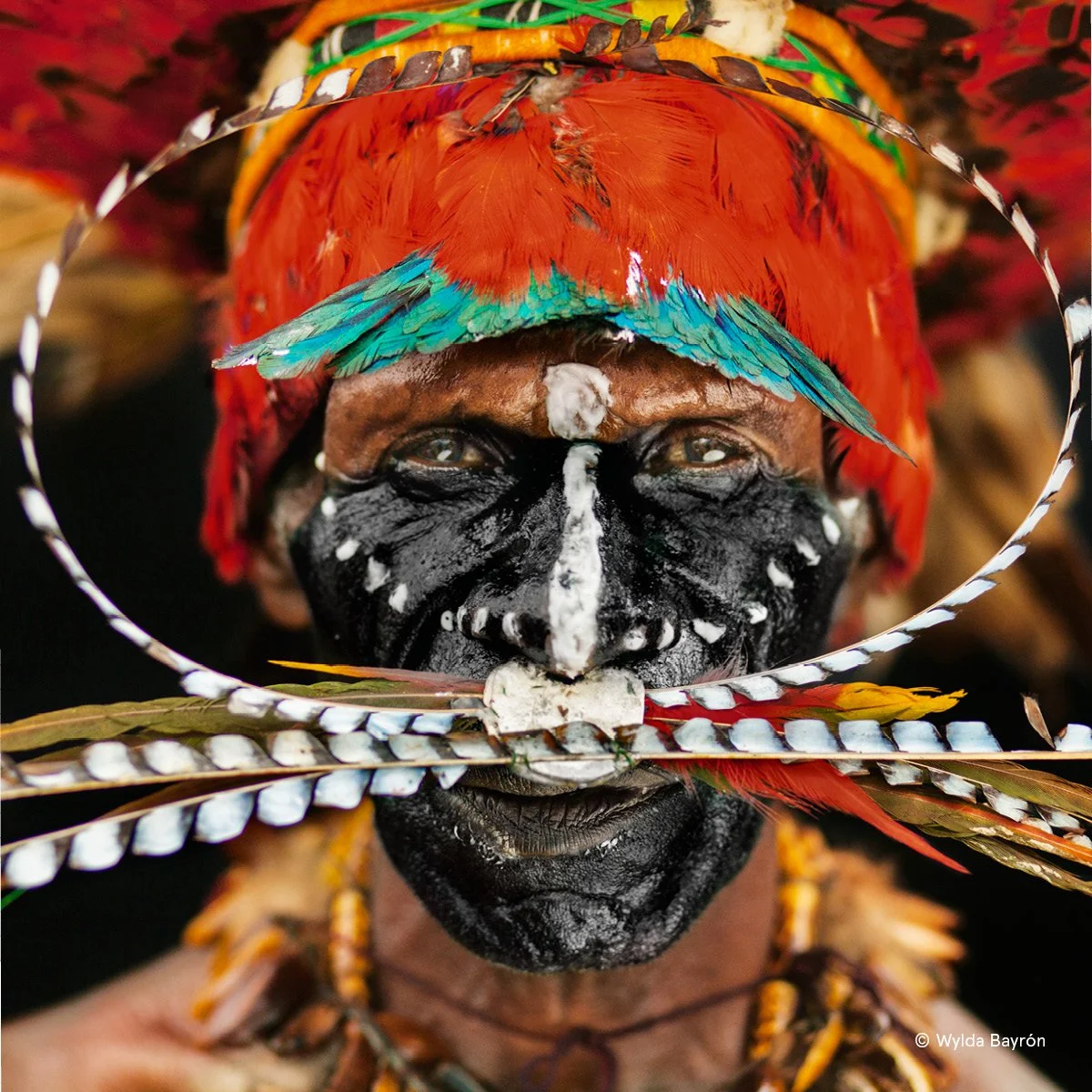
Rimbu. Bilas Exhibition at the Australian Museum. Image credit: Wylda Bayrón

Since the beginning of time, people have worn objects as talismans, status symbols, or to stand out from the crowd. stones, feathers, shells, and bones. gemstones, fabrics, and metals. Consider the numerous exquisite artifacts created by the ancient Egyptians, Romans, and Greeks and discovered during excavations at important sites and in the tombs of emperors and other powerful people. The wearing of these ornaments served as a type of language and communication that stated who the wearer was and where they were from. Papua New Guinea serves as the ideal illustration of this.

In Papua New Guinea, the practice of body modification is referred to as bilas. Bilas, which derives from the pidgin language Tok Pisin, honors how interconnected all living things and people are. Since ancient times, adornments have served to meet many social, spiritual, and physical demands. Some are used to symbolize authority or position, while others are used in cultural festivities and rites. They are made from a variety of natural resources, including shells, feathers, and plant fibers.

The Australian Museum's newest exhibit, Bilas: Body Adornment from Papua New Guinea, features a stunning collection of Wylda Bayrón photographs as well as items from its renowned Pacific cultural collections to highlight the beauty and diversity of body adornment and decoration from Papua New Guinea. The exhibition will examine the various meanings and interpretations of bilas as a practice from various cultural backgrounds, highlighting how closely connected PNG people are to their natural surroundings.

The stunning exhibition featuring photographs by Wylda Bayrón and a selection of objects from the world-renowned Pacific cultural collections of the Australian Museum. Image credit: Anna Kucera

An avid photographer

Wylda Bayrón, a Puerto Rican photographer working in the US, created 60 stunning images for the book Bilas: Body Adornment from Papua New Guinea. For her work behind the scenes on TV shows like Orange is the New Black, Billions, Madam Secretary, and most recently, And Just Like That, this multi-talented photographer is well recognized. But Bayrón's interest is far from a television, in places where culture and customs are still alive and well. Such a site exists in Papua New Guinea.

Papua New Guinea has been a destination for Bayrón on multiple occasions; her first visit (in 2013) turned into an 18-month adventure as she sought to photograph every community in the country's 22 regions. She even picked up pidgin so she could speak. Since then, Bayrón has returned numerous times. Her voyage into the heart of a nation, where communities welcomed her and shared their culture, led to the creation of the pictures that are on display in this exhibition at the Australian Museum.

“The peoples of Papua New Guinea are the curators of these images, and it is their cultures, traditions and customs that are being shared. These photographs document what I could not have when I was growing up – a photographic history of identity,” Bayrón said.

Images may truly tell a story when viewed through Bayrón's lens—a story of cultural continuity, resiliency, adaptability, and regeneration.

Defarim (headdress), Sanduan, Telefomin and Toea Armlet Milne Bay. Image credits: Australian Museum.

The presentation

Visitors to the Australian Museum can see the complex beauty and diversity of cultural decoration and body ornamentation from the many peoples in Papua New Guinea through the exhibit Bilas: Body ornamentation from Papua New Guinea.

The exhibition was created and curated by the Museum's Pasifika team, who worked with local communities and experts from the region. It includes Bayrón's arresting photographs as well as rare, never-before-exhibited cultural objects from the Museum's collection, which is one of the most significant in the world with over 60,000 objects from across the region.

The new items, which were acquired thanks to a gift from the Australian Museum Foundation, include the earliest instances of Enga (human hair) wigs, Kagua area wicker helmets, and Maring/Kalam "Glong" headdresses. The commissioning of these decorations for an Australian institution is a first.

Dr. Michael Mel, one of the exhibition's co-curators and a proud native of Kilipika Village in the Western Highlands, said: “In our culture, the body has long served as a ‘canvas’ for self-expression and to convey a multitude of messages to the outside world. Beyond being a vehicle for social communication and living art, there are also spiritual domains and meanings to the body adornment.”

The images from Bayrón that best represent Bilas are numerous. A Chimbu tribe chief's visage is painted in "Chimbu Roi" using charcoal and broken seashells. His nose piercing and headgear are decorated with bird of paradise feathers.

Additionally, Bayrón describes the image titled "Tumbuna," saying that the youngster would put on the bilas for the first time at dawn. The village chief, his grandfather, meticulously unpacks the feathers he has received from his forefathers and unfolds a tiny tapa (cloth made of bark) that he specifically fashioned for the occasion out of worry that he wouldn't live to see this moment. The youngster exults. He understands that these actions are important because they are passing on centuries-old customs to the next generation.

And that is the main idea of bilas.

Museum visitors admire the impressive headdress from Papua New Guinea. Image credit: Anna Kucera

Through the camera

Australian Geographic was also able to chat with Wylda Bayrón, whose photographs served as the inspiration for the Australian Museum display. We questioned Wylda about her love for PNG and its bilas.

What sparked your interest in photography?

“When I was a focus puller in 2004, I worked on a film in Singapore. I asked production to delay my return for a week as I wanted to visit Malaysia. The week turned into a year and a half travelling through Southeast Asia where I realised my passion for photography and tribal cultures.”

You have worked as a photographer/cinematographer on countless shows and movies. How do you juggle your passion for photography with the demands of film work?

“It’s a tricky balance because I love both parts of my work life and how distinct and different they are. They inform each other so in that sense it’s very rewarding. I try to work on shows that tell stories I love and think are important because each show is an all-consuming affair that can take up to six months of my life. With that money I buy my freedom to travel and invest in my passion for preservation of tribal culture. The cinematography and the photography are each a wing of a bird for me.”

What piqued your interest about Papua New Guinea?

“I’ve always had PNG in mind but the time had not come because I knew I had to go alone and I was in a relationship. I had seen pictures of the huli and a few other highland tribes and I was hooked. Little did I know I’d be spending a decade working with the people there.”

What happened on the first trip that sparked the passion for photographing and learning about the people of PNG?

“Pretty much immediately I was taken in by a family who were able to support me in my desire to capture as many tribes and Bilas as possible. My first “mum” travelled with me to some places initially and introduced me to her Motu family members and friends and that way I was able to use the wankot system to traverse and travel the entire island always having new families take me in and keep me safe. The project was born organically, fuelled by community desire for their own preservation.”

Baining Nature Powa and Chimbu Roi. Image credits: Wylda Bayrón

What resonates most about the peoples of PNG in your heart?

“What resonates most is that belonging to a place is not rooted in where you were born. PNG is my home and the people there are my family no matter what tribe or province they are from. Somehow, we always managed to connect and laugh and do the culture preservation work no matter where I was originally from. Once I learned the language and they knew that I understood them, the life and culture, I was one of them and they didn’t hesitate to accept me. It was always a homecoming even if it was new place. That’s pretty magical and you can’t fake that. PNG and I were written in the stars.”

What does the word bilas mean to you?

“Bilas is identity, community, ancestral knowledge and a core aspect of how we celebrate ourselves and the culture in PNG. The people and I have forged a beautiful bond. Their deep sense of identity and kindness is one of the parts that keep me coming back. It’s the immediate sense of family and community that made the journey so beautiful and I’m forever bonded with the people and the land.”

What is your favourite photo from your beautiful collection now on show at the Australian Museum as part of Bilas: Body Adornment from Papua New Guinea? What is the story behind it (the photo)?

“It’s so hard to identify a sole image as they are each representing a very special place and people. I do love my first photo shoot in the middle Sepik which yielded the image of the three men with a live crocodile around the main man. The first day we tried to shoot it rained and we had to cancel, but the men decided they would get dressed all over again the next day and then take me by canoe several hours north so that I would not miss my flight out as my visa was expiring.”

Source: https://www.australiangeographic.com.au/ne...

Blue plaque unveiled marking Egyptologist's birthplace in Barnsley

At the residence of an Egyptologist from Barnsley who found some of the early hints about the location of Tutankhamun's tomb, a blue plaque has been revealed.

Egyptologist and artist Ernest Harold Jones died from tuberculosis aged 34 before the tomb of Tutankhamun was found

According to Barnsley Council, Ernest Harold Jones, who passed away in 1911, "made significant archaeological discoveries that have largely been forgotten."

After discovering items carrying his name, according to the civic trust of the community, he stimulated curiosity about locating the pharaoh's tomb.

On Thursday 14th of September, the memorial was unveiled on Sackville Street, where he resided.

During a 1922 excavation in the Valley of the Kings, Howard Carter, a Jones acquaintance, famously found Tutankhamun's tomb.

If Jones had not passed away from illness at a young age, Prof. Joann Fletcher, an Honorary Research Fellow at the University of York, thought it was quite likely that he would have discovered the tomb before Carter.

"In many ways he was way ahead of Howard Carter," mentioned Prof Fletcher, who has studied the Egyptologist and artist's life.

"His funeral in Egypt was arranged by his friends Lord Carnarvon and Howard Carter, who were able to follow the clues Jones had found to finally discover the tomb in 1922."

Jones' Welsh-born parents moved their family to Barnsley, South Yorkshire, when Jones' father was appointed the school's first headmaster.

Councillor Robert Frost, council cabinet spokesperson for regeneration and culture, mentioned: "It is fascinating to discover the strong links between Barnsley and ancient Egypt - particularly around the research conducted by Ernest Harold Jones.

"It is important that his achievements are recognised and remembered."

Source: https://www.bbc.com/news/uk-england-south-...

8-Year-Old Discovers On the Beach, a 900-Year-Old Viking Artifact

While on a family vacation in Sweden, an 8-year-old kid discovered a 900-year-old Viking item on the shore.

An 8-year-old boy discovered a Viking artifact on a family vacation.Gotland County Administrative Board

On his walk to the beach, Bruno Tillema noticed an intriguing object and picked it up, according to a press statement from the Gotland County Administrative Board dated September 8.

"I just picked it up from the ground and thought, 'What is this?' " Tillema told the Board. "'Maybe some weird part from a house?' I went looking for fossils. Then mother came and asked what I had in my hand. Then I said, 'Some strange metal thing.'"

Andreas Tillema, Bruno's father, said in an interview with Newsweek that he and his wife had just handed Bruno a book about fossils and that as a result, he was "actively scanning the ground with his eyes."

To clarify what Bruno had found, the family talked to a relative who is an archaeologist.

"A video call later, it stood clear what [it] was," Andreas said.

An animal head-shaped bronze belt buckle from the Viking Age, which lasted between 800-1100 AD, was discovered by Bruno.

To report the relic, the Tillemas got in touch with the county government.

A second artifact, a ring buckle, was discovered after the Gotland museum conducted an investigation of the location.

Bronze was used to make both buckles. During the late Iron Age or the early Viking Age, they were applied on costumes.

Ring buckles were used for both men's and women's burials in Gotland, although animal head buckles were primarily found on women's graves. The Board stated that the buckle-related burials were presumably burned.

The National Antiquities Office will decide whether to display the buckles in a collection after the buckles have been maintained.

"I'm a little happy to be able to do it," Bruno said. "It feels like I've done something big and now I can share it with you."

According to Andreas, his son is pleased to finally share this tale, as he told Newsweek.

"We were asked to keep it a secret until the site was properly examined," Andreas said. "He has even started thinking about becoming an archaeologist when he grows up. His dream is to find a T. Rex skull."

The National Antiquities Office makes the decision about finder rewards.

Source: https://themessenger.com/news/900-year-old...

Did medieval Peasants Travel?

In today’s video, Jason Kingsley, the modern Knight, discusses how and why peasants might have travelled in medieval times and why. Watch the video to find out more!

8,000-year-old Cave paintings found in Türkiye’s İnkaya Cave depict life and death

A number of cave paintings dating back some 8,000 years have been found in İnkaya cave in the Marmara province of Balıkesir during a field study conducted by Associate Prof. Dr. Derya Yalçıklı from Çanakkale (18th March) University, in 2015.

During the same studies, another cave located 5 kilometers away from the İnkaya cave was discovered. The discovery of both caves is known as the most important archaeological discovery made in Anatolia in recent years.

The cave paintings discovered in the Baltalıin and İnkaya Caves, which are situated in the Delice neighborhood of the Dursunbey district in the Balıkesir province of Turkey, offer information that sheds light on Neolithic Age life.

One of the remarkable findings showing that people in the Prehistoric Age were undeniably knowledgeable about the phenomenon of childbirth is the scene found among the cave paintings of İnkaya Cave.

The painting depicts a woman becoming pregnant, the pregnancy, and childbirth in an expression that has yet to be matched.