Expert with "proof" claims that a "atomic blast" destroyed the ancient Biblical city of Sodom.

The ancient city of Tall el-Hammam, which was destroyed by what appeared to be a "atomic blast," is allegedly the biblical city of Sodom, according to a renowned theologian.

The blast that destroyed the city had the power of 1,000 Hiroshima bombs, says Dr John Bergsma (Image: No credit)

This assertion follows what appears to be evidence of the city's existence, which was apparently revealed by archaeological findings in Jordan. Tall el-Hammam, which is located in the southern Jordan Valley, had previously shown indicators that it had been completely destroyed by a catastrophic event. This catastrophic occurrence, according to Dr. John Bergsma, a respected professor of theology at Franciscan University in Ohio, is similar to the biblical tale.

Sea creatures discovered "frozen in time" in the Grand Canyon have "proven" the biblical account of Noah's Ark. According to Genesis, God destroyed Sodom and Gomorrah completely by pouring sulphur and fire on them in response to their "wickedness." Similar scenes of carnage were seen in Tall el-Hammam's ruins, which significantly changed Dr. Bergsma's interpretation of the Old Testament.

According to the Daily Star, Dr. Bergsma suggests that bones and pottery shards found by archaeologists show signs of intense heating, which could be evidence of an asteroid collision.

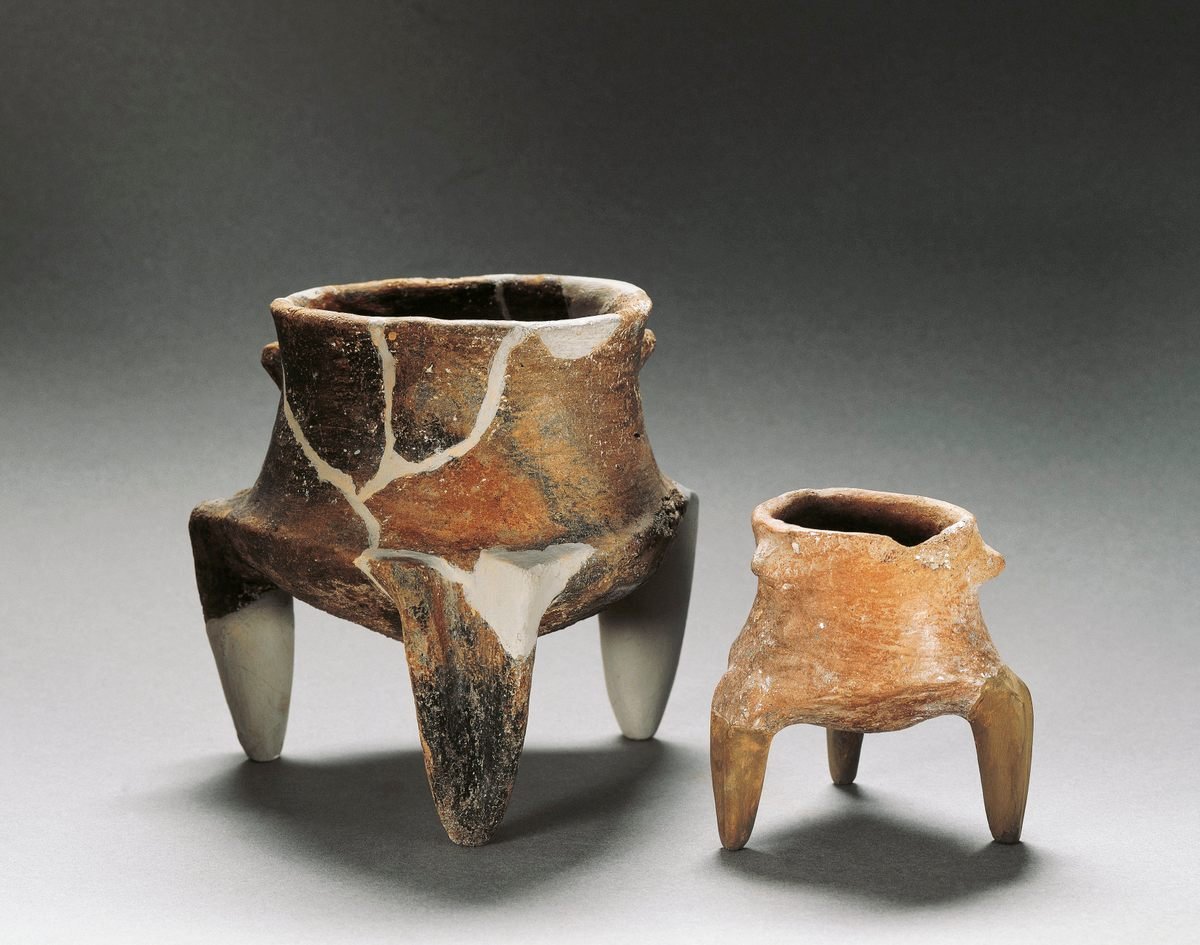
Steven Collins was baffled at the pottery that was 'glazed ' on just one side ( Image: Youtube)

Tall el-Hammam was a bustling metropolis 3,600 years ago, much bigger and more powerful than Jericho or Jerusalem. But it virtually vanished overnight. Interestingly, the absence of arrowheads or other indications of a siege suggests that Tall el-Hammam and its neighboring city were not destroyed as a result of a military assault.

Leading archaeologist at Tall el-Hammam Steven Collins informed Dr. Bergsma of some of these astounding discoveries. According to Dr. Bergsma, Trinitite was found to be encrusted on pottery unearthed at an archaeological site. He said, "that glass layer that you get when you set off an atomic bomb in the desert and it melts the sand".

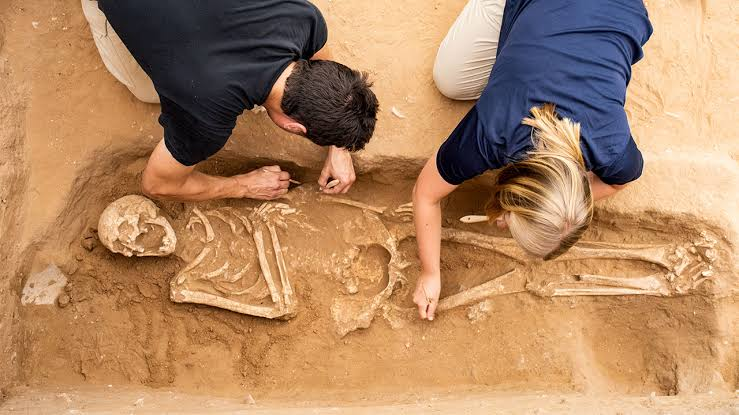
The discoveries didn't stop there. Dr Bergsma also mentioned: "They also started to find human remains. Human skeletons that are complete up until about halfway up the backbone and then there's just a scorch mark and there's nothing on the top of the body..."

He went on to describe the evidence of a powerful heat wave that appeared to burn out these twin cities on the Jordanian side of the river at a height of around 25C above the horizon.

Steven Collins compared this disaster to the infamous Tunguska Event of 1908, in which a massive asteroid crashed with Earth's atmosphere over Siberia and left massive wreckage in its wake. He stated: "The proposed airburst was larger than the 1908 explosion over Tunguska, Russia, where a 50-metre-wide bolide detonated with 1,000 times more energy than the Hiroshima atomic bomb."
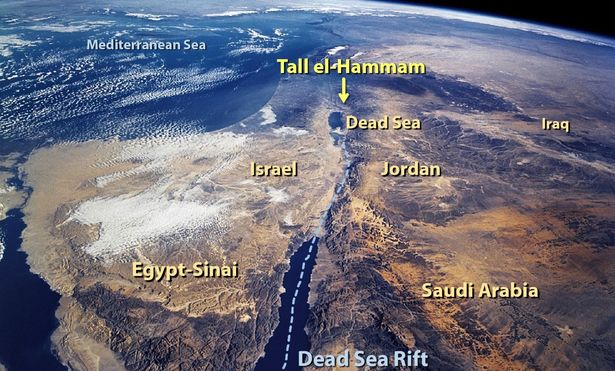
The catastrophe could have thrown up masses of salt from the nearby Dead Sea ( Image: Nature.com)

Professor emeritus of earth science at the University of California, James Kennett, observed that the airburst appeared to have produced a lot of salt. This discovery uncannily parallels the biblical tale of Lot's wife being transformed into a salt pillar after Sodom was destroyed. "The salt was thrown up due to the high impact pressures," he said. "And it may be that the impact partially hit the Dead Sea, which is rich in salt," he said.

But several archaeologists have criticized Mr. Collins, saying that he drew conclusions too quickly and without enough data. According to Professor Kennett, the incident may have simply inspired later myths like Sodom or the fall of Jericho.

However, Dr Bergsma begs to differ. He firmly believes in the historical authenticity of these events, stating: "It really changed my perspective on the Old Testament map because what it pointed out to me is things that sounded too outlandish to be history...is actually shown to be a historical event."

Source: https://www.mirror.co.uk/news/world-news/e...

Giza Before the Pyramids: Discovery Reveals Lost History

The history of Giza before the 4th Dynasty pyramids were constructed is rarely discussed, and is often overlooked or completely disregarded, but in my opinion, the origins of Giza is a subject that should be studied more widely.

A pre-4th dynasty history of Giza is not easy to study for obvious reasons. It’s not just because of the lack of excavations and publications in the modern world; it’s also because Khufu, Khafre and Menkaure would have cleared the vast majority of pre-existing structures to make way for their funerary complexes. On top of that we have more activity at Giza in the 18th, 19th, 21st and 26th dynasties. The Greeks and the Romans were also at Giza.

Due to the colossal size of the pyramids, obviously Giza would have been a focal point for locals and outsiders ever since they were constructed. Therefore, finding evidence for activity before they were built is no easy task.

But there is more to find and I know exactly where to look.

Thanks to the work of Peter Der Manuelian and Diane Victoria Flores, we now know that George A. Reisner discovered Pre-Khufu archaeology to the west of the Great Pyramid - a now lost and buried site known as the Wadi Cemetery. Watch this video to learn more as the lost history of Giza is revealed.

The Wild World of Roman Jobs

Ancient Rome was a multi-ethnic society with a large population that required a broad spectrum of jobs to sustain its economy. However, Choosing their career was not always an option for the general people. This was only possible for people with higher status or inherited roles. Prestigious professions, military leadership, and political administration were reserved for the Roman upper class, whereas ordinary people were involved in various jobs.

Moreover, The Roman Empire depended on slaves and any wealthy person could keep as many as 500 slaves. The slaves were controlled such that they had to partake in challenging, unpleasant works of low esteem. The typical jobs were farming, construction, and domestic services, and educated slaves could work in medicine, teaching, accounting, and artists. Some jobs, however, like the orgy planner or urine collector, were bizarre even to the slaves, so today we will take a look at the Weird Roman Jobs Tier List. The weirder a job is, the higher it is ranked on the list, while more normal jobs are ranked lower.

12 Most Incredible Ancient Technologies That Were Way Ahead of Their Time

Inventors bring the future closer to us. The right invention in the right place at the right time can change the world - but some inventions are further ahead of their time than others. In some cases, the great inventors of the past had ideas that didn’t become commonplace until hundreds of years later! You’ll see some of the brightest and best of them in this video.

10 Most Incredible Finds That Scientists Still Can't Explain

Archaeologists try every day to understand how our ancestors lived. Without them, we simply will not be able to know our future. Each new artifact brings us closer to knowing our past better. Ancient Vikings, perfectly preserved animal remains, Neanderthal teeth and a tree that outlived all of our even most distant ancestors. Watch the video to find out more!

Olive Oatman, 1857 | History Revealed & Brought To Life

Olive had no idea that at her age of 14, her life would change forever in a very dramatic way. In March 1851, her pioneer family of nine was travelling from Illinois to California on a wagon with a company of Mormon Brewsterites in search of new settlement. Despite earlier warnings about the presence of hostile natives, the Oatman family broke away from the train and took a fatal turn through a dangerous territory. A group of about 19 Yavapai tribesmen on foot, armed with clubs, bows, and arrows attacked the family on the banks of the Gila River (later known as Oatman Flat) in Yuma, Arizona. They murdered her father and pregnant mother, as well as four of her siblings. Miss Olive, 14, and her younger sister Mary Ann, 7, were captured and taken away. Her brother, Lorenzo, 15, who had been left for dead, regained consciousness later and found his way back, rejoining another wagon train. He and few companions returned to the scene of the massacre and hastily buried the slain bodies in the rocky soil. According to reports, the remains were reburied several times over the years, in a more suitable ground near by. Lorenzo Oatman himself, resolved never to give up the search for his missing siblings, Olive and Mary Ann.

Olive and Mary Ann were initially kept captive with the Yavapais for a year, where they were treated as slaves and frequently beaten. Their fortunes improved when one day Mohave Native Indians came to trade with the tribe. Sympathetic daughter of the Mohave Chief who noticed the girls and their condition, persisted in making a trade offer for them. Initially Yavapais refused but eventually agreed to trade the girls for two horses, vegetables, blankets and beads. The girls travelled for many days to the Mohave village along the Colorado River, where they were welcomed by the family of the tribal chief. Much of what actually happened during their time with the Mohaves remains unknown and is subject of many myths and speculations. However, it is believed that they were fully adopted into the tribe and were not held in forced captivity. Both girls were tattooed on their chins and arms, in keeping with the tribal custom. The girls who believed they had no immediate family left and would never return to their world, willingly adopted Mohave habits. Unfortunately, little Mary Ann died of starvation when she was ten or eleven years old, during the 1855 famine, which also claimed many tribe members. Given the situation, it is believed that Olive made the decision to remain hidden and not reveal herself to the white railroad surveyors and other white expeditions roaming around the Mohave Valley at the time.

In 1856, Olive was eventually spotted as a white girl living with the Mohave tribe and her return was requested by the authorities at Fort Yuma. Several attempts were made at first to persuade the tribe's council to part with Olive, with trade items such as blankets and horses included. Fearing a potential retribution, the Mohaves eventually accepted the terms and she was repatriated into American society. After a 5-year separation, Olive reunited with her brother, Lorenzo, and gradually began to reintegrate into the community. She became an oddity in 1860s America, partly because of the striking blue tattooing on her face, making her the first known white woman with Native tattoo on record. Olive went on to become a lecturer and she often spoke fondly of the Mohaves, whom she claimed were kind to her in contrast to her previous captors. In November 1865, Oatman married, John Fairchild, a wealthy cattle baron and banker who shielded her for the rest of her life from public scrutiny. Oatman gave up all of her lecture activity and they moved to Sherman, Texas in 1872. The couple never had children of their own, but they did adopt a little girl.

It Was an Ancient European Pilgrimage Site, This Mysterious Ziggurat

In between chelu and mare, as singer Maria Carta would have sang, was this Mysterious Ziggurat of Monte d'Accoddi, a location of the gods.

The massive complex of Monte d'Accoddi on the island of Sardinia is nearly 6,000 years old. ÁNGEL M. FELICÍSIMO, CC BY 2.0/WIKIMEDIA

A ziggurat in Europe, particularly in Sardinia, looked a little absurd at the sheer mention of it. Ziggurats were prehistoric step pyramids and platform mounds that appeared to be taken straight out of the Tower of Babel when they were built in Mesopotamia during the fifth millennium BC. Not exactly seven miles from Sassari, I traveled down a country road to the location, passing fields on both sides as I did so, and then I parked my car in a grassy area. It appeared to be a hill at first, but Monte d'Accoddi really translates as "mountain of stones."

A long ramp with stone borders that reached a small landing and then climbed a broad stairway of stone steps up to the top of a mound platform on the pyramid could be seen, stationed in the center of the barren plain like an air strip. I circled to where the ramp ended and stood there, feeling both amazed and perplexed.

The pyramid appeared lonely and uninhabited from a distance, devoid of any human presence or other construction-related traces. The base of it measured roughly 120 feet by 120 feet. It looked as though someone had rolled a large stone that was carved into the shape of an egg down the lengthy ramp. A sacred granite boulder designating the center of the world, the oval stone was comparable to the omphalos at Delphi in classical Greece. The menhir, which resembled a stone totem symbol and stood seven feet tall and slender, was to one side. There were another four menhirs placed nearby. There was a dolmen, a little rock stack akin to Stonehenge, on the other side of the pyramid. I climbed up the dirt ramp until I was on a platform, then I started climbing the stone steps. Despite lacking the steep elevation of the pyramids in central Mexico, it had the same weight of seriousness as if it were ascending sacred land on the last leg. I could see the entire valley from the top of the platform, with the lengthy ramp of stone steps suddenly seeming to be a hallowed route from the ground to the heavens. An altar's potent significance as a conduit to the contemporary cosmos struck me as strong.

Nearly 6,000 years ago, in the years 4000–3500 BC, the initial pyramid building was found. The Monte d'Accoddi was constructed on a meticulously laid stone foundation, brick by brick, including the corner foundations and the ramp, which set it different from other ziggurats or pyramids. For instance, mud bricks rather than stone were used to build ziggurats in Mesopotamia. The pyramid evolved in two stages, say archaeologists. The second level, which was built approximately 3200 BC, included an altar that was surrounded by the remains of sheep, pigs, and animals that were probably sacrificed, according to archaeologists.

One of the menhirs still standing at Monte d’Accoddi in Sardinia. GIANNI CAREDDU, CC BY-SA 3.0/WIKIMEDIA

The pyramid was somehow attractive despite its otherworldliness; it appeared as though it had been constructed as a stepping stone to a certain historical point in human history. To climb it was called upon. I can picture pilgrims from all around the island making their way to Monte d'Accoddi. I admired being completely alone as I stood at the top on the platform where an altar had originally been placed to either pray the gods or oppose them. Only a couple of employees working in a small office at the edge of the field were present at the scene.

This structure in Sardinia dated back thousands of years further in our timeline of existence, serving as a sacred site in Neolithic Europe. I had experienced a similar sense of wonder while climbing the Tikal pyramids in Guatemala. The antiquity, which was still in tact, marked a turning point in human history by recognizing a civilizational order that advanced beyond what was previously thought possible. According to my personal perspective, it was truly one of the most extraordinary scenes in all of Europe.

Such a location in Sardinia was completely unexpected. A hallowed location that had persisted for thousands of years, I should add, drawing pilgrims from remote parts of the island and beyond, where one stood on the pillars of "civilization" in Europe.

“We are used to thinking of ‘civilization’ as something that originates in cities,” David Graeber reminded us in his book, The Dawn of Everything: A New History of Humanity, “but, armed with new knowledge, it seems more realistic to put things the other way round and to imagine the first cities as one of those great regional confederacies, compressed into a small space.”

On numerous occasions in Sardinia, I felt this way. The fact that little settlements on a small island had created architectural marvels, for instance, as well as the even more astounding fact that these enormous monuments, like the ziggurat and the nuraghes (freestanding stone towers), were still visible on the island. Despite being ancient, they weren't just myths or tales contained in a story. Regardless of how mysterious, they weren't fragments of stone in a museum. As a crossroads in the Mediterranean and ultimately in Europe, this island's origins as a center of civilization offered a window into the very stepping stones of development during a time when the first stone implements for organized farming gave way to the first stone wheels that came into being. These architectural wonders were put together in Sardinia as the result of a group effort including knowledge and skill, not as the result of some enigmatic event.

Monte d’Accoddi was built on a stone foundation, brick by brick, including the corner foundations, as well as the ramp. GIANNI CAREDDU, CC BY-SA 3.0/WIKIMEDIA

Along with numerous tombs, archaeologists discovered underground rooms in the pyramid that resembled the Neolithic domus de janas burial grounds carved into rock chambers all across the island. The graves included sculptures of bull horns as status emblems, just like many of Sardinia's stone necropolis locations. An artifact that connected the inland site to the sea was a whale's tooth, among other things.

The ostensibly prominent but concealed remains were first documented in aerial photographs of the location in 1950. For countless years, it was practically buried beneath dunes and vegetation. The location had been forgotten at the outset of the Nuragic civilization. Early archaeologists believed it to be the remains of another nuraghe, as did the majority of visitors at the time. It was left to rot underground like countless of others. If Sardinia's 7,000 nuraghes had never been unearthed, just think of how many additional Monte d'Accoddi sites there might be.

The first excavations weren't funded until the 1950s on property owned by Antonio Segni, who would later lead Italy as its president. The first funding was acquired by Segni.

In the dig, pottery items, including a bowl with dancing characters, were found. In one of the tombs, there was a small piece of limestone with distinct cuts that appeared to be recording time or a name. Undoubtedly, it served as a landmark for an island lexicon in antiquity. Along with a male figure painted in red ochre, more pottery fragments were also discovered. Shells, obsidian, and other items covered a portion of the tombs in that location. The pyramid was encircled on one side by the limestone hut foundations for a community.

The Sardinian countryside is dotted with thousands of stone towers, or nuraghes, most of which have never been excavated by archaeologists. HANS HILLEWAERT, CC BY-SA 3.0/WIKIMEDIA

A lovely stone carving of a deity was also found in the tombs' underground chambers by researchers. The goddess was thought to be a representation of Mother Earth, or la Dea Madre, because she had her hands on her hips, skinny arms, and a triangle body. With her rounded head and "globe" eyes, the adorable figure wasn't alone herself. Similar dea madre carvings have been discovered in Neolithic necropolis sites all throughout Sardinia, from the smaller island of Sant'Antioco to the western beaches close to Cabras, the Barbagia highlands close to Orgosolo, and domus de janas sites close to Alghero, Porto Torres, and Sassari. The oldest known female sculpture was discovered in the 1940s by a carpenter working close to Macomer who was excavating close to his orchards. He had dug down and retrieved the so-called "Venus of Macomer," which was made of volcanic or basalt rock and was cracked in some places but had a clear face, trunk, and thighs. Recently, it was assigned a Late Pleistocene age, making it at least 15,000 years old.

Such antiquity, along with art and ritual, didn't feel out of place on the island today, like a remnant of some other culture, but rather a crucial aspect of the Sardinian experience.

In his own analysis published in 2019, American archaeologist Gary Webster posed the following question: "How could Monte d'Accoddi, with its singular existence, be missing from most studies on Neolithic Europe, including the most recent Oxford Handbook of Neolithic Europe, which in fact featured a dea madre sculpture from Sardinia on its cover?" In the once-tight corridors of western culture, Sardinia had undoubtedly found a new place for itself thanks to classical archaeology and its plethora of specialists. The Cambridge Prehistory of the Bronze and Iron Age Mediterranean handbook even included a Nuragic bronze ship on the cover, as if the shipment were still awaiting inspection.

Footed food warmers found near Monte d’Accoddi. DEA / A. DE GREGORIO/DE AGOSTINI VIA GETTY IMAGES

Around the year 23, Strabo wrote in his Geography in Greek that "the Carthaginians drown any strangers who sail past, on their voyage to Sardinia," reminding us that a nation's odyssey was not always silent, but muted. That silence persisted in more subtle ways in recent times.

The worship of a female deity that persisted from the Paleolithic to the Neolithic and apparently came to an end in the Bronze Age also piqued my interest. The focus on dea madre objects subsequently switched to Nuragic bronze and other sculptures that included a lot of male characters, such as archers and warriors, boxers and wrestlers, priests and village headsmen. Giovanni Lilliu, a pioneering Sardinian archaeologist, remarked glibly in 1963 that "in this society of men—body and soul—women bring a note of kindness and grace but also of dignity and severe composure, sometimes of a silent and solemn tragic nature: as she still is today, the Sardinian woman." This statement may have been made as a reflection of his own times.

Archaeologist Fulvia Lo Schiavo noted that Nuragic women truly shared "equal treatment" in life and death rites at a level that was "almost unique in the ancient world" in her analysis of burial tomb materials and bronze statuettes of Nuragic priestesses. Many years after Lilliu's groundbreaking research on the Nuragic people, Lo Schiavo's more recent analysis proposed that the "secret" of Nuragic welfare and equality for women ultimately vanished during the instability caused by the colonization of the Phoenicians and then the Carthaginians.

Figures of Dea Madre, or Mother Earth, have been found at Neolithic sites across Sardinia, including this limestone figurine known as the Venus of Cuccuru S’Arriu. DEAGOSTINI/GETTY IMAGES

In the 1390s, when Eleonora of Arborea took control of her judicadu in opposition to Aragon assaults on the island, that "secret" was still a matter of debate. Eleonora positioned Sardinia ahead of most European countries in the Middle Ages by amending and enacting the Carta de Logu system of rules, which was written in Sardinian and gave women inheritance rights, restitution for adultery, and stronger punishments for rape.

Five thousand years after Eleonora's reign, Grazia Deledda's novel After the Divorce questioned that "secret" in Sardinian life for women: "In the ‘stranger’s room’ of the Porru house a woman sat crying." The book, which was released in 1902, was among the first to address the subject of divorce.

In a news report published in the United States after Deledda received the Nobel Prize for literature in 1926, it was stated that it was "strange" that she continued to write about Sardinia after relocating to Rome. For the entire world, Sardinia is of relatively little interest. Contrary to most of Italy, it is not abundant in artistic artifacts. Perhaps Sardinia's attractiveness lies in its solitude; civilization hasn't yet tarnished it or reduced it to the conventional pattern.

To poet Antioco "Montanaru" Casula, Sardinian poet Marianna Bussalai once penned a letter in the 1920s about "the Sardinian women, quiet and ignored poetesses of the shadows." Bussalai was an outspoken feminist, anti-fascist, and independence activist from the mountain village of Orani until her death in 1947. Bussalai considered her identity as a woman and as a Sardinian poet and performer as being linked.

She later added: “My Sardism dates from before the Sardinian Action Party arose, that is, from when, on the benches of elementary schools, I humbled myself why in the history of Italy there was never any talk of Sardinia. I came to the point that Sardinia was not Italy and had to have a history of its own.”

You may add that it has a history of its own, similar to Monte d'Accoddi, the dea madre, and all the ladies in Sardinia.

Source: https://www.atlasobscura.com/articles/anci...

Unraveling the Secrets of Ancient Macedonia (Documentary)

Step back in time and embark on a captivating journey into the heart of Ancient Macedonia. In this immersive documentary, we delve deep into the origins and mysteries of this remarkable civilization, nestled in the northern reaches of Greece. From its humble beginnings to its rise as a formidable kingdom, we explore the unique culture, language, and traditions that defined the Macedonian people. Join us as we unravel the stories of early Macedonian rulers, the influence of neighbouring civilizations, and the pivotal moments that paved the way for the legendary conquests of Alexander the Great.

Longbow vs Crossbow - A Video Essay

Everyone has a strong opinion on whether the longbow or the crossbow was the better ranged weapon in the middle ages. There are speculative but nonetheless common claims like: “the longbow was the machine gun of the middle ages and the crossbow was the sniper rifle”. History buffs, testers and historians can get into heated debates about armor penetration, rate of fire and tactical application of these weapons. Certain aspects like rate of fire or penetration power can be tested experimentally, but testing has limits: after all, tests are not battles.

Also, the interpretation of such tests often leads to logical fallacies – for example: a better rate of fire doesn’t necessarily imply a more effective weapon in battle. In the same vein traditional historiography runs into problems because they often ignore the tactical implications of practical tests. A proper comparison of the two weapons needs to consider both practical tests and historiography. So, in this video we’d like to shed some light on the main arguments of the debate. We‘ll bring together testing and research and – maybe – get a baby step closer to understanding these two weapons and their roles in medieval warfare.

Did a Tsunami Swallow Part of Europe?

What happened to the piece of prime prehistoric real estate known as Doggerland? While a massive megatsunami might have drowned it for good, the underlying reason that it now lies under the sea may have actually been the same thing that made it so great in the first place.

Intro to Historical Chinese Geography

In today’s video we will be going through an overview of the major rivers, mountains, and ancient cities that have shaped Chinese history for over thousands of years. Enjoy!

Ancient Canaanite DNA History

This video shows the DNA results of a Bronze Age Canaanite sample from the city of Sidon, a major Canaanite city-state on the eastern Mediterranean coast. Watch the video to find out more!

The Actual Story of Troy - The Trojan Horse

How much of what we know about the fall of Troy is actually true? Check out today's new video about an epic forbidden love story that led to one of the most iconic and violent ambushes of all time! So was there actually a Trojan horse? Find out right now!

On a mountainside, a Spanish water worker discovers antique gold necklaces

In northwest Spain, two gold necklaces that date back to almost 2,500 years ago were stumbled upon by a worker for the local water company.

On August 29, Sergio Marciandi was at work near Cavandi, Asturias, when he discovered a gold necklace hidden among some rocks.

He informed University of Cantabria prehistoric archeology professor Pablo Arias, who told CNN about the discovery.

When Arias and specialists from the Asturias Archaeological Museum arrived at the location and conducted a preliminary inspection, they discovered a second necklace that had been split up into multiple parts, according to Arias.

"It's really impressive," Arias exclaimed, adding that the discovery might improve our knowledge of the Iron Age, the time frame in which they were created.

Although there have been other discoveries of gold necklaces from the Iron Age, most of them were made in the 18th and 19th centuries, a time when archeological techniques were more limited and much of the knowledge about their source was lost, according to Arias.

He continued: in this instance, the site is still in situ, which helps archaeologists understand its context much better.

“We have very precise information about where they were found,” said Arias. “It’s quite exceptional.”

According to him, the discovery opens up a wide range of prospective research areas and may shed new light on a time period that is now little understood.

Archaeologists are excited about what further study of the necklaces could reveal.

Right now, the necklaces exhibit wear in places where they would have come into contact with the wearer's skin and clothing.

“We know that they were used,” mentioned Arias.

He continued, saying that this type of necklace belonged to the top classes of society and that not everyone could buy one.

Although it is impossible to date the items, Arias thinks they are unlikely to be older than 2,500 years.

In a statement released on Sunday, the Asturian regional government praised Marciandi for immediately informing authorities of the discovery and hailed it as “an extraordinary development considering their quality and the skill of the artisans that made them, and most of all for opening a window to the study and knowledge of the most emblematic type of jewelry of Iron Age gold work, which until now had been closed.”

Source: https://edition.cnn.com/style/article/spai...

'I am horrified': Archaeologists are outraged over ancient human ancestor bones that were sent to the edge of space

The Virgin Galactic expedition that brought the remains of Australopithecus sediba and Homo naledi to the edge of space is being criticized by scientists as a serious ethical lapse.

The fossilized bones of the ancient human relatives Australopithecus sediba and Homo naledi went to the edge of space in this tube. (Image credit: Future)

Scientists are upset that ancient human ancestors' fossilized remains have for the first time traveled to the edge of space.

On September 8, fragments of two extinct human ancestors, Australopithecus sediba and Homo naledi, were transported on a Virgin Galactic voyage. The fossils were launched to the edge of space by millionaire Timothy Nash, who was born in South Africa, from Spaceport America in New Mexico.

Lee Berger, the head of the Centre for the Exploration of the Deep Human Journey at the University of the Witwatersrand in South Africa and an explorer in residence with the National Geographic Society who played a key role in the discovery of both species, made the selection of the fossils. A thumb bone from H. naledi, the still-mysterious 300,000-year-old hominin discovered in the Rising Star cave in 2013 by a team of researchers Berger dubbed "Underground Astronauts," and a fragment of the collarbone of the 2 million-year-old A. sediba were both chosen for the expedition.

In a statement, Lee Berger said that "the journey of these fossils into space represents humankind's appreciation of the contribution of all of humanity's ancestors and our ancient relatives," while Matthew Berger opined that these hominins "never could have dreamed while alive of taking such an incredible journey as ambassadors of all of humankind's ancestors." Lee Berger had not responded to a request for comment by the time of publication.

Anthropologists and others have criticized the space travel for a variety of reasons, including the fact that these extinct creatures would not have understood their journey into the upper atmosphere.

Alessio Veneziano, a biological anthropologist and co-organizer of the AHEAD conference (Advances in Human Evolution, Adaptation, and Diversity), succinctly summarized the four main topics that have been explored in a discussion on X (previously Twitter): 1) The absence of a scientific rationale for the flight; 2) The moral dilemmas associated with treating our ancestors with respect; 3) Berger's access to the fossils, which few other researchers have; and 4) The distortion of palaeoanthropology as a field of study.

The remains of Homo naledi, whose thumb bone was sent to the edge of space on Sept. 8, 2023, in a Virgin Galactic craft. (Image credit: Stefan Heunis / Stringer / Getty Images)

It has been harshly criticized since the fossils' trip into space had no discernible scientific goal, especially considering that a mission malfunction may have destroyed the irreplaceable specimens. Berger's initial application for a permit, which was ultimately granted by the South African Heritage Resources Agency (SAHRA), stated that the mission's purpose was to advance science and draw attention to South Africa's work on human origins rather than to address any specific scientific issues.

According to Justin Walsh, a professor of art and archaeology at Chapman University in California, the impacts of spaceflight on cultural artifacts "hasn't been an area of scientific study. Space archaeologists like me are definitely interested in the effect of the space environment on items in space," he said, "but I don't think we'd use a piece of heritage from here on Earth as a test article to see what happens to it."

Sonia Zakrzewski, a bioarchaeologist at the University of Southampton in the U.K., remarked in an X thread, "I am horrified that they were granted a permit," adding that she would use it as an example in her students regarding unethical methods. This "is NOT science".

Zakrzewski's worries about the morality of the flight were shared by Walsh. We owe the petrified bones respect since they are not merely scientific objects but also the remains of our common ancestors, according to Walsh. However, it appears that the fossils were classified as paleontological remains rather than human remains for the sake of the permission, avoiding moral and legal dilemmas. This speaks to the larger, continuing scientific debate about what constitutes a "human" being.

According to Rachel King, an associate professor of cultural heritage studies at University College London, "As a sovereign state, South Africa can manage its national estate as it sees fit, including shooting part of that estate into space like the US, Russia, Denmark, and others all have," she told Live Science in an email. However, she emphasized that "the fact that it happened through what looks like a standard compliance procedure should make everyone think about potential wider consequences," including upcoming events that could endanger archaeological property.

The fossilized remains of Australopithecus sediba, whose clavicle rocketed to the edge of space in a Virgin Galactic spaceship on Sept. 8, 2023. (Image credit: Alexander Joe / Staff / Getty Images)

A crucial component of Berger's permit application is the supporting documentation, which he used to demonstrate why the fossils were chosen and reduce the likelihood that they would be lost because they have been "extensively studied" and "published many times." But aside from Homo naledi, there aren't many fossil hominin casts that can be studied and viewed by the general public. This is frequently due to a lack of financial and material resources in the nations where these casts were discovered. The entitlement and privilege made apparent by the flight is the final significant criticism of the space flight of the fossils.

Nash, whose father John amassed a fortune in aviation, brought the fossils aboard Virgin Galactic. Nash was among the first customers to purchase a ticket for Richard Branson's Virgin Galactic spacecraft's second commercial trip. In addition, Nash has known Lee Berger for more than ten years and he owns the majority of the so-called Cradle of Humankind, including the area where the Bergers found A. sediba, which he plans to turn into a "paleotourism" business.

Although the majority of paleoanthropological scholars do not have Berger's access to land and fossils, the issue still exists in many people's views because Berger misrepresented what these researchers truly do.

"This is an unusual activity for ancient fossils," Walsh said, with "no sign that Berger was interested in performing science and answering that question [on the effects of spaceflight] by flying the fossils." Walsh would have preferred more open discussion about the mission, including greater details about the advantages and disadvantages, prior to the flight, in conformity with accepted scientific practice.

"We should ask: Can the University of the Witwatersrand and Lee Berger be trusted to care for these fossils going forward, if this is what they think is an appropriate thing to do with them?" Walsh said.

Source: https://www.space.com/archaeologists-fumin...

Central China's water system from the early Shang Dynasty has been unearthed.

In the Henan Province of central China, a water system that dates back more than 3,600 years has been uncovered. This discovery will help people comprehend how the old city was laid out.

This photo taken on March 23, 2023 shows a ditch of the water system in the ruins of a city from the Shang Dynasty (1600-1046 B.C.) in Zhengzhou, capital of central China's Henan Province.

A water system from more than 3,600 years ago has been discovered in central China's Henan Province. This find will improve people's understanding of the city layout back then. (Henan Provincial Institute of Cultural Heritage and Archaeology/Handout via Xinhua)

In the ruins of a city from the Shang Dynasty (1600–1046 B.C.) in Zhengzhou, the capital of Henan, three ditch sections were discovered. Together, these parts make up the greatest water infrastructure from the Shang Dynasty's early years that has been uncovered thus far.

One of the portions was constructed on a real river channel, while the other two were wholly artificial, according to local archaeologists. The ditches were discovered to be around 540 meters long, 12 meters wide at their widest point, and four meters deep at their lowest point.

"Based on our study of spatial positions and cultural relics recovered from the ditches, we believe that they were interconnected and belonged to a large water system, which demonstrated the grandeur of a Shang capital," mentioned Yang Wensheng, vice director of the Henan Provincial Institute of Cultural Heritage and Archaeology.

About 25 square kilometers of the city were in ruins, and it is thought that Tang, the first emperor of the Shang Dynasty, established the city as the Shang capital.

Archaeologists discovered stone water diversion facilities and fake open channels in one of the ditch sections, proving that the water system had a complicated functional design as early as the Shang Dynasty. Additionally, remnants of handicraft facilities for casting copper and creating bone things were discovered.

In the northern areas of the city, the ditches were linked to ponds and gardens, indicating that water from the system provided not only the city's industry and life but also its beautification.

"Discovery of this water system enhanced our understanding of the layout of the ancient city, which is of significance for in-depth study of city planning and functional zones division in the early Shang Dynasty capital," said Yang Shugang of the Henan Provincial Institute of Cultural Heritage and Archaeology.

Source: https://english.news.cn/20230913/dd457412f...

During excavations in Kent, a Roman statue of the Greek sea god Triton was uncovered

Archaeological excavations at Teynham, Kent, have uncovered a Roman figure of Triton, a Greek sea god.

The Triton statue has been carefully lifted and removed from the site for initial conservation works.

The location was discovered while conducting research for a brand-new housing development next to the A2 London Road, which parallels the historic Roman Watling Street.

For early conservation treatment, the Triton statue was gently raised and removed from the area, exposing the piece's intricate design.

The statue itself and the circumstances surrounding its ritual burial are still being studied further.

Dr Richard Hobbs, Senior Curator of Roman Britain, The British Museum mentioned: "This is a really stunning piece of sculpture, undoubtedly of great significance to our understanding of Roman Britain and its place in the wider Roman Empire.

"It shows a Triton – half man, half fish – riding a sea monster. Although a few other fragments of similar sculptures are known from Roman Britain, nothing quite like this has been discovered before."

The archaeological investigation works commenced late May 2023.

Roman cremation remains and pieces of a chalk wall foundation were identified during the initial site assessment.

Due to this, Swale Council mandated a 0.5 hectare archaeological excavation at the site with the help of Kent County Council Heritage Conservation.

A 7m square structure was surrounded by a walled enclosure that measured 30m square.

Additional excavation work showed the building was formerly a Roman mausoleum, and one of its artifacts was a Roman coin from between 320 and 330 AD.

Roman and maybe later graves with diverse grave items were also present at the site.

Further research into the statue itself and the circumstances of its ritual burial are ongoing.

Canterbury Archaeological Trust (CAT), who were chosen to lead the inquiry, started working on the archaeological investigation in late May 2023.

The intention is to carefully bury and preserve these important relics within the roundabout's manicured center, preserving access to them for future generations.

Robert Masefield, Archaeology Director for RPS the project archaeological consultant confirmed: "We expected interesting Roman archaeology, perhaps a cemetery, but the finds including the lively and unique statue of a Triton and the mausoleum remains have by far exceeded that. These finds are now part of Teynham’s local legacy and the nations rich Roman story. Further study will place the findings in their full historical context."

"This area of North Kent, where the main Roman road travelled close to the many inlets off the Swale is particularly rich in in Roman remains taking advantage of the sea and road connections. The Roman mausoleum is the latest spectacular discovery in Swale and is itself an outstanding and significant find which will add considerably to our understanding of the Roman landscape in this region. I am fortunate in my work to regularly see many remarkable archaeological discoveries in Kent, however seeing the uncovering of the Triton statue was a very special moment indeed. It will be fascinating to follow the research into the statue and find out more about the ritual burial of it", said Simon Mason, Principal Archaeological Officer, Kent County Council.

Source: https://www.itv.com/news/meridian/2023-09-...