Researchers find a child's shoe with its original laces that dates back 2,000 years

In Austria, a child's shoe from more than 2,000 years ago was discovered with its laces still attached.

The size of the shoe, which is leather, roughly corresponds to EU 30 (US 12).

According to the German Mining Museum Bochum-Leibniz Research Museum for Geo-resources, the leather shoe, which is around an EU 30 (US 12) size, was probably created in the second century BC.

According to a recent news release, the shoe was discovered by archaeologists in the western community of Dürrnberg, where rock salt mining dates back to the Iron Age.

The shoe is believed to have been kept in exceptionally good condition by the salt, which is particularly effective at preserving organic residues.

“Our research activities at Dürrnberg have been providing us with valuable finds for decades in order to scientifically explore the earliest mining activities. The condition of the shoe found is outstanding,” Professor Thomas Stoellner, head of the Research Department at the German Mining Museum, said in the news release.

According to the museum, excavation work is being done at Dürrnberg to learn more about the life and work of Iron age miners.

Other archeological hints

Along with other biological remnants, such as a piece of a wooden shovel blade and some fur that may have been from a fur hood, archaeologists also found the shoe.

According to the press statement, the lacing from the shoe's remains that were discovered preserved was probably composed of flax or linen.

Finding a child's shoe is "always something special," according to the museum, as it proves that kids were present underground.

Stoellner added, “Organic materials generally decompose over time. Finds like this child’s shoe, but also textile remains or excrement like those found on Dürrnberg, offer an extremely rare insight into the life of Iron Age miners.”

Source: https://edition.cnn.com/2023/09/20/world/a...

Ancient Cyrene worries following Libya floods

One of the most important ancient sites in the nation was submerged by the same floods that claimed hundreds of lives in the Libyan city of Derna, endangering the collapse of its UNESCO-listed monuments, according to a recent visitor and a renowned archaeologist.

Floodwaters remain trapped amid the ruins of ancient Cyrene, raising fears for the UNESCO-listed monuments of one of Libya's premier ancient sites

The Temple of Zeus from the second century AD, which was larger than the Parthenon in Athens, sustained relatively minor immediate damage, but the water circling around their foundations poses a threat for future collapses, according to Vincent Michel, the head of the French archaeological mission in Libya.

Cyrene, which was founded from the Greek island of Santorini approximately 600 BC, was one of the major Classical centers for almost a thousand years before it was largely abandoned in 365 AD due to a significant earthquake.

Floodwater remains trapped around some of Kyrene's main monuments raising concerns for the integrity of their foundations

Cyrenaica, the old name for eastern Libya, bears its name.

In 1982, UNESCO designated the area's remaining monuments as a World Heritage Site. In 2016, after years of strife and neglect following the NATO-backed rebellion that toppled longtime ruler Moamer Kadhafi, UNESCO listed the location as part of its World Heritage in Danger list.

A large portion of the area is still flooded days after the massive rains brought on by Storm Daniel on September 10–11, according to Claudia Gazzini, a Libya expert with the International Crisis Group think tank, who recently visited the location.

Fallen boulders block the main street connecting the upper and lowers levels of the ancient city down which rainwater would normally drain off

The enormous site, which also has a necropolis outside its walls that is as large as the city itself, has some ancient walls that have collapsed, obstructing the water courses that would typically drain the area.

"There's a street lined by ancient walls that connects the upper and lower levels down which rainwater would normally escape but large boulders have fallen in, blocking the flow", Gazzini told AFP by telephone from Libya's main eastern city of Benghazi.

"On the lower level, there's also dirty water continuously bubbling out of the ground in the middle of the ruins," she added, adding that neither locals from the nearby village of Shahat nor a representative from the local antiquities division, whom she met there, could explain where it was coming from.

Blocks of marble that formed part of the auditorium of Cyrene's ancient amphitheatre lie strewn on the gound after being dislodged by the torrential rains that accompanied Storm Daniel

"If water continues to flow in and remains trapped in the site, the retaining wall could collapse, taking with it a large chunk of the ruins," she said.

Weakened foundations

The French archaeologist Michel, who has spent ten years working in another section of the region and is quite familiar with the location, claimed to have been able to analyze photographs of the monuments taken after the floods.

"For the moment, there's no major destruction at Cyrene -- the monuments are still standing," he said.

"But the torrents of water, earth and rock have created gullies in the ancient streets, particularly the Royal Road, and the main damage is still to come as the water has spread over a wide area and has weakened the foundations of the monuments. Since the stone in the region is of poor quality, the monuments risk falling apart due to lack of good foundations," he added.

He continued, "hundreds of cubic metres of water which has shifted and submerged some of the tombs" in the nearby necropolis.

The accumulation of water behind the site's ancient retaining wall has raised fears it may give way, triggering the collapse of monuments in a landslide

Following the floods, which claimed the lives of more than 3,000 people and left tens of thousands homeless, Michel said he was especially concerned about the risks of looting.

Visitors frequently come to this location in the Jebel al-Ahkdar mountains, inland from the Mediterranean shore, for its expansive views. But in the wake of the devastating floods, Libyans are more concerned than ever.

The quick mobilization of Libya's antiquities department, which had already enlisted assistance from the Italian archaeological mission to save Cyrene and the French mission he leads to safeguard two nearby sites, Michel added, had somewhat allayed his fears.

The aim is to "join forces with the local authorities in coordination with UNESCO to raise the main points of weakness in the monuments and record any deterioration," Michel said.

The site's drainage should then be fixed, and the monuments' foundations should be strengthened.

Source: https://www.dailymail.co.uk/wires/afp/arti...

Researchers Find 2000-Year-Old Graves with Burned Human Remains

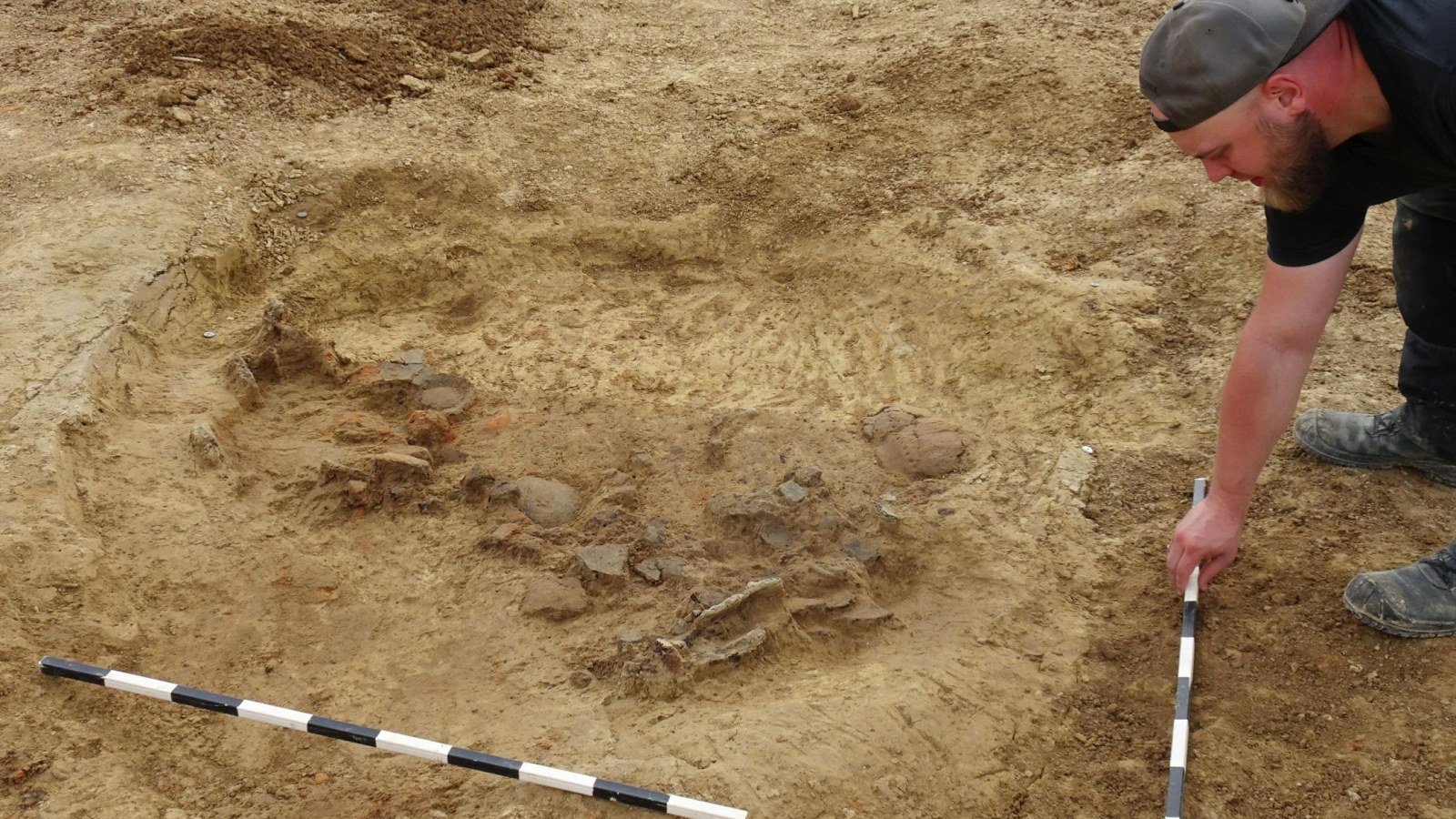
Approximately 2,000 years ago, a group of graves containing cremated human remains were discovered by archaeologists. One of the graves included a very remarkable discovery.

The burials were discovered by researchers with the Regional Association of Westphalia-Lippe (LWL) in western Germany, next to Fröndenberg and just outside of Dortmund.

Recent clay mining operations in the area have found proof of prehistoric human habitation, mainly during the Iron Age. But the LWL archaeologists were shocked by the most recent discoveries.

"When a few remains of corpses were uncovered, it quickly became clear that we had found a small burial ground here," Eva Cichy of LWL Archeaology said in a press release.

The researchers discovered the remains of containers used as burial urns for cremated remains in several of the sites.

The team discovered a number of minor pits in addition to one very significant larger one. This larger pit is about three feet across and oval in shape. The researchers discovered numerous, especially huge ceramic pieces at the pit's edge. Some of these included embellishments, including finger prints.

Similar pottery objects from the third and second century B.C. have been discovered in different regions of Germany in the past.

In addition to burnt bone fragments, the pit also had many loom weights and a painted spindle whorl, a disk-shaped object with a hole in the middle. These discoveries suggest that the person buried there was most likely a woman because weaving was done with the use of the loom weights and spindle whorls.

A very well-preserved flint arrowhead and Iron Age ceramic fragments were discovered by the researchers in another hole.

The arrowhead was produced by people of the Bell Beaker culture, who lived in Europe about 4,500 years ago, and thus looks to be far older than the burial site, according to the researchers.

The individuals who dug the graves may have discovered the artifact and purposefully buried it among the deceased. Alternatively, it might have accidentally fallen into the pit as it was being excavated or filled in.

The discovery of a mummy believed to be around 1,000 years old that was buried in a burial at the summit of a sizable pyramid building in Peru was disclosed by archaeologists earlier this month.

Local media outlets also reported in July on the finding of a pre-Hispanic cemetery in Colombia.

Source: https://www.newsweek.com/archaeologists-di...

First Look: Oceanographers Rediscover the Long-Lost Japanese WWII Vessel Akagi 18,000 Feet Below the Ocean

Explorers aboard the E/V Nautilus successfully performed the first deep-water visual dive to revisit the Imperial Japanese Navy ship, Akagi, in a momentous occasion for marine archaeology and world history. A Japanese and American-led expedition team saw the debris for the first time since it sank to the deep ocean seafloor 81 years ago at a depth of 18,000 feet (5.5 kilometers). They conducted the first visual inspection of the wreckage.

The first look at the WWII Vessel Akagi.

The Akagi, or 赤城 in Japanese, was regarded as the Japanese naval fleet's flagship at the time. The Battle of Midway, which took place close to the U.S. Hawaiian Islands, was won or lost as a result of the bombing of that ship and the subsequent sinking by American forces.

A dive was made by a group of deep-sea explorers and researchers using an autonomous underwater vehicle (AUV) with sonar. The long-lost Akagi aircraft carrier was later discovered, for the first time since it sank, at 18,000 feet of water in the Papahnaumokukea Marine National Monument (PMNM), some 1,300 miles (2,092 kilometers) northwest of Pearl Harbor.

Remote-operated vehicles (ROVs) were used by Nautilus researchers to descend to the seafloor in 2023, nearly four years later. It is the first time since its sinking in 1942 that people have actually seen the wreckage.

It was successful.

The study team, which included archaeologists from Japan and the U.S., carried out the historic, non-invasive dive in September 2023 to record the wreck's historical significance, assess its condition, and pay tribute to the victims lost on both sides of the conflict.

"As we are indeed on the carrier Akagi, let’s take a moment of silence, please, to remember the type of site that we are on – an important site – for great service and sacrifice and the loss of lives," mentioned James Delgado, an archaeologist associated with the expedition.

Surveying the Akagi and the other ships destroyed in the Battle of Midway has proven to be a difficult undertaking because to its distant location and exceptional depth. The Akagi marks one of the deepest, most remote cemeteries in the world with its dark, icy, high-pressure waters of the deep Pacific Ocean.

"We can understand this as Native Hawaiians and the depth and the reverence that we hold for this place, and for those who lay in the realm of Po Kanaloa, the god of the sea," said Malia Evans, a monument resource monitor at the O’ahu Education Coordinator PMNM. "We are in reverence as we view the Akagi."

Battle damage, including a section of the carrier's deck that had been turned upside down due to accumulated explosive pressure, was visible from the ROV cameras.

"The survival of this structure, even in its damaged state, is something we hadn’t been expecting. It’s rather amazing to see and even though it has deteriorated and fallen in, there are identifiable elements that clearly connect us back to that time and that point in the battle," said Delgado.

The battle of Midway, which lasted four days, saw the sinking of four Japanese carriers, including the Akagi. It began on June 4, 1942, after American intelligence agents gathered information from Japanese communications revealing the imperial navy's plans to set up a defensive perimeter of islands, including the remote Midway Atoll.

Both Japanese and American forces viewed Midway, a shallow reef halfway between Honolulu, Hawaii, and Tokyo, Japan, as a key location for establishing a military base. Nearly 3,400 sailors and airmen were lost at the Battle of Midway, which marked a change in military dominance between Japan and the United States in the Pacific War theater.

"It was a tough four days 81 years ago. A lot of pain, a lot of sorrow, and we hope that some healing has happened to so many men and women that were involved," said Delgado. "From the study of these sites, a lot of good can come and we’ve already seen that with the collaboration of people coming together."

Because it altered "the balance for the Pacific War, and with that, the future of the Pacific," the Battle of Midway is now regarded as one of the "ten most significant naval battles in human history," according to Delgado.

"Overall, the Battle of Midway claimed the lives of nearly 3,400 sailors and airmen with US losses in excess of 350 and Japanese losses in excess of 3,000. Five major aircraft carriers (Akagi, Kaga, Sōryū, Hiryū, and Yorktown), as well two other surface units (heavy cruiser Mikuma and the destroyer USS Hammann), and over 390 aircraft were also destroyed," wrote the Ocean Exploration Trust, a nonprofit that oversees operations of the exploration vessel and is headed by Robert Ballard, who found the Titanic in 1985.

The naval battleground is currently protected by PMNM, one of the world's largest maritime protected areas and a UNESCO World Heritage Site.

Source: https://www.iflscience.com/first-look-ocea...

Two species may have gone extinct as a result of medieval whaling

In the eastern North Atlantic, two species of whale may have been hunted to extinction by medieval European hunters, according to a recent examination of ancient whale bones.

The North Atlantic right whale is considered functionally extinct in Europe, and only a small number can be found elsewhere.

The activity of whaling is believed to have existed in coastal communities for thousands of years, despite taking place on an industrial scale during the 19th and 20th centuries. Researchers have analyzed ancient whale bones in an effort to better understand how previous whaling practices might influence current whale management.

“Mediaeval cultures are especially associated with the early growth of whaling, but the targets and scale of these activities are poorly understood given the limitations of pre-modern historical records,” wrote the authors of a new study investigating ancient whaling.

Their study attempted to identify the primary species that were targets of early whaling and how frequently those species were recorded in archaeological records in comparison to other species, both at the time and during subsequent industrial whaling.

The research examined 719 whalebone fragments from sites in northern and western Europe, dating from roughly 3500 BCE to the 18th century. The composition of a protein called collagen in the bone was examined by the researchers to identify the species to which each fragment belonged. Since collagen composition varies among whale species, it serves as a reliable identification.

They found some pretty illogical results.

Rarely were the dominant targets of industrial whaling, such the blue and humpback whales, as well as today's common minke whales, to be detected among the bone fragments. Instead, they discovered that the North Atlantic right whale and the Atlantic grey whale were the two species most frequently encountered in the eastern North Atlantic Ocean and are now extinct.

The researchers deduced from this that, in accordance with the scant number of pre-modern historical sources mentioning whales, right whales may have been often targeted by medieval hunters. The discovery that grey whales were also frequent prey was unexpected because their mention in the documents is less frequent.

The study's authors put out the following theories as to why the two species were hunted to extinction:

“Both the grey whale and the North Atlantic right whale may have fallen victim to a perception of limitless natural abundance, due to ease of hunting and initially high numbers in coastal waters during the inception and early development of European whaling.”

Regardless of whether they detected a fall in population, once they were a fixed part of whaling technique, hunters may have continued to hunt them until they were extinct.

It's uncertain if right and gray whales were hunted because they were simpler to catch or because they were the species that were more prevalent at the time. The study came to the conclusion that the answer to this question is crucial to understanding both the ecology of whales now and, potentially, the oceans of the distant past.

Source: https://www.iflscience.com/medieval-whalin...

On the Danube, archaeologists learned how Roman legions chilled their wine

A new ancient refrigerator with additional cooling has been found at an excavation site close to the town of Svishtov (on the Danube), according to a report from Science in Poland, a science news outlet run by the Polish Press Agency. The discovery was made by lead archaeologist Piotr Dyczek, a professor at the Center for Research on Antiquities of Southeastern Europe at the University of Warsaw.

Near the city of Svishtov, in northern Bulgaria, on the Danube, is where you'll find the Novae camp. Probably somewhere in the middle of the first century AD, it was founded. This location is linked to the First Italian Legion, whose presence may be traced to the fifth century AD. The principalia, the camp's administrative center, was found to be the most significant of the camp's monumental structures. The legionary hospital (valetudinarium), as well as the baths (thermae legionis), are similarly magnificent. The camp is 17.99 hectares in size.

The camp had a necropolis on its southern and eastern sides, as well as a town (canabae) on its western side. The Novae defenses were bolstered in the late ancient era, and a new section (the so-called annex) was erected to the camp on the eastern side, occupying an area of about 8 hectares. Soldiers and civilians coexisted inside the walls at that time. The final centuries of the sixth century contain the earliest signs of Roman activity.

A Roman-constructed food storage container that served as a primitive refrigerator for traveling soldiers was recently discovered in Bulgaria. Photo: Piotr Dyczek

Researchers discovered a complex of wooden and earthen military barracks connected to the VIII Augustus Legion during this year's excavation campaign. This legion was the first to be stationed permanently at the Roman Empire's Danube border. Scientists measured the structure and found that it was sixty meters long and thirty-eight meters wide.

Here was found the earliest known well in Novae, which provided water for the legionaries. Additionally, a network of ceramic and lead-piped aqueducts was discovered.

“At the lead water pipe, a container made of ceramic plates was placed in the ground – so that the pipe ran along its longer side. This is an antique refrigerator, another one that we discovered, but this time with additional cooling. Inside, there were fragments of vessels for drinking wine, bowls, and animal bones. This will allow us to recreate the last meal,” mentions Professor Dyczek.

A series of unusual pots, including a set for drinking wine, were found during the excavation of a ceramic furnace from the fourth century. A smooth and comb design is used to embellish rare black-surfaced vases. The dispute between the specialists on the dates and provenance of these unique watercraft on the Danube is expected to come to an end when Prof. Dyczek argues that the set can be properly dated.

A tiny pendant depicting a silver, painstakingly crafted mouse with every last detail perfected is also among the relics that have been discovered, along with almost two hundred other antique trinkets.

Source: https://arkeonews.net/archaeologists-disco...

Photos reveal the discovery of an ancient Roman "fridge" that contained wine and animal bones

Archaeologists discovered a unique—and familiar—find while excavating a Roman military camp in Bulgaria: a filled refrigerator.

Archaeologists excavating the ancient Roman military camp in Bulgaria unearthed a rare refrigerator with wine and animal bones inside, photos show. Photo from Krzysztof Narloch

According to a news release from the University of Warsaw on September 13, archaeologists discovered lead and ceramic water pipes while working on the Roman-era military fortification Novae's remains.

Lead archaeologist Piotr Dyczek stated in the press release that they discovered an old "fridge" next to the lead pipes that was built out of ceramic plates and used to store food. There was still food in the refrigerator, along with bowls for drinking wine and animal bones.

The fridge's and its contents' actual ages are yet unknown.

An aerial view shows some of the ruins at Novae. Photo from Krzysztof Narloch

In Novae, a comparable refrigerator was discovered in October, according to McClatchy News. There were still remnants of cooked meat, animal bones, and dishware within this chilling machine.

“The discovery of such ‘refrigerators’ are rare, because they rarely survive reconstructions of buildings,” Dyczek said previously.

A collection of wine pottery vessels found at Novae. Photo from Krzysztof Narloch

On the lower Danube River, Novae was constructed as a permanent outpost for Roman troops in the first century A.D. Up to the middle of the fifth century, the camp served as a home for Italian military recruits.

According to the press release, excavations at Novae also turned up the remains of a wooden barracks building connected to the camp's first permanently stationed Roman troops, the camp's earliest known well, and a fourth-century furnace.

A detailed mouse pendant found at Novae. Photo from Krzysztof Narloch

In addition, archaeologists discovered a unique set of black wine drinking jars with a little silver pendant in the form of an intricate mouse. Images present these artifacts.

Along the border between Bulgaria and Romania, in the northern Bulgarian city of Svishtov, Novae is located. It is about 155 miles northeast of Sofia.

Source: https://www.kansascity.com/news/nation-wor...

Israel Discovers Mysterious 3,800-Year-Old Canaanite Arch and Stairway

In northern Israel, archaeologists have discovered a stunning—yet utterly perplexing—find: a 3,800-year-old Canaanite arch and stairway, perfectly preserved underground.

An aerial view of the dig site at Tel Shimron Eyecon

The construction, which was discovered at the Tel Shimron archaeological site, is unknown to researchers. Additionally, they don't understand why it was closed off soon after it was built.

In contrast, the preservation of the structure is "breathtaking, especially since the building material is unfired (!) mud brick—a material that only rarely survives a long time," writes excavation co-director Mario A.S. Martin of the University of Innsbruck in Austria in an email to Live Science's Sascha Pare.

Tel Shimron hasn't received much attention from archaeologists in the past. The site had never undergone a significant amount of excavation before the current dig started in 2017. The team recently came across an odd building that appeared to be man-made.

“We kept digging down further, and it was preserved at a depth of one meter, then two meters, then three meters, then four meters,” excavation co-director Daniel Master, an archaeologist at Wheaton College, tells the Times of Israel’s Melanie Lidman. “This structure was totally intact, and suddenly we realized we were dealing with the foundation of a building or a superstructure that had been constructed at the top of the site.”

According to Ariel David of Haaretz, the team discovered mud brick walls that were up to 13 feet (4 meters) thick. Strangely, none of them contained any rooms. Instead, there was a lengthy passage within, which led to the enigmatic arch. Researchers discovered a staircase leading further underground behind it.

According to Live Science, this arch is "corbelled," which means it was constructed by adding brick layers gradually inward. A "true arch" is created with bricks of a specific shape that fit together, whereas this style is occasionally referred to as a "false arch." According to The Times of Israel, the recently discovered arch is the country's first instance of corbelled construction.

These buildings were quickly filled with sediment after construction. According to Martin to Live Science, "Why the passage went out of use so soon is a matter of speculation." The fact, however, is that it was carried out voluntarily and not because there was a threat of impending collapse. Since it is the sole explanation for why the feature is still so exceptionally well preserved nearly 4,000 years later, the swift backfill is for us archaeologists the most fortunate part of the entire story.

The brick corbelled arch hangs over a corridor inside of the structure found at Tel Shimron. Eyecon

These buildings were built between 1800 and 1750 B.C.E., at a time when the area was home to a sizable Canaanite metropolis. In ancient Egyptian literature, the city was referred to as a significant commerce center.

The initial hypothesis of the scholars was that the walls might have been erected to defend the city from invader troops. In the end, though, the design of the site refuted that hypothesis.

They now believe the structure may have been used for cultic activities in light of a few hints. According to Haaretz, the crew discovered a Nahariya bowl, a style of seven-cupped clay dish used for ritual offerings. Thousands of animal bones that may have been used in sacrifice were also discovered in a nearby building.

The discovery has been exciting for the researchers, who are used to plodding, steady development, even though there are still many unanswered concerns. Master tells Haaretz, "I’m going to spend the next few years convincing my students that this is not archaeology." You simply don't come across large, complete, arched tunnels that you can just walk through.

The researchers hope to uncover more information about the enigmatic staircase in the future. When they eventually get there, they want to "dig down from the other side to try to reach whatever this passage leads to from above," Master continues. The location has been reburied in the interim to shield it from the weather.

Source: https://www.smithsonianmag.com/smart-news/...

Seven Elite 'Lords' Tombs from 3,000 Years Ago Have Been Found by Archaeologists

Seven ancient tombs belonging to a group of affluent people have been found by archaeologists in Peru.

A stock image shows an archaeologist excavating human remains. Researchers have discovered seven ancient tombs (not pictured) belonging to a group of elite individuals in Peru.

The graves were discovered at the Pallawcha Pampa archaeological site, which is located deep within the Peruvian Andes highlands in the province of Vilcas Huamán in the Ayacucho area, according to the Andina news agency. The tombs were discovered by a team from National University of San Cristóbal de Huamanga (UNSCH).

The tombs, which include human remains, are believed to be 2,900 years old and predate the Wari or Huari culture, according to researchers. Between around A.D. 500 and 1000, the Wari had a pre-Hispanic civilization that thrived in the south-central Andes and coastal regions of what is now Peru.

The most significant pre-Hispanic society in the area that now comprises the present Ayacucho region was this civilization, which predates the Inca Empire.

The leader of the UNSCH archaeological team, Edison Mendoza Martnez, said that the burials found at Pallawcha Pampa were those of notable individuals and referred to them as "the Lords of Vilcas Huamán."

At the site's surface level, archaeologists discovered three mounds that were encircled by terraces and held up by substantial stone walls. The researchers also found a significant number of broken pottery strewn about.

Due to the fact that it had the most archaeological relics, Central Two, one of the mounds, was of great note.

At this mound, excavations revealed a circular building and multiple holes that were later covered with slabs.

"When excavating the holes, secondary burials were found—in some cases they were not only of a single individual but of several. As an offering, associated elements were found such as vessels," Mendoza Martínez told the Andina Agency

The crew discovered several funeral objects at the site, including gold feathers, metal needles, and rings. According to the archaeologists, these artifacts show that the graves belonged to an aristocratic group.

Mendoza Martnez claimed that the crew also discovered proof of a later Wari occupation of the site, including intricate building.

The researchers' next step will be to conduct a DNA analysis to date the remains and discover whether the individuals interred there were blood relatives.

Archaeologists reported the discovery of a mummy in Peru earlier this month, which they believe to be roughly 1,000 years old. In the Peruvian capital of Lima, the remains were interred in a cemetery at the summit of a huge clay pyramid building.

Archaeologists also reported the finding of historic underground galleries at another location high in the Peruvian Andes in September.

Source: https://www.newsweek.com/archaeologists-di...

After discovering medieval artifacts, Kenilworth Pool intends to alter

A new swimming pool's plans need to be revised in light of the discovery of medieval ruins nearby.

Ceramics and buildings have been uncovered at the Kenilworth site

At Abbey Fields in Kenilworth, pottery and at least five structures, some dating to the 13th century, were found.

On September 27, a meeting will be conducted to give the public an update on the project.

Ian Davison, leader of the Warwick District Council, said the revelation will result in extra expenses and delays.

The new, multimillion-pound swimming center, which will have a second indoor pool, has been under construction since September.

The find was made by a company tearing down the old pool while it conducted site investigations with Archaeology Warwickshire.

Prior to St Mary's Abbey being disbanded in the 16th century, Abbey Fields was farmland that belonged to that institution.

The discovery will mean increased costs and delay in the pool's development, Warwick District Council said

The public meeting at St. Nicholas Church will provide an overview of the results and discuss the need to create specific, updated strategies to safeguard the discovered medieval ruins.

"The aim of this event is to bring the public fully up to date with the Abbey Fields Swimming Pool project," Mr Davison said:

"The significant, historic medieval remains necessitate substantial additional costs and time delays, so residents will be given an insight into the important decisions that the council will need to make in the coming months."

The council's project team has been working closely with Historic England since the findings were made, and they have authorized updated plans to elevate the level of the proposed new swimming pool structure so that it stands over the relics.

Source: https://www.bbc.com/news/uk-england-covent...

The site of 'Pingyang' in Shanxi is revealed through ancient tombs

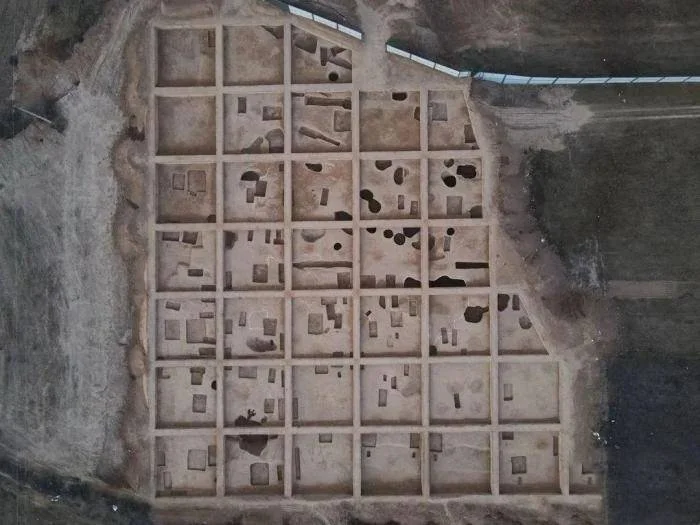
The Shanxi Provincial Institute of Archaeology announced on September 18 the discovery of 215 tombs in Xiangfen County, Shanxi Province, dating from the Neolithic to the Ming (1368-1644) and Qing (1644-1911) periods.

An aerial view of the tombs unearthed in Xiangfen County, Shanxi Province, China. /Photo provided by Shanxi Provincial Institute of Archaeology

They add credence to the hypothesis that the legendary civilisation established by Yao, one of the Five Emperors in Chinese mythology, was born in "Pingyang," the region beneath Xiangfen County that is today known as Yaodou District.

A combined archaeological team carried out the excavations from June 2020 to July 2022. The excavation area was split into two areas, east and west of the Fenhe River, where a total of 348 archaeological sites were cleared and 215 tombs were discovered.

Two settlements were included in the eastern area, and 145 graves were discovered there. 959 objects, including 222 bronze items, 21 iron items, and 528 pottery items, were included with the burial materials.

Three settlements in the western region, totaling 69 tombs and 437 ancillary burial artifacts, were found there. There were also 196 additional ash pits, a home site, six stoves, and two kiln sites discovered.

A photo shows some pottery items unearthed in Xiangfen County, Shanxi Province, China. /Photo provided by Shanxi Provincial Institute of Archaeology

The ancient city site of Guchengzhuang, a cultural heritage site in Xiangfen County, where pottery with the inscription "Pingshi" was unearthed, is located about 300 meters to the southeast of the excavation area. Pingyang County was established as the location of the ancient city during the late Warring States period (475-221 BC), when the area was conquered by Qin forces, after these pottery pieces were proven to have been produced under its direction. During the Western Han Dynasty (206 BC–25 AD), the county's name was later changed to Xiangling County.

This area, according to archaeologists, is home to a wide range of artifacts from various historical periods, and the Guchengzhuang City Site offers more proof that Pingyang actually served as the capital of the famous civilisation that Yao established.

Source: https://news.cgtn.com/news/2023-09-19/Anci...

Shoewear may be 148,000 years old, according to archaeologists who discovered an ancient "sandal" mold

Long-held assumptions regarding sandals have been completely disproved by a mysterious collection of footprints discovered in three different places throughout South Africa.

The ancient imprint appears to show a sandal mould (Image: Charles Heim)

The human footprints discovered on the Cape's coast are estimated to be 148,000 years old. And while it was widely believed that sandals were used in Jesus' day, it was not believed that they were worn in the Stone Age, which was many centuries earlier.

However, the newly discovered footprint reveals that people were wearing sandals with "rounded anterior ends, crisp margins, and possibly evidence of strap attachment parts." An international team of researchers lead by Charles Helm from Nelson Mandela University made the study public.

The fossils were found in South Africa (Image: Getty Images)

He wrote: “The purported tracks have dimensions that are broadly consistent with those of hominin tracks. “Track sizes appear to correspond to the tracks either of juvenile track-makers, or else small-adult hominin track-makers.

“While we do not consider the evidence conclusive, we interpret the three sites, as suggesting the presence of shod-hominin track-makers using hard-soled sandals. In the Middle Stone Age, a significant foot laceration might have been a death sentence.

Three separate sites were analysed by the experts (Image: Getty Images)

“Ichnological evidence from three palaeosurfaces on South Africa’s Cape coast, in conjunction with neoichnological study, suggests that humans may indeed have worn footwear while traversing dune surfaces during the Middle Stone Age. The hominin track record may be biased towards identification of tracks made by barefoot individuals, therefore the development of criteria for the identification of shod-hominin tracks should aid in future interpretation efforts.”

Years of professional notions that stone age people roamed around barefoot could be disproved by the data given. Museums all around the world are well renowned for their presentations of "early man," which depicts them without anything on their feet. However, they may now be compelled to change the displays.

Source: https://www.dailystar.co.uk/news/world-new...

Israel finds a stoneworkshop from the Second Temple in the West Bank

It was common practice to utilize stone tools during the Second Temple era, and in fact, stone tools have been found at practically all of the region's archaeological sites.

Second temple site for the production of stone tools, September 2023

According to a statement released on Monday by the Coordinator of Government Activities in the Territories (COGAT), construction on Route 437 in the West Bank revealed the remains of a Second Temple-era quarry and an early stone tool production facility.

The Staff Officer for Archaeology in the Civil Administration in Judea and Samaria, who works under the auspices of the Israel Antiquities Authority (IAA), oversaw the excavation.

The Second Temple period used stone tools.

Researchers came to the conclusion that the area operated as a center for mining and tool distribution for Jerusalem and the surrounding area after discovering a comparable tool production setup in the same location about thirty years ago.

Second temple site for the production of Stone tools, September 2023 (credit: COGAT SPOKESMAN)

Nearly all Second Temple-era sites in the area have been found to feature various types of stone implements, including cups, bowls, trays, and other objects.

The Staff Officer for Archaeology in the Civil Administration in Judea and Samaria, Benny Har-Evan said of the discovery: "The Civil Administration will continue to work day and night for the preservation of the archaeological sites and finds in Judea and Samaria, which are part of the treasures and culture of the region.

"It is a great privilege to carry out the excavations and discover an ancient and rich world under the soil of the area. We are all getting to know and glimpse a life full of culture and prestige that the area has known throughout the generations, thanks to these extraordinary discoveries."

Source: https://www.jpost.com/archaeology/article-...

This 300,000-year-old fossil could be a new branch in the human family tree

A 300,000-year-old fossilized jawbone has been found by scientists in a cave in eastern China; it might represent a new branch in the human evolutionary tree.

Digital reconstruction of the skull that was found in Hualongdong, China

It's interesting how the specimen combines elements from the past and the present.

It raises more questions about what kind of prehistoric humans lived there for about 800,000 years between the Middle and Late Pleistocene.

The mandible, like Homo sapiens, lacks a genuine chin

The mandible was unearthed in Hualongdong, an area in eastern China, and it was discovered to have both contemporary and ancient traits.

Early human species like Homo erectus shared a robust jawbone along with them.

In addition, it lacks the genuine chin that distinguishes Homo sapiens. The side of the mandible that connects to the upper jaw, however, resembles contemporary humans more and is thinner than that of early hominins.

Early Homo sapiens may have had a common progenitor with us

According to palaeoanthropologist Xiujie Wu, who was a member of the study, the Hualongdong people may represent an early Homo sapiens progenitor or near cousin that has never been identified.

The Hualongdong mandible has traits from both the past and the present, just like the remains discovered in the early 2000s in the Moroccan archaeological site of Jebel Irhoud.

One of the first members of the evolutionary lineage that contains Homo sapiens is assumed to be represented by the Jebel Irhoud bones.

Understanding the Pleistocene human ancestry of East Asia

"More fossils and studies are necessary to understand [the Hualongdong people's] precise position in the human family tree," mentioned Martinón-Torres, a team member.

She asserted that ancient proteins taken from bones could provide more information about the Hualongdong people's relationships with both more primitive species and modern humans.

Researchers found the bones of 16 people during cave excavations in China. Numerous of these remains were discovered to be those of a 12- to 13-year-old boy's cranium.

It is unclear how humans have occupied East Asia

Yameng Zhang of Shandong University claims that the image of human occupancy in East Asia throughout the Pleistocene is unclear. It is unknown which of the various archaic hominin species that lived in East Asia during the Middle Pleistocene could have been the ancestors of modern humans.

Source: https://www.newsbytesapp.com/news/science/...