7,000-Year-Old Underwater Structure Discovered Off Western France
Researchers exploring the seabed near Sein Island believe they may have identified a remarkable human-made structure dating back roughly 7,000 years. If confirmed, the discovery could reshape what we know about early coastal communities in prehistoric Europe.
A Discovery That Began With Ocean Mapping
The story began in 2017, when retired geologist Yves Fouquet examined detailed laser-mapped images of the ocean floor. Among the data, he noticed a long, unusual formation stretching about 120 meters across an underwater valley.
What caught his attention was its shape—it didn’t resemble a natural geological feature. Instead, it appeared structured and deliberate, suggesting it could be man-made.
Years of Exploration Beneath the Sea
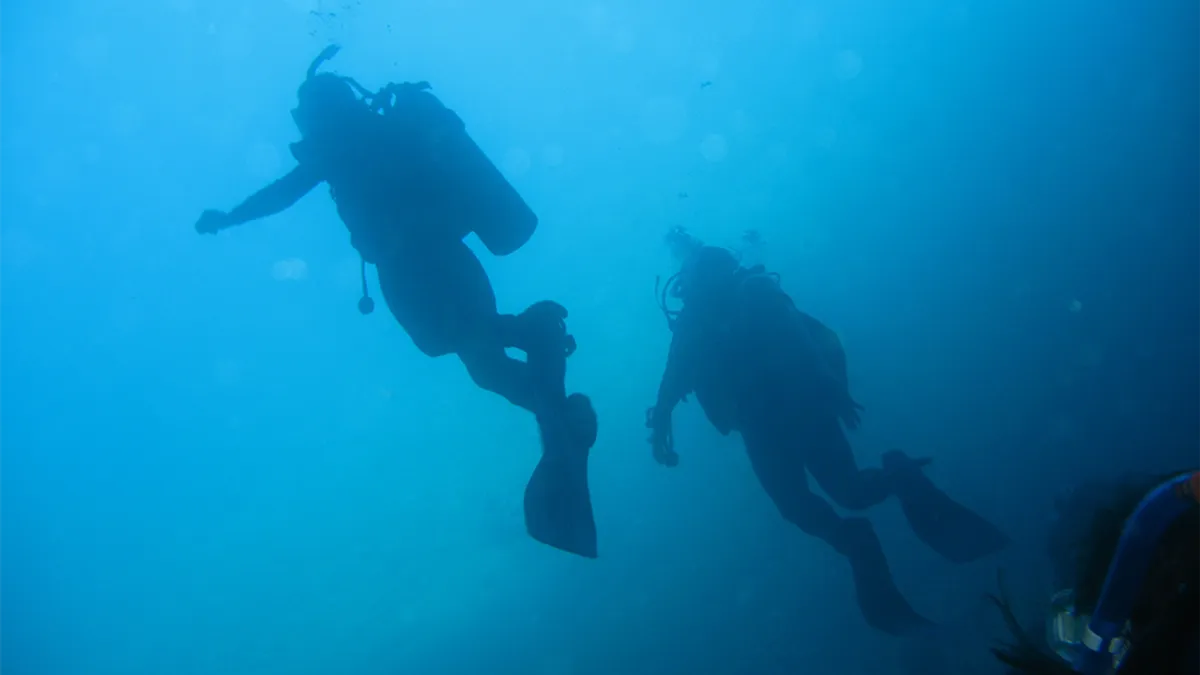
A team of archaeologists launched a full investigation in 2022. Early dives were challenging due to dense seaweed, which made mapping difficult. However, continued efforts through 2024 confirmed the presence of not just one structure, but several.
The main feature, known as TAF1, is a 120-meter wall accompanied by around a dozen additional constructions. Among the most striking elements are upright stone slabs and monoliths arranged in parallel lines, spaced about 1.5 meters apart.
Dating Back to a Changing World
Researchers estimate the structure was built between 5800 and 5300 BCE, during the shift from the Mesolithic to the Neolithic period. At that time, sea levels were much lower, meaning the structure would have been partially or fully exposed depending on the tides.
Interestingly, this site may even predate some of the earliest known megalithic structures in Europe, making it an especially significant find if verified.
What Was It Used For?
While its exact purpose remains uncertain, researchers have proposed two main possibilities:
A Sophisticated Fish Trap
The structure may have functioned as a large fish weir, designed to trap fish as tides moved in and out. Similar, though smaller, systems have been identified in the nearby Molène archipelago.
The size and design suggest it could have been used for centuries, with added stones indicating ongoing maintenance and adaptation.
Coastal Protection System
Another theory is that it served as a barrier to protect the shoreline from waves and currents. The structure appears reinforced on the side exposed to stronger ocean forces, supporting this idea—though researchers consider it less likely than the fish trap explanation.
A Possible Link to Ancient Legend
In a more speculative interpretation, the team has connected the site to the Breton legend of the sunken city of Ys, said to lie somewhere off the coast. While there is no direct evidence linking the two, the idea reflects how rising sea levels may have left lasting impressions on local folklore.
More Research Needed
Despite the excitement surrounding the discovery, scientists stress that further study is essential. Additional dives, improved mapping, and detailed analysis will be needed to confirm the structure’s origins and purpose.
Unlocking Secrets Beneath the Sea
This underwater site offers a fascinating glimpse into how ancient communities may have adapted to changing environments. Whether it served as a fishing system, a protective barrier, or something else entirely, the discovery highlights the ingenuity of early human societies—and the many secrets still hidden beneath the ocean.