Rare Roman Artifacts Debut at Corbridge Roman Town
A remarkable collection of rare Roman objects is set to go on public display for the first time at Corbridge Roman Town. The unveiling will take place this weekend, offering visitors a unique opportunity to explore pieces of ancient history up close.
Highlights of the Exhibition
The artifacts will be featured in a new exhibition titled Roman Rivers and Rituals, held at the historic Hadrian's Wall site. The collection includes a variety of intriguing items that reflect both daily life and symbolic practices during the Roman era:
A detailed gladiator knife handle
A scabbard slide used for securing a sword
A decorative buckle
A mount shaped like a panther
Several Roman coins
Each object provides valuable insight into Roman craftsmanship, culture, and ritual traditions.
Exploring Roman Life and Beliefs
The exhibition focuses not only on practical tools but also on the deeper cultural and spiritual aspects of Roman society. Items such as the panther-shaped mount may have held symbolic or ritual meaning, while coins and weapon accessories reveal everyday activities and social structure.
A Unique Historical Experience
This first-time display gives visitors a rare chance to connect with artifacts that have remained unseen for centuries. By combining historical interpretation with carefully preserved objects, the exhibition brings the Roman past to life in an engaging and accessible way.
Bringing History Closer to the Public
Events like this highlight the importance of preserving archaeological discoveries and sharing them with a wider audience. The Roman Rivers and Rituals exhibition promises to be both educational and inspiring, shedding light on the rich legacy of Roman Britain.
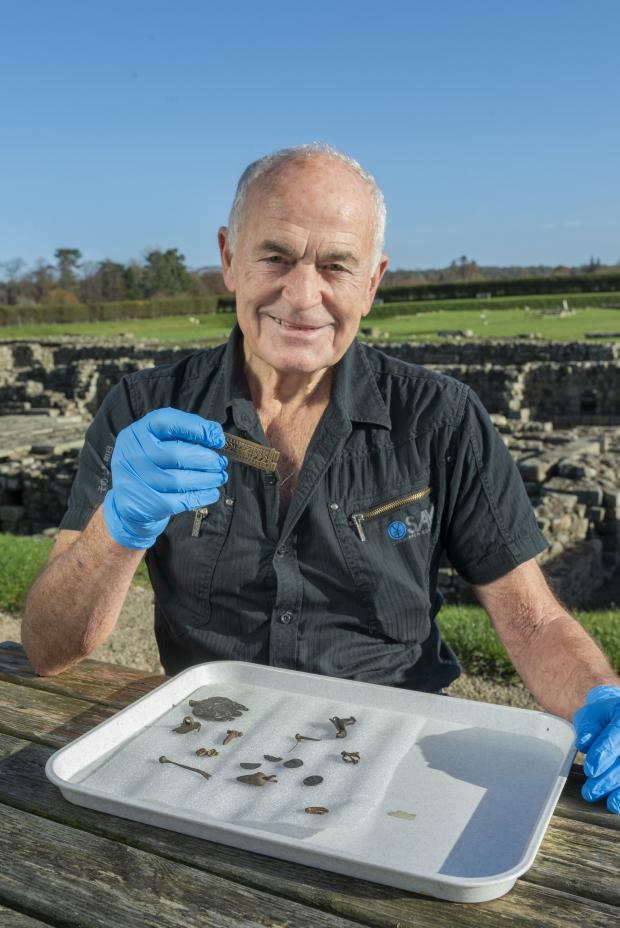
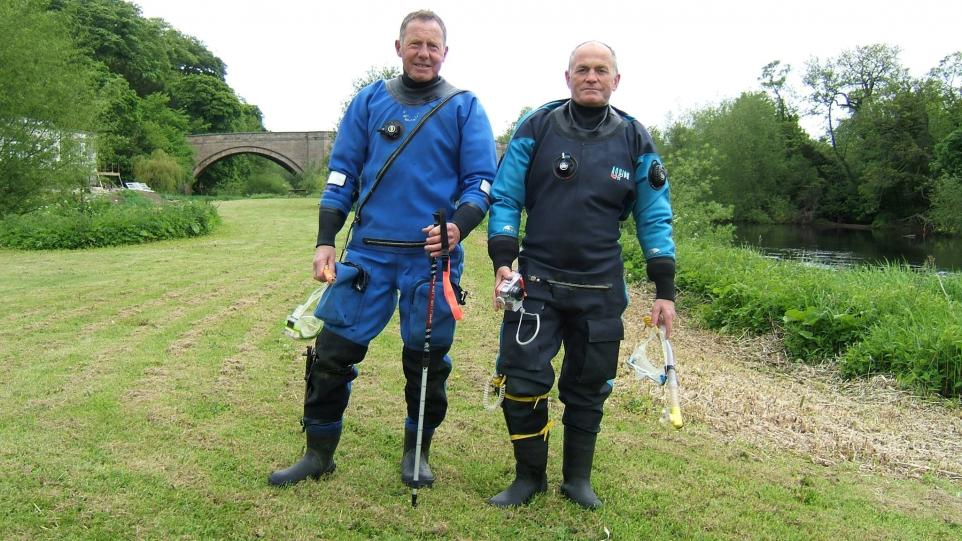
Bob Middlemass with some of the objects
River Discovery Reveals Hidden Roman Treasures
The artifacts now on display were discovered near the remains of a Roman bridge that once served as a key crossing into Corbridge Roman Town. Buried for centuries beneath layers of mud in the River Tyne, these objects were eventually uncovered by two divers and amateur archaeologists.
The Roman Connection to Water and Rituals
According to English Heritage, the exhibition highlights the Romans’ deep fascination with flowing water. Rivers were not only practical resources but also held spiritual importance.
The Romans often used water in rituals, believing it could please their gods, attract good fortune, and offer protection. Objects found in rivers were sometimes intentionally placed there as offerings, reflecting a blend of faith and tradition.
A Tradition Older Than Rome
The spiritual significance of water did not begin with the Romans. For thousands of years, earlier cultures had already viewed rivers and natural water sources as sacred spaces. However, when the Romans arrived in Britain, they combined these long-standing beliefs with their advanced engineering skills.
Their ability to construct bridges, aqueducts, and water systems demonstrated both respect for and control over nature—symbolizing a balance between reverence and dominance.
Blending Belief and Engineering
This exhibition not only showcases rare artifacts but also tells a broader story about how the Romans interacted with the natural world. Through both ritual practices and impressive construction, they expressed a unique relationship with water—one that blended spirituality, practicality, and innovation.
Bringing Ancient Practices to Light
These discoveries offer a deeper understanding of Roman life in Britain, revealing how everyday objects and sacred traditions were often closely connected. Today, they provide visitors with a fascinating glimpse into how ancient societies viewed and valued the world around them.
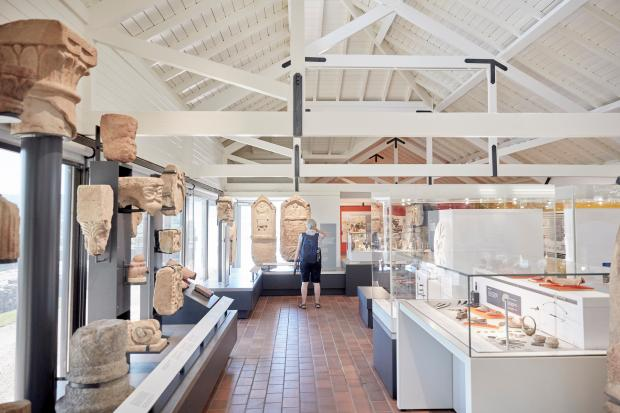
The new exhibit will showcase a series of Roman finds which have never been on display before
Dere Street and the Roman Crossing at Corbridge
The ancient Roman road known as Dere Street once stretched north from York and crossed the River Tyne at Corbridge Roman Town. Because this route was strategically vital, a strong and reliable bridge was built to ensure safe and efficient travel.
For those journeying along this road—whether traders, soldiers, or civilians—reaching or leaving Corbridge marked a significant moment. Crossing the river was not just a physical act but also a spiritual one.
Offerings for Safe Passage
Travelers often paused at the bridge to make offerings to the river’s deity. These acts were meant to seek protection for the journey ahead or to give thanks for a safe crossing, especially when moving near the опасный frontier of Hadrian's Wall.
Over time, these offerings settled beneath layers of silt in the river, remaining hidden for centuries. It wasn’t until the 1990s that many of these objects were rediscovered, preserved by the mud that once concealed them.
Roman Artifacts on Display
The exhibition Roman Rivers and Rituals now showcases these fascinating finds, each offering a glimpse into Roman life, beliefs, and craftsmanship:
Gladiator Knife Handle
A finely crafted handle shaped like a secutor—a heavily armored gladiator equipped with a shield and crested helmet. Interestingly, the figure is left-handed, which was considered unlucky in Roman culture, making it a rare depiction. The missing blade would have folded along the back of the figure.
Copper Alloy Buckle Plate
Dating from the 1st to 2nd century AD, this piece reflects the everyday attire and functional design of Roman accessories.
Iron Fetters (Shackles)
Discovered near one of the bridge’s stone piers, these restraints—used to bind ankles—offer a powerful reminder of the presence of slavery in the Roman world.
Panther-Shaped Mount
This decorative piece, likely part of a pair attached to a vessel handle, highlights the artistic detail common in Roman objects.
Nail Cleaner and Toilet Tool
Part of a personal grooming set, these items would have been suspended from a loop, emphasizing Roman attention to hygiene.
Military Strap Ends
These components of a soldier’s belt were designed not only for function but also for display, producing a metallic shimmer and sound as soldiers walked.
Phallic Mount
A symbol commonly used for protection, the phallus was believed to ward off evil and bring good fortune.
Scabbard Slides
Used to secure a sword and its sheath to a belt, these pieces were essential for Roman soldiers.
Roman Coins
Many coins found at the site are heavily worn, suggesting long circulation before being deposited—possibly as ritual offerings.
A Journey Into the Past
The Roman Rivers and Rituals exhibition brings these long-lost objects into the spotlight for the first time. Included with general admission, it offers visitors a chance to connect with the personal, spiritual, and practical lives of people who crossed this ancient bridge thousands of years ago.
Through these discoveries, the story of Corbridge becomes more vivid—revealing how travel, belief, and daily life were deeply intertwined in Roman Britain.