The intricate headdress may have been a way to unite two distinct prehistoric cultures.
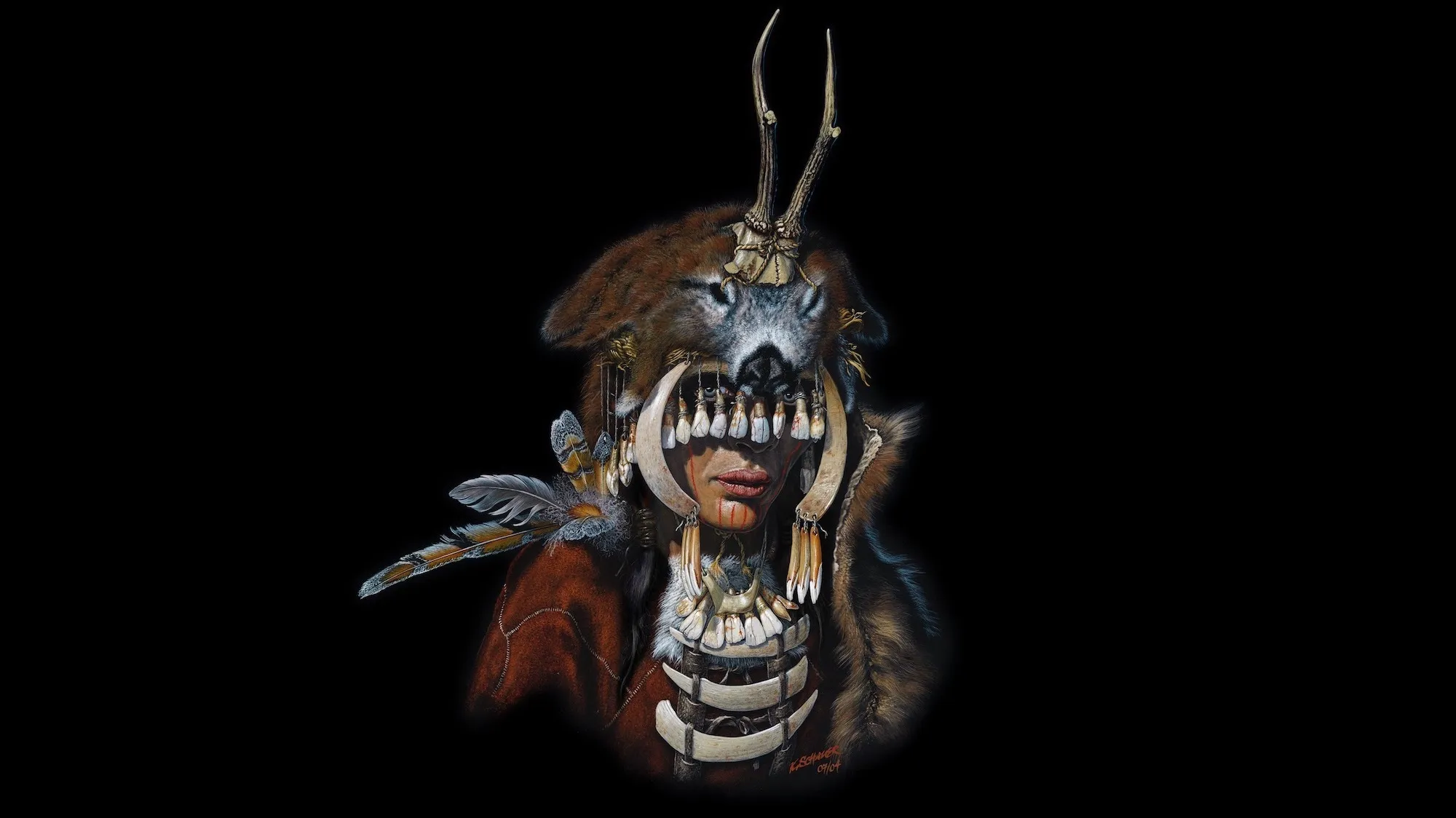
Reconstruction of the Bad Dürrenberg shaman in her ornate, including a roe deer antler.
A Mysterious Antler With a Deeper Story
At first glance, it might resemble leftovers from a predator’s meal. But this ancient antler tells a far more compelling story. Dating back thousands of years, it may represent a moment of contact between Europe’s last hunter-gatherers and its earliest farming communities.
Farmers on the Move
Around 5500 BCE, early agricultural groups known as the Linear Pottery culture began expanding across Europe. As they moved into new territories, they brought farming practices, domesticated animals, and a distinct material culture.
This expansion gradually displaced Mesolithic hunter-gatherers in regions such as central Germany, pushing many groups farther north. However, the transition was not immediate or absolute.
Two Lifestyles, One Shared Landscape
“There was a long period during which farmers and hunter-gatherers lived side by side,” explains Oliver Dietrich, co-author of a recent study published in Praehistorische Zeitschrift and press officer at the State Office for Heritage Management and Archaeology Saxony-Anhalt – State Museum of Prehistory.
According to Dietrich, the terms “Neolithic” and “Mesolithic” do not describe strict time blocks. Instead, they refer to two different ways of life—farming and hunting-gathering—that overlapped in certain regions.
Despite this coexistence, archaeologists still know relatively little about how these groups interacted. That is where one important site comes into focus.
A Frontier Settlement: Eilsleben-Vosswelle
The settlement of Eilsleben-Vosswelle settlement offers rare insight into this transitional era. Located along a cultural frontier, the community sat between hunter-gatherers to the north and farmers to the south.
Evidence suggests the settlement may have been fortified, hinting at tension—or at least the need for defense. At the same time, archaeological finds show clear cultural blending.
“The material culture discovered at Eilsleben reflects this frontier situation,” Dietrich notes. Many artifacts show strong influence from hunter-gatherer traditions, including tools crafted from antler in a Mesolithic style.
Among these objects is a striking example: a 7,000-year-old roe deer antler.
Not Just Animal Remains
Researchers carefully examined the antler to determine whether it had been shaped by human hands. The results were convincing.
They identified:
A rectangular skull fragment
Cut marks consistent with skinning
Small notches carved at the base
These features strongly suggest intentional modification. The antler was likely worn as part of a mask or headdress, with the carved notches helping secure it in place.
Radiocarbon dating places the artifact between 5291 and 5034 BCE.
A Symbol of Cultural Exchange?
This antler is more than a crafted object. It may represent a point of contact between two different lifeways. Its Mesolithic-style craftsmanship found within a Neolithic farming settlement hints at exchange, adaptation, or shared symbolic practices.
Rather than depicting a simple story of replacement, the evidence suggests a more complex reality—one where hunter-gatherers and early farmers interacted, influenced one another, and shaped a shared cultural landscape.
What first appeared to be animal remains may, in fact, preserve a moment from one of Europe’s most transformative periods.
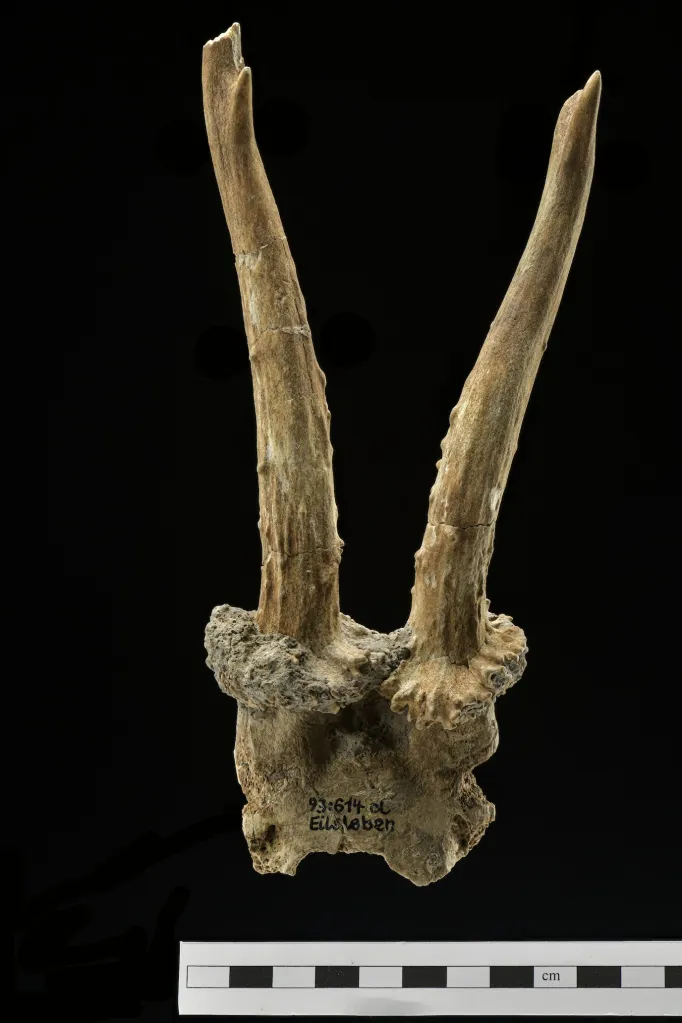
Roe deer antler worked into a headdress from Eilsleben.
A Rare Type of Headgear
“Similar headgear has not been found in early farming contexts,” explains Oliver Dietrich. “However, there are strong parallels in hunter-gatherer settings.”
The closest comparison to the Eilsleben antler comes from the famous shaman’s grave at Bad Dürrenberg.
The Shaman of Bad Dürrenberg
The individual buried at Bad Dürrenberg was a woman between 30 and 40 years old who lived around 9,000 years ago. She was interred in an elaborate grave in what is now central Germany, alongside a child about six months old.
Archaeologists identified her as a likely shaman—or spiritual specialist—based on the objects placed in her tomb. These included pendants made from animal teeth and a deer antler believed to have formed part of a ceremonial headdress.
Although this burial predates the Eilsleben antler by several millennia, it provides an important interpretive framework. The similarities between the two antlers suggest that the Eilsleben artifact may also have had ritual significance.
Contact Between Farmers and Ritual Specialists?
According to researchers, the Eilsleben antler could point to interaction between early farming communities and hunter-gatherer ritual experts. If so, this would offer rare evidence of spiritual and cultural exchange—not just economic or material contact.
The Neolithic transition brought major changes to daily life. Farming altered diets, settlement patterns, and health conditions. In fact, some of these lifestyle shifts were not entirely beneficial. Early agricultural communities often experienced new health challenges compared to their hunter-gatherer predecessors.
Within this context, it is plausible that farming groups may have sought assistance from individuals viewed as healers or spiritual mediators—people deeply familiar with the natural world and knowledgeable about the medicinal properties of local plants.
A Symbol of Shared Knowledge
The Eilsleben antler, when viewed alongside the Bad Dürrenberg example, may represent more than a decorative object. It could symbolize cooperation or knowledge exchange at a time of profound transformation.
Rather than a simple replacement of hunter-gatherers by farmers, the archaeological record increasingly points to dialogue, adaptation, and shared practices. The antler may be a quiet but powerful reminder that Europe’s early farmers did not evolve in isolation—they may have drawn on the spiritual traditions and ecological expertise of the hunter-gatherers who came before them.