Fresh Clues About Life in Late Bronze Age Central Europe
A groundbreaking study published in Nature Communications offers the most detailed look yet at daily life in Central Europe during the Late Bronze Age (around 1300–800 BCE). This era, often called the Urnfield period, is best known for its major cultural shift toward cremation burials. Until now, that practice has made it extremely difficult for researchers to study the people of this time using DNA and chemical analysis.
By combining archaeology with cutting-edge biomolecular science, researchers have finally begun to fill in this historical gap.
Why This Period Has Been Hard to Study
Cremation was widely practiced during the Late Bronze Age. While this ritual marked an important cultural transformation, it also destroyed much of the biological material needed for genetic and isotopic testing. As a result, scientists have long struggled to reconstruct the ancestry, diet, health, and mobility of these communities.
To overcome this challenge, an international team of archaeologists and geneticists turned their attention to rare non-cremation (inhumation) burials found in parts of Germany, Czechia, and Poland. These unusual graves preserved the biological evidence needed for deeper investigation.
A Scientific Approach: DNA, Isotopes, and Bones
The research team used a powerful interdisciplinary method, combining:
Ancient DNA analysis to trace genetic ancestry
Stable oxygen and strontium isotope testing to track mobility and geographic origins
Osteoarchaeological examination to assess health, diet, and physical stress
Strontium isotope data from cremated remains, where possible
Key sites included Kuckenburg and Esperstedt in Central Germany, excavated by the State Office for Heritage Management and Archaeology Saxony-Anhalt. The findings were then compared with genetic data from neighboring regions to place the results into a wider European context.
Gradual Changes in Ancestry — Not Population Replacement
One of the study’s most important discoveries concerns genetic ancestry.
Rather than showing evidence of large-scale population replacement, the data reveal gradual and regionally varied genetic shifts over time. Communities maintained strong local traditions while forming increasing connections with groups in the Danube region.
In other words, cultural change during this period did not result from sudden migration waves displacing earlier populations. Instead, it appears to have been shaped by steady interaction and exchange.
Diet and the “Millet Experiment”
The researchers also uncovered fascinating details about food habits.
At one stage, broomcorn millet became a major staple in some communities. However, this dietary shift appears to have been temporary. Rather than signaling the arrival of a new population, it reflects a flexible adaptation within established communities.
Later, cultivation patterns shifted back toward more traditional crops such as wheat and barley. This suggests that Late Bronze Age societies were responsive to environmental, economic, or social pressures and adjusted their agricultural strategies accordingly.
Health, Work, and Living Conditions
Skeletal analysis provides insight into daily life and physical well-being.
The remains show signs of physically demanding labor, indicating active lifestyles. However, overall living conditions appear relatively stable. Importantly, there is no evidence of widespread epidemics during this period.
Burial customs also varied considerably, highlighting diverse social or cultural practices within and between communities.
A New Chapter in Late Bronze Age Research
By combining genetics, isotopic science, and archaeology, this study delivers the first comprehensive biomolecular portrait of Late Bronze Age populations in Central Europe. It demonstrates how interdisciplinary research can illuminate periods once considered inaccessible due to burial practices like cremation.
The findings reshape our understanding of this era, revealing societies that were connected, adaptable, and resilient — not disrupted by sudden demographic collapse, but evolving through gradual cultural and biological change.
As new scientific tools continue to develop, even long-silent periods of history are beginning to speak again.
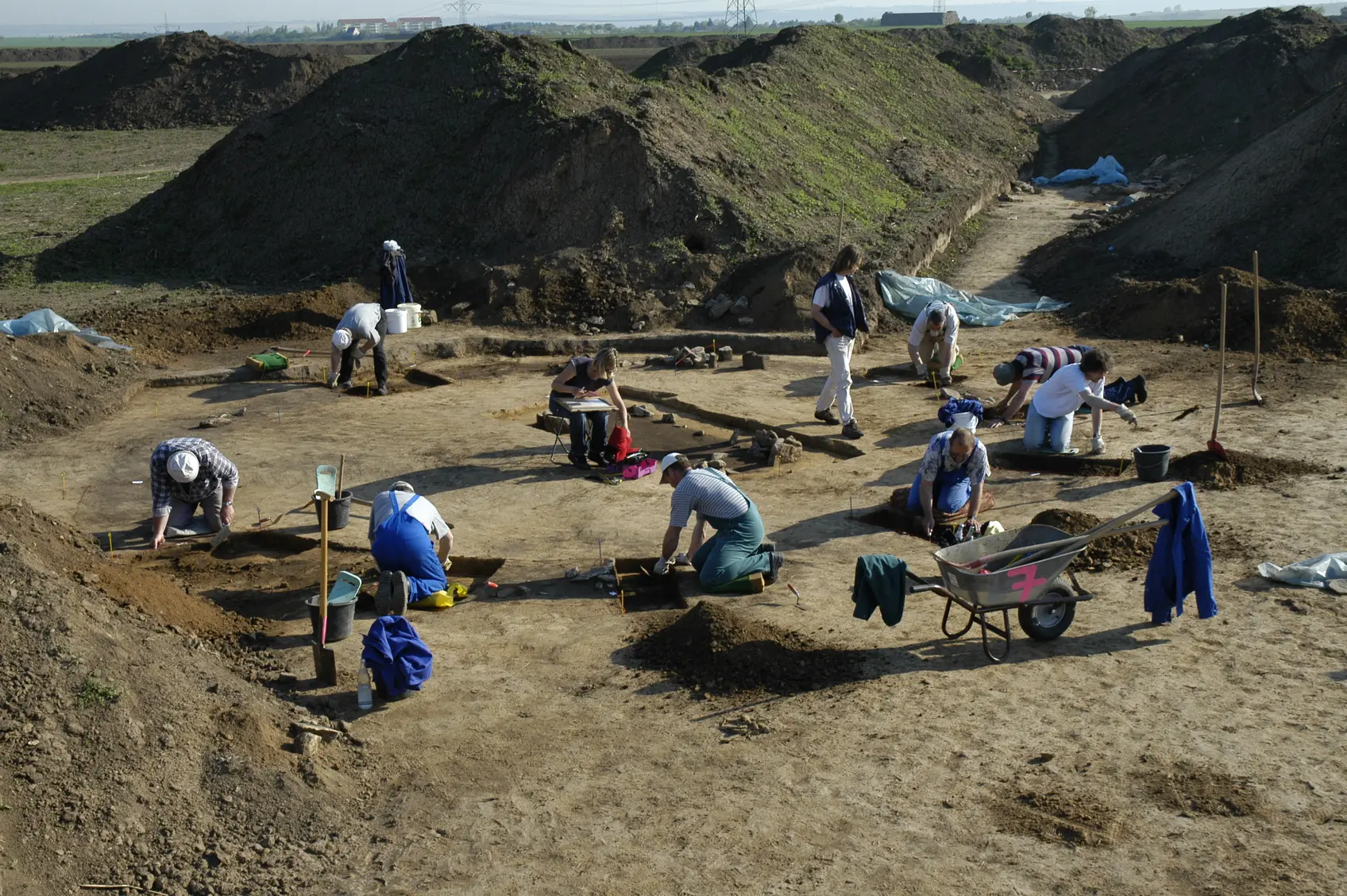
Living in times of change

Late Bronze Age circular ditches with central graves from the excavations near Esperstedt.
Living Through Change: A Community Story
“This research helps us understand how people experienced change in their everyday lives,” explains Eleftheria Orfanou, a PhD candidate at the Max Planck Institute for Evolutionary Anthropology in Leipzig and the study’s lead author.
She emphasizes that the Late Bronze Age was not a single dramatic turning point. Instead, it unfolded as a series of everyday decisions. Communities made choices about what to eat, how to farm, how to bury their dead, and how to maintain social ties. These societies were deeply rooted in their local landscapes, yet they were also closely connected to neighboring regions.
Gradual Shifts in Genetic Ancestry
The genetic findings reveal slow and regionally distinct changes in ancestry over time. Importantly, these developments occurred alongside strong local traditions rather than replacing them.
In Central Germany, noticeable genetic shifts appeared only in the later stages of the Late Bronze Age. This timing suggests that local groups gradually became more involved in broader interaction networks. In particular, connections strengthened with communities to the south and southeast of the Danube region.
The evidence does not point to sudden population replacement. Instead, it reflects steady contact and cultural exchange.
Tracking Movement Through Chemical Signatures
To better understand mobility, researchers analyzed strontium and oxygen isotopes preserved in human remains. These chemical markers function like geographic fingerprints. Because isotope values reflect the environment where a person grew up, scientists can determine whether someone was local or had migrated from another region.
The results are striking. Most individuals from Central Germany—whether cremated or buried intact—display local isotope signatures. This indicates that cultural changes likely spread through communication, trade, and shared practices, rather than through large-scale migration.
The Arrival of Millet in Europe
A Flexible Food Strategy
Dietary evidence provides another window into adaptation during this period. In the early Late Bronze Age, communities began consuming broomcorn millet. This crop had recently made its way into Europe from northeast China.
Its adoption may have been a response to environmental pressures or economic challenges. Crucially, there is no genetic evidence of major new population groups arriving at the same time. This strongly suggests that existing communities incorporated millet into their diets on their own initiative.
A Return to Traditional Crops
Interestingly, millet consumption declined in the later Late Bronze Age. People shifted back toward established crops such as wheat and barley.
This pattern does not reflect a steady intensification of millet farming. Instead, it reveals experimentation and flexibility. Communities tested new agricultural strategies, adapted when necessary, and ultimately made choices based on resilience, practicality, and cultural preference.
Health, Disease, and Daily Life
The research team also searched for signs of ancient illness by combining genetic data with skeletal analysis.
They detected DNA from bacteria commonly linked to oral health problems, including dental disease. However, there is no evidence of widespread epidemic outbreaks.
Skeletal remains reveal signs of childhood stress, joint wear, and occasional injuries—indications of physically demanding lives. Even so, most individuals appear to have been in generally stable and relatively good health.
A Picture of Resilient Communities
Taken together, the findings present a nuanced portrait of Late Bronze Age societies. These were not communities overwhelmed by crisis or mass migration. Instead, they were adaptable groups navigating change through practical decisions about food, social connections, and daily life.
The study highlights resilience, experimentation, and cultural continuity—showing that even in times of transformation, people remained firmly grounded in both their traditions and their relationships with the wider world.
Diverse funerary culture
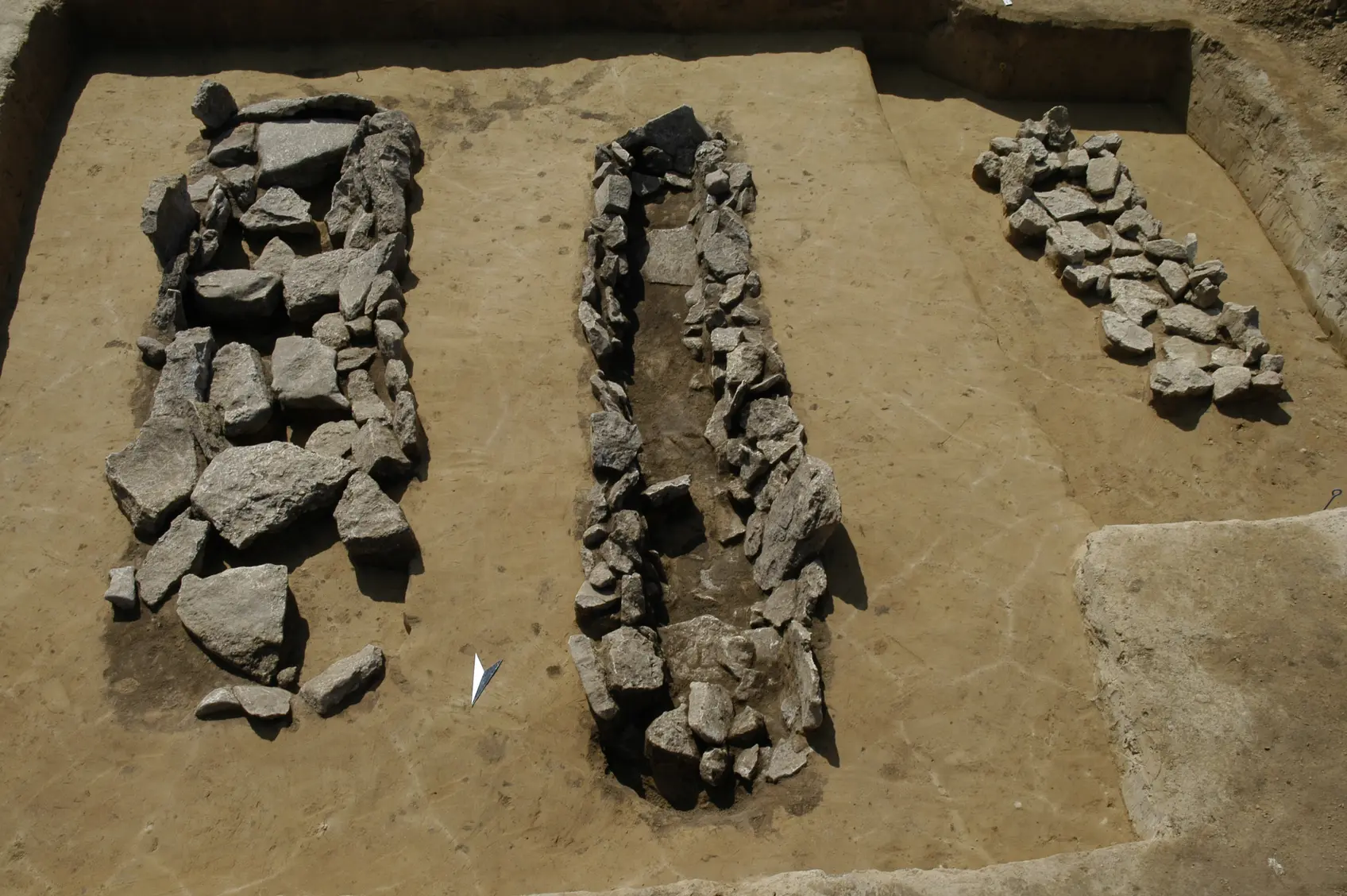
Graves with stone built walls from the Late Bronze Age excavations near Esperstedt.
A Complex and Diverse Burial Landscape
The study also sheds light on the rich and varied burial traditions of the Late Bronze Age—customs that may feel unfamiliar from a modern Western viewpoint.
Within the same communities, researchers found evidence of cremation, full-body burials (inhumation), skull-only deposits, and multi-stage funerary rituals. Rather than being rare or unusual, these practices appear to have coexisted as accepted and meaningful options.
According to Eleftheria Orfanou, these rituals were not fringe behaviors. Instead, they formed part of a broader cultural toolkit available to communities during the Urnfield period. Burial choices were closely connected to how people expressed memory, identity, and their understanding of personhood in the Late Bronze Age.
In other words, funerary practices were flexible and intentional. They reflected how individuals and families wanted to be remembered and how they defined belonging within their society.
Reconstructing Dynamic Social Worlds
By combining archaeological discoveries with anthropological study, ancient DNA research, and isotope analysis, the team was able to build a multidimensional picture of Late Bronze Age life.
The results portray these societies not as static or isolated, but as vibrant and adaptive. Change did not erase tradition. Instead, innovation was woven into existing cultural frameworks.
As Wolfgang Haak, project leader at the Max Planck Institute for Evolutionary Anthropology, explains, communities did not simply react to external influences. They actively shaped their own ways of living. By blending new ideas with established customs, they created hybrid practices that carried deep local meaning—while still participating in an increasingly interconnected world.
Together, the findings reveal Late Bronze Age Central Europe as a landscape of resilience, creativity, and cultural choice.