Introduction
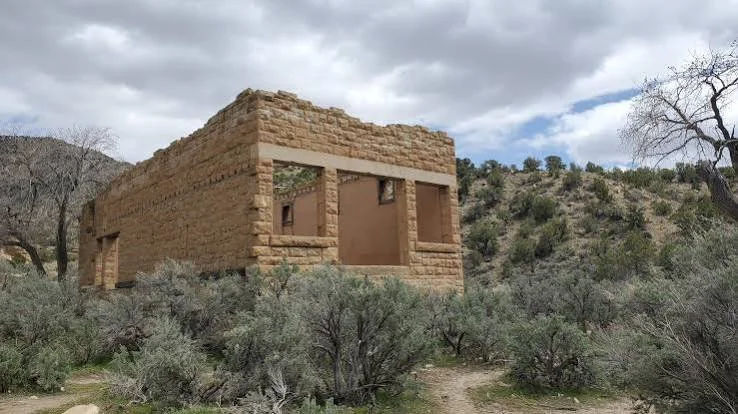
Alazon represents the many small railroad stops that once punctuated Utah's western transportation corridor.
Such places could appear insignificant when compared with major railroad cities, but they formed essential components of the railway system.
A railroad required a network of stops, sidings, maintenance points, water facilities, communication stations, and worker settlements.
Alazon's abandoned landscape therefore preserves evidence of the infrastructure that made long-distance rail transportation possible.
Railroad Geography
Railroad construction created new geographic relationships.
Locations that had previously been remote became connected to national markets.
A railroad stop could provide access to freight, mail, passengers, and communication.
The importance of each stop depended upon its operational function.
Some became towns.
Others remained small maintenance or service points.
Why Stops Were Established
Railroads needed strategically placed facilities.
Trains required water and fuel.
Crews needed places to rest.
Tracks required maintenance.
Freight sometimes needed to be loaded or unloaded.
Telegraph systems required stations.
A small settlement could therefore exist because of one specific railroad function.
Everyday Railroad Life
Workers at small stops lived in environments very different from major cities.
They were surrounded by open desert and long stretches of track.
Their work schedules were determined by trains.
A delay or mechanical problem could change the rhythm of the settlement.
Families adapted their lives around railroad timetables.
Communication
The telegraph was essential.
Before modern telecommunications, railroad operators relied on telegraph messages to coordinate train movements.
Small stations could therefore become nodes in a national communication network.
This was one of the railroad's most transformative effects.
The physical tracks moved people and goods, while telegraph wires moved information.
Abandonment
Railroad landscapes are particularly vulnerable to technological change.
When locomotives became more efficient, watering stations could become unnecessary.
Dieselization eliminated many steam-era facilities.
Improved signaling reduced the need for some staffed locations.
Changes in routes could bypass older stops.
Alazon's abandonment should therefore be understood as part of technological modernization.
Archaeological Remains
An abandoned railroad stop can preserve foundations, railroad grades, loading areas, debris, and household artifacts.
These remains allow archaeologists to reconstruct settlement organization.
Even fragments of glass and ceramics can help establish periods of occupation.
Industrial remains can reveal the functions of the station.
Cultural Landscape
Alazon also demonstrates how railroad infrastructure created cultural landscapes.
Railroads were not merely transportation corridors.
They were communities.
They shaped employment, migration, commerce, communication, and settlement patterns.
Conclusion
Alazon's significance lies in its representation of the small-scale infrastructure behind the great railroad system.
Its abandonment reminds us that transportation technology is constantly changing.
The railroad stops that once seemed permanent could disappear when the technology supporting them changed.