Introduction
Alta occupies an important place in Utah's mining history and is closely associated with the early discovery and development of silver in the Wasatch Mountains.
Today, Alta is primarily associated with skiing and mountain recreation. Yet its landscape preserves evidence of an earlier industrial economy in which underground mining dominated the local environment.
Early Mining in the Wasatch
Mining expanded in Utah during the nineteenth century as settlers and prospectors increasingly investigated the mineral potential of mountain regions.
The Wasatch Mountains contain extensive mineralized zones.
Discoveries near Alta contributed to the development of Utah's early silver industry.
Silver and Economic Development
Silver was particularly valuable during the nineteenth century.
Its monetary role increased the importance of silver discoveries.
Mining companies could attract capital when deposits appeared sufficiently rich.
The resulting operations required substantial investment.
The Mining Community
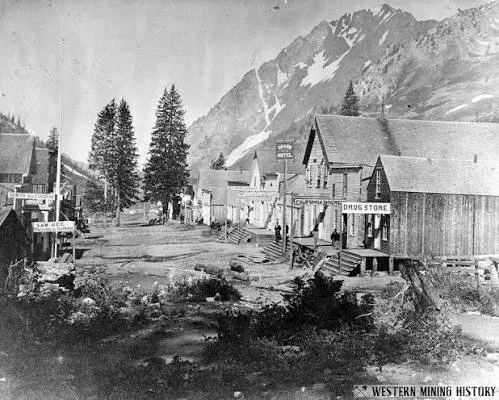
Alta developed as a mining settlement.
Workers needed housing, food, tools, transportation, and services.
Businesses followed the workforce.
The town became an industrial community located at high elevation.
Mining at High Altitude
Alta's elevation created special challenges.
Snow could make transportation difficult.
Cold temperatures complicated outdoor work.
Avalanches posed hazards.
Building and maintaining roads and structures required adaptation to mountain conditions.
The physical environment therefore shaped industrial activity.
Underground Workings
The mines created networks beneath the mountains.
Shafts and tunnels followed mineralized zones.
Ore was transported to surface facilities for processing.
Some of the most significant evidence of historic Alta therefore exists in locations that are no longer obvious to visitors.
Silver Milling
Ore had to be processed before valuable metals could be recovered.
Mills crushed rock and separated valuable mineral material from waste.
Water was often important in milling operations.
The remains of historic processing facilities provide evidence of nineteenth-century engineering.
Mining Labor
Mining required workers willing to operate under dangerous conditions.
Drilling, blasting, timbering, ore removal, and transportation all involved hazards.
Workers also faced the difficulties of high-altitude living.
The community's history therefore includes both technological achievement and labor risk.
Decline
Alta's mining economy changed as ore deposits became less profitable and other industries developed.
The settlement eventually became much smaller.
The landscape later acquired a new economic identity through recreation and tourism.
From Mining to Skiing
The transformation from mining settlement to ski destination is particularly significant.
The same mountains that once constrained miners eventually became an economic resource for winter recreation.
This represents a striking example of landscape reuse.
Preservation
Mining remnants remain important historical resources.
They preserve evidence of the industrial origins of the community and help prevent modern visitors from seeing Alta solely through its contemporary recreational identity.
Conclusion
Alta's silver history illustrates the importance of early mining in Utah's economic development.
The settlement's transformation from a high-elevation mining community into a modern recreational destination demonstrates how landscapes can acquire entirely new economic meanings while retaining physical evidence of earlier periods.